
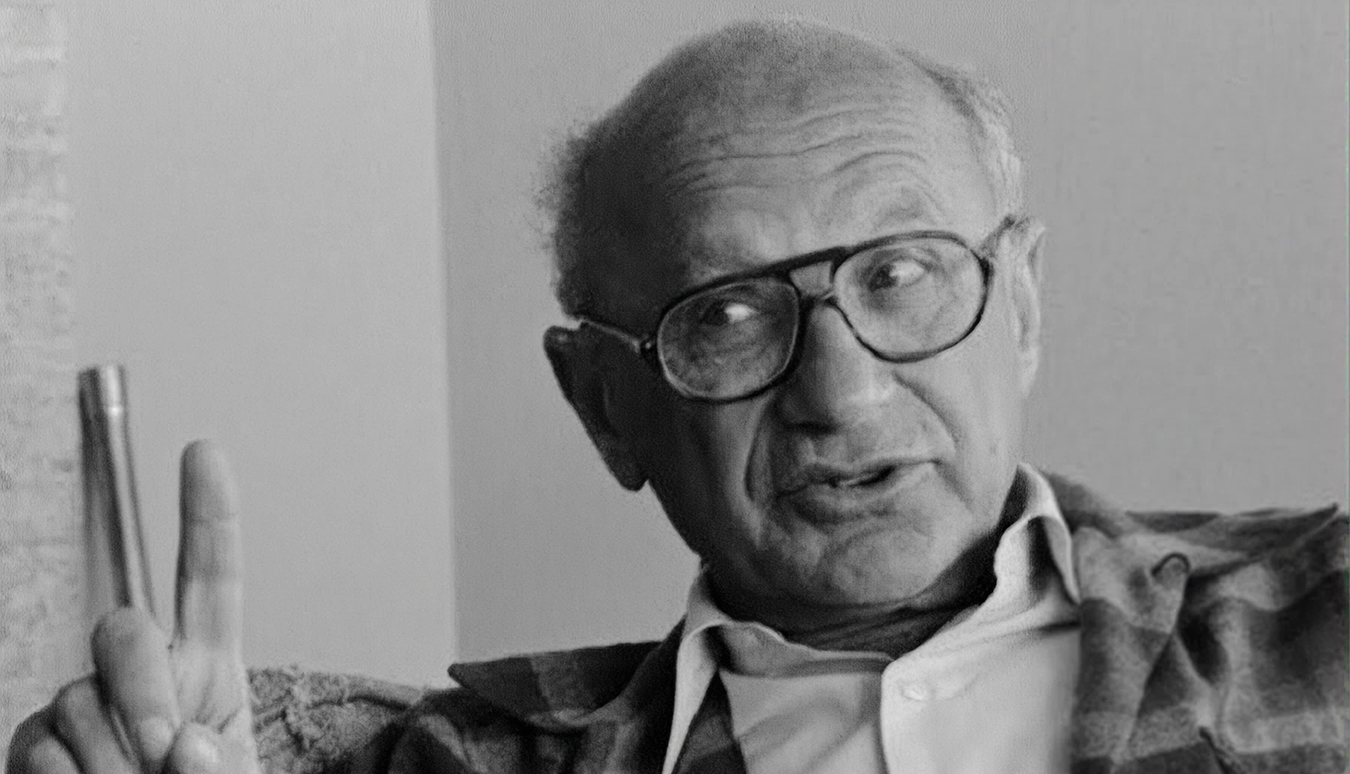
Milton Friedman Lives!
Friedman’s economic model has worked everywhere it has been tried. The idea that this history of consistent success is now outdated is at odds with both history and logic.
If nothing else, he lives as a perfect bogeyman for the American left, which blames him for everything from neo-liberalism to designing authoritarian regimes all over the world.
It’s flattering, in a way. Or it would be if it weren’t largely nonsense. In an interview near the end of his life, Milton Friedman told Econtalk’s Russell Roberts that of all the things he had advocated, only two had been remotely successful. Those were ending the military draft (which the left actually supports) and implementing a floating exchange rate regime for world currencies.
But the degree and persistence of the hate-mongering seems a little strange. Even more strange, much of the new energy and enthusiasm for Friedman fright is coming from political conservatives. Here are some recent examples (I could easily have selected from dozens of other sources, but these are a good sample):
Cory Doctorow called Friedman “a crank” in 2023, invoking the eternal canard that the Nobel prize-winning economist was the chief “cheerleader and enabler of genocidal maniacs like Augusto Pinochet.” He claims, without reference or evidence, that Friedman favored extreme inequality and hereditary servitude. Doctorow closes by admitting that when he’s feeling down, he cheers himself up by imagining Friedman being tormented in hell for eternity.
Robert Reich’s play, entitled “Milton and Augusto,” depicts the Chilean dictator as mocking Friedman’s enabling of that murderous, oppressive regime. I’ll admit Reich (who has no formal economics training, none!) is a better playwright than he is an economist, but this conversation is entirely fabricated. Yet it is sometimes cited as if it were a documentary.
Finally, Naomi Klein’s Shock Doctrine (2007) fabricated an imaginary framework—“disaster capitalism”—built on Friedman’s anodyne claim that reforms would be more successful in a crisis. In Klein’s febrile account, Friedman advocated the intentional engineering of catastrophes; she actually implies Friedman’s model directed the flood control failures in Louisiana that resulted in the disaster after Hurricane Katrina, as a means of imposing economic measures that expanded inequality.
For some reason, the same (obviously correct) observation about opportunities caused by crises is not given equal weight when the left invokes it. Rahm Emanuel’s “You never want a serious crisis to go to waste” is an almost exact paraphrase of Saul Alinsky’s 1971 argument in Rules for Radicals that fabricated threats were a “precondition” for successful propaganda. Of course, Alinsky was himself parroting Lenin, who had actually advocated the active fomenting of crises and chaos, as a way of achieving the reforms the political left desired!
The difference is that it was Lenin, and Alinsky who advocated the active and intentional creation of crises; Friedman and Emanuel were simply stating an obvious and eternal political principle.The New Wave
There does seem to be a new tenor to some of the criticisms of Friedman because it is conservatives are now leveling much of the scorn. Simplifying always leaves out nuance, but I think it is fair to divide the current anti-Friedman wave into three elements with one recurrent element.
1. Laissez-faire is obsolete
Vice President J.D. Vance and the broader national-conservative or “new right” movement voiced by Oren Cass (both Vance and Cass, by the way, have the same economics qualifications as Robert Reich) say that the idea of self-organizing commerce is “old-fashioned” and needs to be consigned to the scrap heap of history. In a June 30, 2026, interview with Michael Knowles, Vance argued that the Republican Party’s economic center of gravity has shifted “from Milton Friedman to Alexander Hamilton.” What he meant was that the “new” economic policy should predate the development of economic theory. The shift from laissez-faire toward economic nationalism, tariffs, and state-assisted industrial policy is far from new; it is, in fact, exactly the outdated mercantilist view that Adam Smith demolished in Wealth of Nations.
To be fair, Vance’s specific argument is not that Friedman’s economics was wrong in the abstract, but that it was historically contingent: free-market policy “worked” in the Reagan era only because American society was more religiously and morally rooted at the time. Today’s less cohesive, more atomized society needs the state to play a more active, guiding role in the economy, including tariffs and industrial policy aimed at reviving domestic manufacturing.
2. Business profits
In 1970, Friedman published a now-famous New York Times Magazine essay “The Social Responsibility of Business is to Increase its Profits.” The core claim was simply that shareholders’ goals are diverse and possibly contradictory. No single management strategy focused on social goals could possibly optimize that set of objectives. Consequently, the most responsible thing for business to do would be to pursue profit, honestly and within the law, and then let shareholders do with those profits as they will.
Bizarre distortions and outright misrepresentations of this simple argument have recently bubbled up from some deep, noisome pit. Examples include a November 2025 SAPIR Journal piece, “What Milton Friedman Got Wrong,” and constant refrains of scorn from such commenters as Nobel laureate Joseph Stiglitz to Salesforce C.E.O. Marc Benioff. Bizarrely, the Stigler Center, named after Friedman’s friend and intellectual supporter George Stigler, published an entirely incoherent set of comments in “Friedman 50 Years Later.”
They blame Friedman’s essay for launching “shareholder primacy,” which is the doctrine that a corporation’s only social responsibility is profit maximization for shareholders, full stop. Critics argue this legitimized decades of short-termism, hostile takeovers, junk-bond financing, and disregard for employees, communities, and the environment. But this whole argument misreads (or I suspect, never read) the 1970 essay. Friedman never used the terms “shareholder value” or “shareholder primacy,” and he never implies that ethical constraints should be suspended. What he does claim is that managers should not impose their own ethical goals, which is a different proposition entirely. The shareholder-first ethos of the 1980s–90s arose instead from hostile-takeover pressure and executive stock-based compensation, not from Friedman’s essay itself.
3. Globalization and Deindustrialization
A cross-ideological populist coalition, ranging from economic-nationalist conservatives to progressive never-traders, draws (loosely) on academic work from labor economists David Autor, David Dorn, and Gordon Hanson (the original “China Shock” papers, 2013–2016). It is true that Friedman was among the most prominent 20th-century advocates of unilateral free trade grounded in comparative advantage. Critics argue that the trade liberalization his ideas underwrote, especially normalizing trade with China (“permanent” normal trade relations in 2000, World Trade Organization membership from 2001), destroyed roughly 2.4 million U.S. manufacturing jobs between 1999 and 2011. The ripple effects contributed to the social and economic decline of manufacturing communities and fed today’s populism on both left and right.
To be honest, this is less a critique of a specific Friedman idea than an indictment of the free-trade consensus he symbolized. In the podcast series I did last summer and fall on the Scottish Enlightenment and then every chapter of the Wealth of Nations, I found it striking that the arguments that Smith considered, took apart, and corrected in his industrial policy and trade discussion are so resilient. But there is something different this time: the relationship among nations no longer satisfies liberalism’s (potentially) optimistic premises. If we are not at or considering war with another country, the argument for free trade is straightforwardly unilateral. But as Jonathan Pelson argued in Wireless Wars, if one nation operates under liberal assumptions but another nation is trying to maximize relative gains for purposes of military dominance, then another world view may be necessary.
It is wrong to believe that Friedman did not understand that. Blaming Friedman for China is like blaming Marie Curie for the invention of nuclear weapons. Like Adam Smith, Friedman was analyzing a situation where people were trading for commercial reasons, and as equals. It is anachronistic to believe that Friedman, a thorough-going empirical realist, would not have recognized China’s profound exceptionalism.
4. The Recurring Refrain: Consorting with dictators
In March 1975, Friedman spent two weeks in Chile; he met with dictator Augusto Pinochet exactly once, for forty-five minutes. Pinochet said little but asked Friedman to put his recommendations in writing. They had met at 5:30 p.m., the end of a long day, so it’s not surprising that Pinochet would ask such a thing.
Friedman did so about a month later, in an eight-point letter recommending sharp cuts to money-supply growth, spending cuts, and trade liberalization. It was the same style of advice he gave to many other governments. In fact, it was the exact same advice he gave on other trips at about the same time to the governments of Taiwan, Israel, Japan, West Germany, the U.K., Iceland, Estonia, about twenty other nations, and, importantly, China.
The Chile visit was a few weeks in 1975; the China engagement was deeper and longer, including two extended trips (1980, 1988) and a personal two-hour meeting with Zhao Ziyang in the Great Hall of the People. Yet “Friedman and Pinochet” is a stock phrase, while “Friedman and Zhao Ziyang” is not really a thing.
One must ask, though: which was the more authoritarian, murderous, repressive regime? If China was your answer, you are correct. Friedman was an enthusiastic proponent of the market order and honestly believed that it was better to live in a prosperous dictatorship than in a poor one. If either China’s or Chile’s dictators had asked about political freedom, Friedman would have advocated for individual rights and liberty. But that subject was not on the table. Instead, Friedman advised the Chinese, exactly as he had all the other nations he visited, on how to open their economy and increase commercial activity.
There is one more twist worth mentioning on this final point. It is true that because Chile adopted the recommendations of “los Chicagos,” especially Arnold Harberger, it became by far South America’s wealthiest large economy. They have universal health care and a pension system that provides a more robust social safety net than any of their neighbors, and the comparison is not close. That is because they immediately adopted Friedman’s recommendations for reforming their economy.
But China has also become wealthy. The open market “Reform and Opening Up” led by Deng Xiaoping from Mao’s death in 1976 to Deng’s “Southern Tour” in 1992 resulted in an enormous increase in China’s prosperity. That is because China adopted, though belatedly, Friedman’s economic reform recommendations.
Friedman’s economic model has worked everywhere it has been tried. The idea that this history of consistent success is now outdated is at odds with both history and logic.
Michael Munger is Professor of Political Science and Economics at Duke University. His research focuses on the relations between political and commercial institutions.

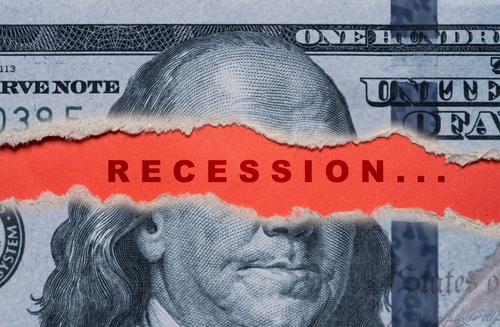
Diagnosis: Recession
'Recession' reads less like a technical macroeconomics monograph and more like intellectual history conducted with an economist’s data discipline.



.jpeg)