Postliberalism’s Hungary Gambit Failed

Any chance of future postliberal success rests on J.D. Vance.
When Donald Trump won the 2024 election, bringing self-identified postliberal J.D. Vance into the White House, friends told me that James M. Patterson and I needed to change the name of our upcoming book. It was to be called Why Postliberalism Failed, a play on the title of Patrick Deneen’s book Why Liberalism Failed. With Vance in the White House, postliberalism did not appear to be a failure. One person suggested we change it to Why Postliberalism Will Fail, but we decided to leave the title. These days, we are a little smug about having kept it. With Viktor Orbán’s party losing power in Hungary and postliberals at odds with the Trump administration over the Iran War, this iteration of postliberalism looks once again bound not only to fail in terms of its own principles but also to remain politically relevant.
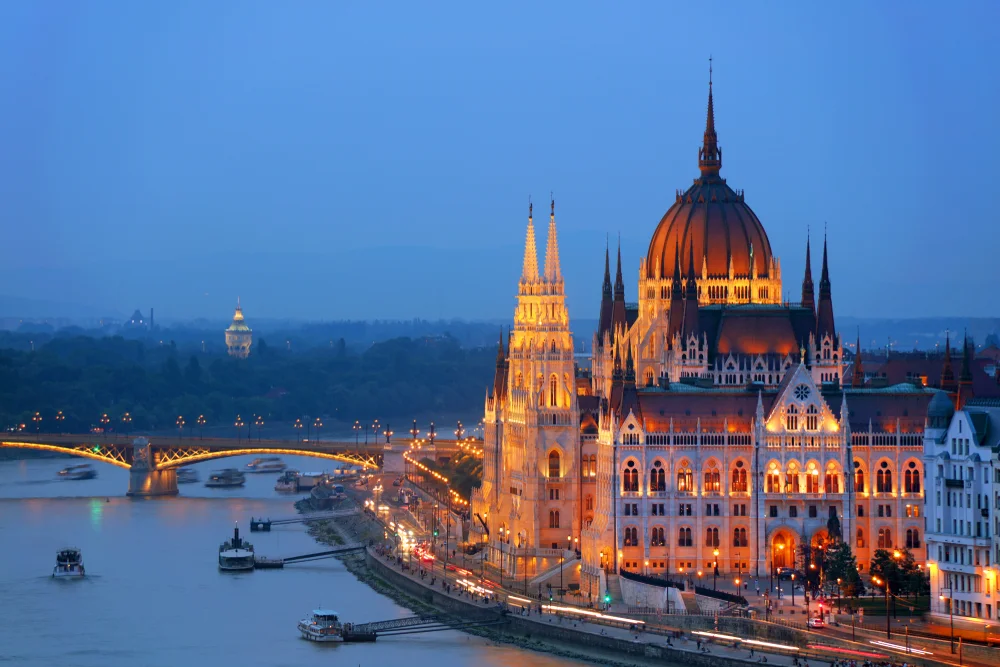
I predicted in January that 2026 would likely be a bad year for postliberalism. One of the reasons was the decent probability that Orbán, the chief funder of the postliberal movement, would be voted out of office, which is exactly what happened. A party led by conservative anti-corruption candidate Peter Magyar gained a supermajority of seats in the Hungarian parliament—enough to potentially reverse Orbán’s illiberal constitutional reforms. Relevant to our book title, Magyar also promised to remove or defund all the tax-funded partisan organizations that Orbán had built and funded, including those related to the American postliberal and new-right movements.
This development occurred around the same time as Trump’s spat with Pope Leo XIV and Vance’s choice to functionally tell the pope to stay in his own lane. Admittedly, the Iran War and its justification are complex matters that I would rather not get into here, and it is true that in the Catholic Church there is healthy room for disagreement about the prudential applications of moral and social-ethical principles. This is especially the case when there is information asymmetry regarding the relevant facts. But none of that implies that the Pope has no place weighing in on political matters. To Vance’s credit, he backtracked in a later, more reconciliatory statement. But this is just one instance in a series of moments when Vance has been in tension with the last two popes, and not only over debatable policies. If Vance is the Catholic postliberal movement’s last hope, this does not inspire much confidence.
While James and I, along with many critics of postliberalism, celebrated the fall of Orbán’s rule, others, more sympathetic to their project, tried to keep the candle burning. Rod Dreher, for example, has held a position at the Hungarian-taxpayer-funded Danube Institute for the last few years (implicitly one of the organizations that Magyar wants out). Dreher downplays the election’s significance for the political movement he supports, noting that Magyar himself is conservative and strict on immigration—all Orbán’s failure shows is that you cannot win with a bad economy and while tolerating corruption.
But from the standpoint of critics of postliberalism that is precisely the point. In the debates about postliberalism since Deneen’s book Why Liberalism Failed appeared in 2017, postliberals and their friends (e.g., Kevin Roberts) would say that conservatives needed to stop fearing the use of power; some of their close friends in the new right would even echo Carl Schmitt, saying that in politics you need to reward friends and punish enemies; they would ask rhetorically “do you not know what time it is?”; others would dismiss proceduralism as an obstacle to promoting the common good. Among postliberal intellectuals, Adrian Vermeule opposed Madisonian constitutionalism, called for a more powerful executive and bureaucracy, and said we would be better off without a Congress; Gladden Pappin bragged about the organizations that were formed to promote Trump loyalists to fill government positions; Christopher Rufo said these kinds of efforts, which included DOGE (a brainchild of Curtis Yarvin), were an “ideological purge,” an effort to install a new elite, which echoed the arguments of Patrick Deneen’s book Regime Change. What they learned from Viktor Orbán was that you could decrease the separation of powers and weaken the checks and balances of a government by filling strategic positions with loyalists.
Postliberals also pushed a dubious economic agenda. Power should be used, they argued, to shape the economy; industrial policy was all the rage, and various forms of right-wing dirigiste strategies were suggested, including 1930s-style corporatism, as it was promoted by Orbán’s employee, Gladden Pappin. Viktor Orbán not only resisted mass immigration (as his replacement, Peter Magyar, does), but he also, they argued, saved Hungarians from the “globalists” who were hollowing out industry with their doctrine of free trade.
So, when Dreher admits Orbán’s loss was about the economy and corruption, postliberal’s conservative critics rightly gasp. Those are precisely the things we warned about—using political power to create advantages for your political party, stifling political speech, rejecting proceduralism for partisan advantage, and misguided economic policies that make countries poorer. The argument was primarily about corruption and poor economic policy. One might argue that more autocratic control is not intrinsically corrupt, but opponents of postliberalism always saw corruption as one of its consequences; and even then, Orban’s autocratic tendencies, his attempts to tip the scales to secure more power for himself and his party, were certainly a good part of what Magyar and his voters opposed.
Postliberals are a minority in American politics, but they punch well above their weight. They are well organized, operate in lockstep, and are loyal to one another—they behave in many ways like the leftists who for decades carried out a strategy of a “long march through the institutions.” Like Joseph de Maistre, one of their intellectual forebears, they believe that social revolutions succeed from the top down, through strategically placed elites. The more transparent their unpopular project, the less successful it will be. They are willing to talk in popular fora about their movement as a populist one, about a fight against the “globalists” and mass immigration, when it is far more about acquiring power for a much less popular social project—this is especially the case for the integralist faction (e.g., Vermeule and Pappin). They want to remove limits on the executive branch’s power, fill the government with loyalists, and form a compliant court, all for someone who shares their comprehensive vision (e.g., Vance).
The fall of the Orbán government not only cut off a huge amount of postliberal funding, but it also exposed their project to further scrutiny. They are leaving Hungary embarrassed and rejected by the Hungarian people. This also leaves them with no political power. Any near-future prospect they have is tied to J.D. Vance, whose power in turn depends on Donald Trump. We have seen many of Vance’s friends already thrown under the bus by Trump, particularly Steve Bannon and Tucker Carlson. It is unclear whether Trump even likes Vance or will endorse him. The 2028 primaries are a long way away in Trump time.
There were Catholic postliberals of the past, such as the Argentinian integralists who promoted Juan Perón in the 1940s, who got through the palace threshold only to be tossed aside by the leader they had promoted. Other postliberal projects attained power but abused it in ways that oppose the Catholic principles its adherents claimed to support. At this point, even with their friend Vance, postliberals are unlikely to have much say in Trump’s administration. If Vance is not elected in 2028, they are back to square one, with zero political power, little funding, and toxically bad press. Based on what we’ve seen of Vance, that might be better for them and their project than if he actually wins. Let the readers judge for themselves, but it looks once again like postliberalism has failed.
Thomas D. Howes is editor-in-chief of The Vital Center, founder of the Reagan Caucus and Reagan Caucus Action, and a lecturer in politics at Princeton University. He is co-authoring, with James M. Patterson, a book titled Why Postliberalism Failed, to be published by the Acton Institute.

Can Trump Survive the Iran Debacle?
Trump's on-again-off-again negotiation style has made regime change ever more difficult to obtain.

The (False) Triggers of Great Power War
'The Coming Storm' wants to concentrate minds and offer a route away from catastrophe.
.jpeg)
Contract with Conservatism: The Tea Party Past and Post-Trump Future
There is no third party waiting in the wings.


.png)
Get the Civitas Outlook daily digest, plus new research and events.
Get the Civitas Outlook daily digest, plus new research and events.