The Courage of the Americans
Thomas wonders why we remain hesitant, if not positively wrong-headed, in the understanding and application of our American endowment of freedom.
Associate Justice Clarence Thomas used a recent address at the University of Texas at Austin, held to celebrate the 250th anniversary of the signing of the Declaration of Independence, as a tribute to the Declaration, and as recognition that it is the source and pinnacle of American liberty. But Justice Thomas also did something more with those remarks: he reminded us of the need today to correct our thinking about American constitutionalism, and more importantly, of the need to understand that we have faltered, and must recover our courage, as it is the linchpin in securing our liberty.
Thomas reminds us that it is the Declaration which announces, “We are all equally created in the image and likeness of God. We are all endowed with natural rights to life, liberty, and property. Our rights and our dignity are inherent. They do not come from others and that they do not come from the Government.”
Yet, Thomas wonders why we remain hesitant, if not positively wrong-headed, in the understanding and application of our American endowment of freedom. He looks to Washington DC, observing that, “there are too few people who are willing to do what it takes to do the right thing—to sacrifice the popularity, flattery, comfort, and security that are the costs of principle. It is because too few of us reflect on the courage and commitment of the final sentence of the Declaration.”
Using the awful Plessy v. Ferguson (1896) decision as an example, Thomas explains that “It did not take me long in Washington to stop wondering why the Supreme Court took sixty years to overrule Plessy v. Ferguson, the 1896 decision that endorsed government racial segregation and validated the Jim Crow South that I grew up in. It could not have taken my Court sixty years to know that Plessy was a hideous wrong and that racial segregation was grossly incompatible with our colorblind Constitution. The Justices must have known it all along. The right thing to do, as Justice Harlan spelled out his lone dissent at the time, was obvious, as it so often is. What stood in the way was cowardice. The Justices were afraid of the societal consequences.”
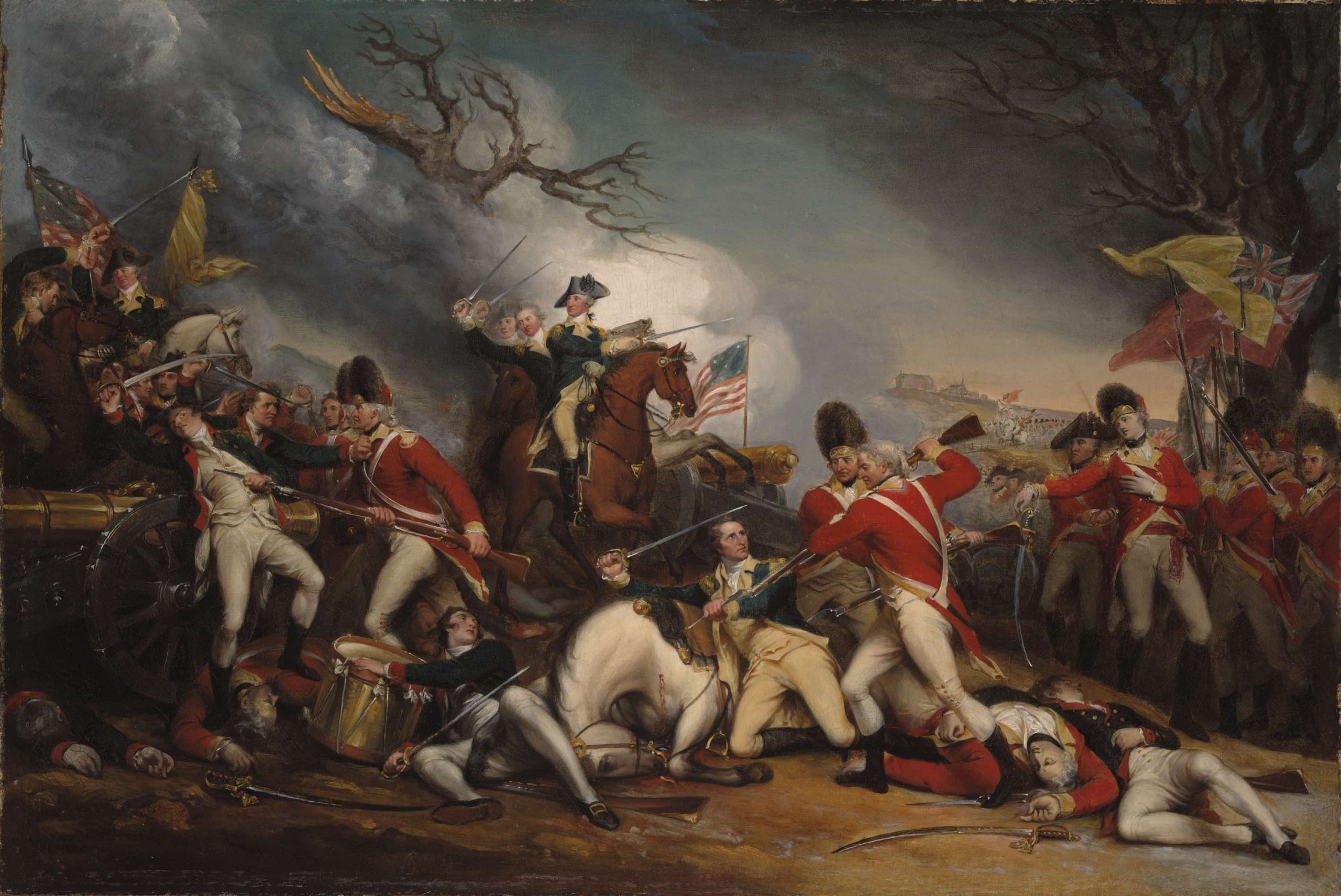
In focusing on the virtue of courage, Thomas particularly calls our attention to the Declaration’s concluding line: “And for the support of this Declaration, with a firm reliance on the protection of divine Providence, we mutually pledge to each other our Lives, our Fortunes, and our Sacred Honor.” Said Thomas, “It can be easy to forget, 250 years later, the courage it took for those 56 men to sign the Declaration.”
In addition to the importance of courage, Thomas also helps us understand the foundation of American constitutionalism and why we have been missing its truths. Today, Americans have accepted the purportedly superior claims to knowledge made by progressives about human nature, law, and the Constitution.
Thomas rightly identifies Woodrow Wilson, America’s 28th President, as the father of American progressivism. In many essays, he made war on the natural rights and limited government founding of America. Thomas quotes Wilson as saying, “the inalienable rights of the individual were ‘a lot of nonsense.” Wilson redefined ‘liberty’ not as a natural right antecedent to the government, but as “the right of those who are governed to adjust government to their own needs and interests.” Thomas rightly concludes that nowadays, the political contest in America has become a struggle between two different constitutions: the Founders’ Constitution and the Progressive Constitution.
Here, Thomas might have added that Progressives believe that time, especially the future, possesses moral qualities, whereas our souls do not. Accordingly, per Wilson, we should understand that human nature, possessing freedom and virtue, is an impossible notion because a stable human nature doesn’t exist. We need experts to tell us who we are and ensure our conformity with one another. This is the flawed philosophic rationale of Wilson’s and the progressives’ dismissal of the foundation of American liberty. Everything is evolving; nothing can be the foundation of liberty. Freedom and virtue are just artificial constructions given to us by a benighted capitalist, patriarchal, and racist history, depending on which wave of progressivism is talking.
The Progressive Constitution is a collection of milestones laid down in the service of emancipating individuals from the market, the family, religion, and the rule of law itself. The role of the state and its presidential leadership is to instinctively sense this future and lead the country toward a more encompassing egalitarianism. The Constitution’s limits on power must be jettisoned; its provisions are now just a regulatory launching pad and must be reinterpreted to legitimate the progressive desire for power to bring us into a correct relationship with the future. This is the source of the pronouncements by progressive politicians when they accuse conservatives of wanting the country to go backward. As Kamala Harris intoned during the 2024 presidential campaign, “We aren’t going back.” And, “Ours is a fight for the future. And it is a fight for freedom.” And so, in their eyes, Conservatives become the enemies of an inexorable progress by wanting to return to what the Founders intended.
While indicating the fundamental errors of progressivism and announcing that a divided constitutional house cannot endure forever, Thomas again reminds us of the importance of courage. He tells us that Americans were given tremendous gifts, ones that make a noble life possible, but that our conduct has not proven worthy of them.
To Thomas, the Declaration means little without its last sentence. Courage is a virtue, and we can claim it as a birthright as Americans. The Fathers have called us by name to follow their example; they have written it into our charter document.
Richard M. Reinsch II is the Editor-in-Chief of Civitas Outlook.
Symposium on Associate Justice Clarence Thomas’s Remarks on the Declaration of Independence
.webp)
Reclaiming Our American Inheritance
Thomas’s message is the same insight Abraham Lincoln invoked against Chief Justice Taney’s sophistry in the Dred Scott decision.

Three Generations of Living Constitutionalists Is Enough
Justice Thomas radiates a fundamental sense of decency, humility, and respect for the dignity of every human being—he lives the virtues of which he speaks.

.webp)
The Declaration’s Truths Heal a Multitude of Errors
Attacks on the Declaration from both the left and the right deny the universal character of its self-evident truths and their foundation in natural law.

.jpg)


Get the Civitas Outlook daily digest, plus new research and events.
Get the Civitas Outlook daily digest, plus new research and events.