
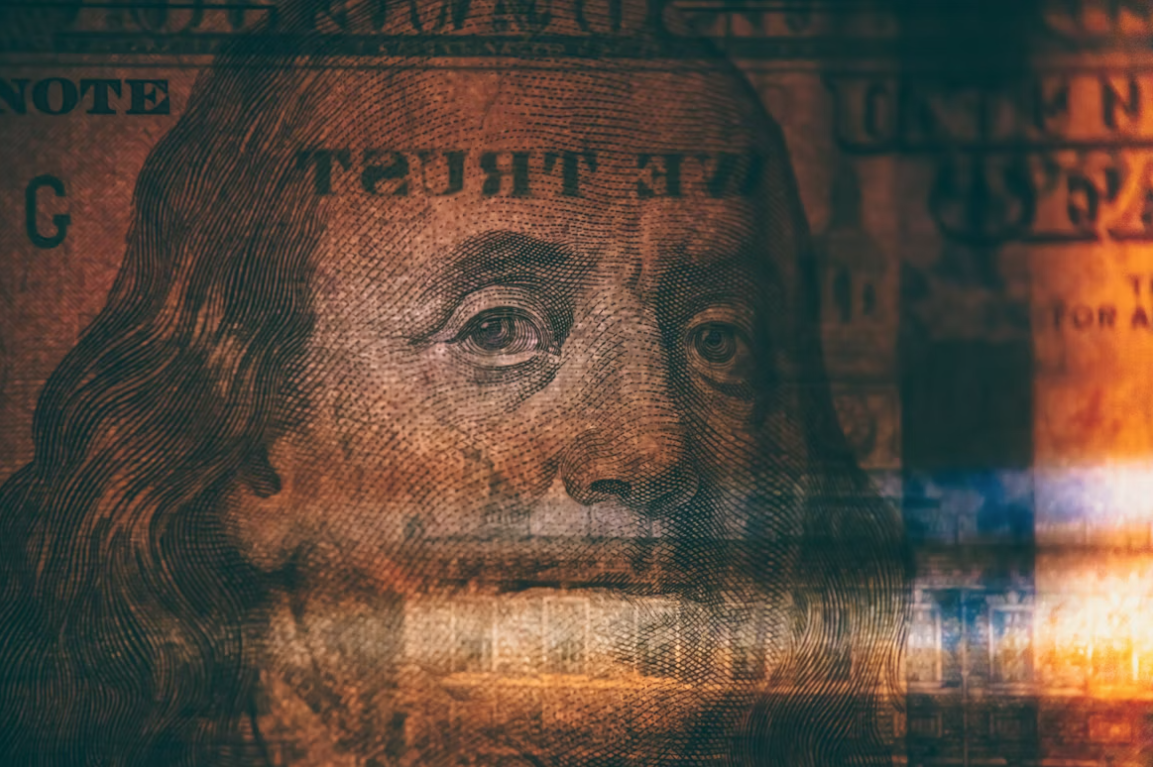
How the Rich Preserve Liberty

John McGinnis' Why Democracy Needs the Rich reminds readers that the wealthy matter not because they are invariably virtuous, but because liberty requires private power strong enough to resist public power.
In his short story “Harrison Bergeron,” Kurt Vonnegut portrays what happens when the desire for social equality is taken to its logical limit. To ensure complete equality, the strong must wear weights, the beautiful must wear masks, and the intelligent must wear headphones that blast noises whenever they begin to think intelligent thoughts. In short, to make everyone the same, it is not enough to make everyone average. Everyone must be brought down to the lowest common denominator.
What is often overlooked in the story, however, is that complete social equality is not actually possible. To ensure that no one enjoys unequal advantages, a “Handicapper General” and her cadre of goons must remain free of handicaps so they can impose them on everyone else. They are therefore grossly unequal to their victims. The resulting dystopia is more unequal and far more tyrannical than the inequalities that would likely emerge from a system of political and economic freedom.
In Why Democracy Needs the Rich, John McGinnis has written a book for readers who might otherwise confuse “Harrison Bergeron” with a how-to manual. Unfortunately, many of those readers are unlikely to pick it up. Regardless, the book arrives at an especially opportune moment, as assorted individuals in need of remedial economic education work themselves into a lather over the wealth of figures such as Elon Musk. Unaware that net worth is not the same thing as sitting on a mountain of physical cash, like Walter White, but in a larger storage facility, they seem to imagine that such wealth could simply be confiscated by the government and redistributed to solve their favored social ills without destroying the enterprises that created the wealth in the first place.
Does anyone seriously think SpaceX or Tesla would retain a fraction of their value if ownership were transferred to the federal government? The same people who cannot revise a student aid form in three years are unlikely to possess the dispositions and skills needed to snatch falling rockets the size of skyscrapers with giant chopsticks or build self-driving cars. For those who remain troubled by Musk, he helpfully maintains a social media site where they can tell millions of their fellow humans why they should dislike him too.
If you have a soft spot for social equality but remain skeptical of the wisdom of government officials, you should read Why Democracy Needs the Rich. McGinnis does not argue that the rich are always beneficial, or that they always have been. Wealth built on slavery, serfdom, state favoritism, monopoly privilege, rent-seeking, or, we might add, political insider trading is not a “net-positive”. His claim is narrower and more persuasive: in a commercial republic, private wealth is, on balance, beneficial and even necessary. It protects liberty not because the wealthy are uniquely virtuous, but because they provide independent centers of power outside the state and its allied institutions.
Before making that case, however, one must first decide who counts as rich. McGinnis sensibly notes that “it is not essential to have a precise cutoff for what constitutes the ‘rich,’” though he focuses most of his analysis on the top 1 percent and, especially, the top 0.1 percent. Some nations exist in such penury that almost no one appears wealthy by the standards of a prosperous commercial society. More often, however, wealth must be defined relatively. Even socialist societies, despite their gratuitous production of poverty, deprivation, and persecution, provide dachas for the party elite. No political order abolishes hierarchy. The question is whether power and resources will be concentrated in the hands of a few officials or dispersed among competing groups and institutions.
That is why the rhetoric of equality can be so misleading. If no private groups exercised disproportionate influence, we would not be left with equality. We would be left with the government. The American constitutional order, instead, accepts that liberty will produce differences in ambition and talent and therefore in wealth. As Madison put it in Federalist 10, the protection of the “different and unequal faculties of acquiring property” is among the first objects of government.
Despite complaints about the alleged immiseration of citizens in capitalist societies, empirical observation confirms that we do not see flotillas of the oppressed and exploited fleeing Key West for the workers’ paradise of Cuba. Unlike the clerisy, average Americans seem largely untroubled by anxiety over Elon Musk’s wealth. They are usually more worried about keeping up with those closest to them. Or, as H. L. Mencken put it, “A wealthy man is one who earns $100 a year more than his wife’s sister’s husband.”
The loudest complaints about inequality, McGinnis notes, often come from the intelligentsia ensconced in academia, who criticize the wealthy’s influence while seeming not to notice that many of their arguments apply with equal, if not greater, force to themselves. Using the same principles often invoked to criticize wealth inequality, Hrishikesh Joshi has persuasively argued that the academy’s political homogeneity poses a serious problem for democratic legitimacy because faculty determine “what information students are presented with and how that information is presented within larger narratives.”
The press, which is also ideologically skewed, exercises similar power. Journalists decide what stories they think are worthy of being covered and how they will be presented to the public. The entertainment industry, too, shapes public attitudes, often while congratulating itself on its righteousness. Harvey Weinstein famously declared that “Hollywood has the best moral compass, because it has compassion.” One is hard-pressed to find a recent, more sanctimonious declaration that was more decisively discredited by the declarer's own actions.
The wealthy, unlike the professoriate, press, and performers, McGinnis points out, are not clustered around a homogeneous set of political preferences. They disagree significantly across a vast range of policy questions. If they were ideologically homogeneous, there would be greater reason for concern. Instead, their diversity of opinion is part of what makes private wealth less dangerous than its critics assume.
Nor are the wealthy a fixed, ossified caste. In a commercial republic, the wealthy classes experience significant churn, as newly minted fortunes and technologies displace and outpace old ones. Market competition does not eliminate inequality, but it does make status less secure than in socialist and neo-corporatist systems.
McGinnis also points out how the wealthy can counteract the power of special interests, particularly those that benefit from policies and programs where costs are widely distributed while benefits are narrowly concentrated. Small, well-organized groups often have strong incentives to defend privileges that inflict diffuse costs on everyone else. As McGinnis shows, wealthy individuals and foundations have played a significant role in movements to improve the environment, promote educational reform, and expand employment opportunities, even in the face of highly organized interest groups. Throughout American history, they have also supported abolitionism, women’s suffrage, and civil rights.
The bureaucracy presents a related problem. Administrative agencies are deeply entrenched, insulated from ordinary democratic accountability, and often captured by the special interests they are supposed to regulate. They also exhibit political homogeneity. Government employees are naturally disposed to support government power and their authority to exercise it. Bureaucratic power is especially dangerous because it can combine legislative, executive, and judicial functions in the same hands. Agencies often write rules with the force of law, enforce those rules, and then adjudicate alleged violations in their own tribunals. James Madison warned against precisely this danger in Federalist 47: “The accumulation of all powers, Legislative, Executive, and Judiciary, in the same hands . . . may justly be pronounced the very definition of tyranny.” Much of the modern administrative state seems designed to test how much accumulation of power a constitutional system can tolerate before Madison’s warning becomes merely descriptive.
Private wealth can also serve a public function. Often, the only people who can stand up to bureaucratic power are those with independent means. George Jarkesy, a hedge fund manager, successfully challenged the Securities and Exchange Commission’s use of in-house adjudication to impose civil penalties for alleged securities fraud. A person of average means would have been unlikely to sustain such a challenge all the way to the Supreme Court. But because Jarkesy did, all Americans are now better protected against at least one form of administrative tyranny.
Private wealth matters because it can counterbalance these institutions by funding movements that would otherwise struggle to survive. The wealthy are not always wise, admirable, public-spirited, or possessed of good taste. But in a free society, they help prevent the monopolization of power.
As McGinnis shows, this is especially important in a commercial republic. The rich do not merely serve as a counterweight to other elites. They also help build the institutions and habits necessary for liberal democracy to survive. Wealth generated through enterprise and innovation is often used to support the intermediary institutions praised by Alexis de Tocqueville that stand between individuals and the state.
That is McGinnis’s most important contribution. He never asks readers to praise the rich thoughtlessly. He asks them to recognize that a free society needs multiple, independent centers of power. For that reason, a more accurate title for McGinnis’s book might be Why Democracy Needs Freedom. The rich matter not because they are invariably virtuous, but because liberty requires private power strong enough to resist public power. A society without rich people would not be a society without elites. It would be a society in which fewer people possessed the resources to resist other elites and one with less liberty, opportunity, and material progress.
Joshua Dunn is executive director of the Institute of American Civics at the University of Tennessee, Knoxville. The opinions expressed are those of the author and do not represent the views of the Institute of American Civics or the University of Tennessee.

From Milton Friedman to Alexander Hamilton: Why J.D. Vance’s Economic Vision Needs James Madison
Loftily stated goals do not remove the risks of concentrated benefits, dispersed costs, and political capture.

On Debt: Two Honest Measures, Two Different Questions
A response to Thomas Savidge's '“Full Faith and Credit” Means a Claim on America.'



Get the Civitas Outlook daily digest, plus new research and events.
Get the Civitas Outlook daily digest, plus new research and events.