The Brexit Vote Ten Years On

We used to think we could have both liberalism and democracy. Now we are forced to choose between them.
At the end of the Cold War, we thought we had won. We had no doubt who “we” were. We were the West, and our way had prevailed. Our way was the future, and the future was secured. Our way was liberal democracy.
Fast-forward a generation. One quarter into the twenty-first century, and there can be few who now have the confidence of the 1990s. Both “liberalism” and “democracy” in liberal democracy have come under challenge as never before. My shelves are jammed with books called Putting Liberalism in Its Place, Liberalism and Its Discontents, Why Liberalism Failed, Post-Liberalism, Twilight of Democracy, 10% Less Democracy, Democracy Erodes from the Top, How Democracies Die, and How Democracy Ends.
These books and dozens like them make very different arguments, for sure, and they are written from a variety of perspectives. But they all have one thing in common: they recognize that the uneasy tension between liberalism and democracy, which was the hallmark of the apparently victorious West a generation ago, has come badly unstuck. Moreover, that tension has been pulled apart from both ends at once. That is, there are those who consider there is too much democracy (and that it gets in the way of achieving liberal outcomes). And there are those who think there is too much liberalism (and that the elites who support it get in the way of what the people really want). The first group considers the second to be vulgar, authoritarian populists; the second group considers the first to be elitists bent on fixing the system for themselves. Battle rages not least because truth lurks in both sets of claims.
The countries of the West have tried many strategies and experimented with multiple institutional arrangements in their search for ways to combine liberalism with democracy. Indeed, this search has been the dominant theme of Western constitutional theorizing since Publius wrote one of its most impassioned contributions—The Federalist—nearly 240 years ago. Publius knew the proposed US Constitution was designed to channel and refine democratic passions and enthusiasms, but he argued that building the new government on what he called the “republican principle,” that is, ensuring the self-governing person was the foundation of the government, would result in stability, security, and prosperity if constitutional limits were upheld. That, alas, has proven difficult. The architects of the European Union were likewise experimental, bold, and innovative. They were even more determined, if necessary, to sideline democracy than the Founding Fathers in America were. Twice in living memory, Europe had erupted into war—World War One and World War Two can be seen as the bookends of a prolonged period of European civil war. The pattern needed to be arrested, and the great insight of the EU’s founders was that the way to stop it was not through democratic politics but through economics.
The EU was founded in 1957 on the belief that countries like Germany and Italy would not go to war with countries like France or Belgium if doing so were contrary to their economic self-interest. And the way to ensure that European warfare became contrary to national economic self-interest was to integrate and entwine economies. That is precisely what the European Union was created to achieve: this is why its centerpiece is the European single market. Its fundamental aim is to secure what EU lawyers call the “four fundamental freedoms”: free movement of goods, services, persons, and capital between Member States, regardless of national frontiers.
The UK was painfully slow to realize that it should join this project, rather than watch it grow from the sidelines. Nostalgic as ever for its imperial glory days, British leaders thought the Commonwealth, rather than the European continent, offered the better trading route to prosperity and growth. Only in 1973 did the UK belatedly join the EU.
Had the EU remained loyal to its founding mission, all would have been well, and the UK today would be leading the European Union, not leaving it. But there was a fatal flaw in the EU—encapsulated by that word, “project”. The USA is not a project, and the EU should never have conceived of itself as one. Yet its founding treaties give the game away: European law says the EU seeks an “ever closer union” among the peoples of Europe.
Ever closer union. The fatal flaw of the EU. Never content with the sensible and much-needed economic integration it set out to achieve from the beginning, the EU is always looking for the next thing to get its teeth into. It started with the environment in the 1980s. Then it was the single European currency in the 1990s. Then it was European citizenship. Then it was political union and a common foreign and security policy. The EU grew and grew, expanding not only in size (from six Member States in 1957 to nine in the 1970s to fifteen by the 1990s and to a whopping 27 Member States today). Much more importantly, it also grew in scope, reaching into every field of government, every area of national policy.
This is why the UK left. Ever closer union became a juggernaut. It wasn’t that you could not stop it: you could not even make it change course. There was only ever one direction of travel—further integration—ever closer union—entailing yet further erosion of national sovereignty, national control, and national identity, all in the name of European Union.
When the EU was founded, it was very far from democratic. It was avowedly liberal in ambition: as we have seen, its very purpose was to liberalize the European economy. When the EU was founded, it did not matter that its institutions were not democratic. What the EU did was technocratic, regulating the detailed rules of international trade and harmonizing them to make the movement of goods and services, workers, and capital easier and freer. These are policy areas with low electoral salience. Defense, security, tax-and-spend, and public services (such as education and health in Europe)—these are the policy areas where democracy matters, where voters care, where elections are won or lost. And the EU stayed well away from them: they were matters not for the EU’s institutions, but for national governments and parliaments. In its early days, then, the EU’s radical privileging of liberal ends over democratic means was not especially a problem.
But the more the EU departed from its founding mission and crept into domains with much higher electoral salience, the more problematic the project became. Of course, there was modest institutional reform to mitigate the risk. Bits of democracy were bolted on. But it was tokenistic. The European Parliament was never loved and, in any event, its powers are still dwarfed by the unelected European Commission and its twin driver of ever closer union, the European Court of Justice (the most politicized and the most activist court I have ever encountered).
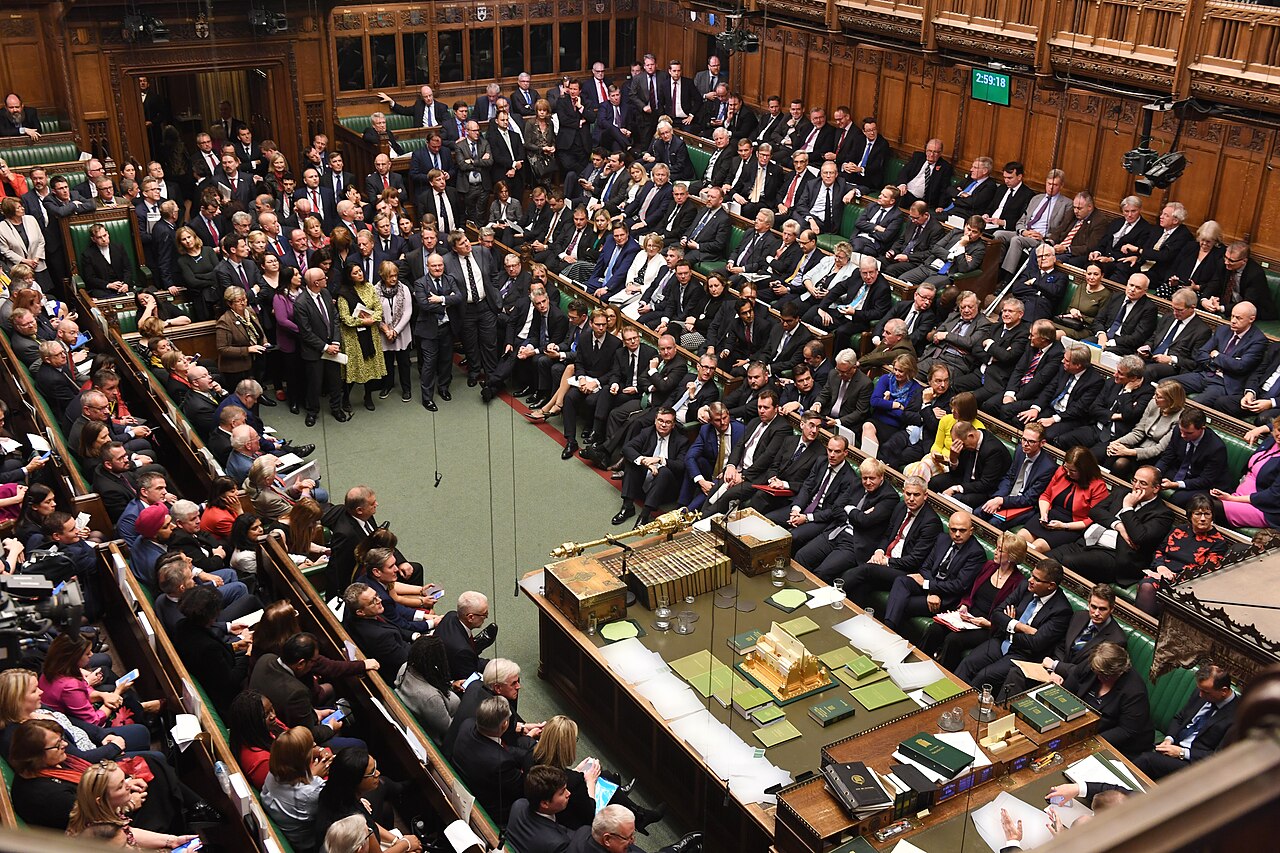
The UK’s Brexit referendum, held ten years ago on June 23, 2016, was the moment the EU’s liberal project crashed headfirst into democracy. The people who voted to remain in the EU were those who had benefited, the winners in the game of European integration, who cared more about liberal ends than democratic means. The people who voted to leave the EU were those the project had left behind, the UK equivalent of the hillbillies in JD Vance’s famous elegy.
A more traditionally English way of putting it is that the vote was a peasants’ revolt. The governing class overwhelmingly wanted to remain in the EU. The House of Commons, the House of Lords, the civil service, the Supreme Court, the Scottish Parliament, the UK Government of the day (the Conservative Party), and the Opposition (the Labour Party) all wanted and expected a remain vote. But democracy is not easy to tame, as Publius was at pains to point out, and, given its chance, it will bite back.
Where that leaves liberal democracy in Britain—or indeed in Europe—will take at least a generation to determine. Some laud the vote as the triumphant moment when a nation liberated itself, and some mourn it as an act of supreme democratic folly. It may be that there is truth in both claims. We used to think we could have both liberalism and democracy. Now, it seems, we in the West are increasingly forced to choose between them.
Adam Tomkins is John Millar Professor of Public Law at the University of Glasgow, UK. His most recent book is On the Law of Speaking Freely (Oxford, 2025).

The Brexit Vote Ten Years On
Some laud the Brexit vote as the triumphant moment when a nation liberated itself, and some mourn it as an act of supreme democratic folly.
Properly Honoring Slavery’s End
Designating Juneteenth as the federal holiday for emancipation is not only politically motivated but is historically imprecise.



.png)
Get the Civitas Outlook daily digest, plus new research and events.
Get the Civitas Outlook daily digest, plus new research and events.