The Forgotten Greenspan Great Moderation Legacy

Greenspan’s true legacy is the long stretch of prosperity he helped steward.
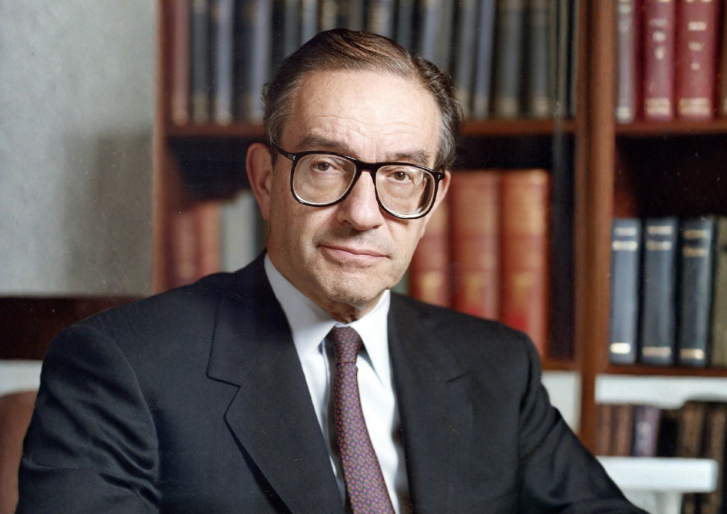
Alan Greenspan, who passed away this week at the age of 100, deserves to be remembered as one of the most consequential and successful central bankers in American history. His record speaks for itself, but it has too often been obscured by a misleading narrative about the 2008 financial crisis. For nearly two decades, he was known simply as ‘the Maestro’, a nickname Bob Woodward immortalized in his 2000 biography, which captured the reverence markets, presidents, and economists worldwide had for his stewardship of the American economy.
Greenspan’s interest in economics began at an early age. He was a touring jazz clarinet player. According to a 2019 interview with Greenspan, in 1944, while traveling with the Henry Jerome Orchestra, he performed at New Hampshire’s Mount Washington Hotel during the Bretton Woods Conference (the UN Monetary and Finance Conference). He would have been just one floor away from John Maynard Keynes and the international economic policymakers who would establish the world’s Bretton Woods fixed-exchange-rate system, which would last into the 1970s. Not long after, he decided to leave music (he had studied at Juilliard) and enter economics, something he would later call one of his best decisions.
After working as a private economist, joining Nixon’s campaign, and serving as Ford’s CEA chair, Greenspan was Fed chair for 18 and a half years under both Republican and Democratic Presidents. Initially appointed by Ronald Reagan, he was later reappointed by George H.W. Bush, Bill Clinton, and George W. Bush. That kind of bipartisan confidence in a Fed chair is itself a remarkable achievement, a testament to his credibility and his consistent focus on price stability and growth.
Milton Friedman, the great champion of monetarism and free markets, was famously skeptical of discretionary central banking. Yet he made an exception for Greenspan. While Friedman usually advocated strict monetary rules, he made an exception for Greenspan’s discretionary approach, ultimately writing in a 2006 Wall Street Journal op-ed that Greenspan’s performance was remarkable and had “set a standard” for central bankers worldwide. High praise from perhaps the most influential monetary economist of the twentieth century.
Greenspan oversaw the Fed during a time of great productivity gains in the 1990s, the era economists would come to call the Great Moderation,” a period of low inflation, steady growth, and declining macroeconomic volatility. Kevin Warsh faces a similar economic landscape today amid the rise of AI. Will productivity gains mean upward pressure on prices or downward pressure in the long run because of a positive shock to supply? Greenspan and Warsh both correctly believed that supply-side innovation is ultimately disinflationary, and that a rigid rules-based response to a productivity boom could choke off growth unnecessarily.
He also called the collapse of the tech bubble, albeit somewhat early, citing “Irrational Exuberance” in 1996, years before the bubble would burst in the early 2000s. That speech drew ridicule at the time as markets continued to surge for years, but his instinct was right, and his willingness to name the phenomenon publicly showed intellectual courage.
Later in life, after leaving office, Greenspan unfairly became associated with the housing market frothiness that preceded the global financial crisis. The pivotal moment came during his October 2008 testimony before the House Committee on Oversight and Government Reform, where Democratic lawmakers spent four hours grilling him. Under intense political pressure, Greenspan acknowledged a “flaw” in his belief that banks, acting in their own self-interest, would protect their shareholders adequately. That concession, seized upon by critics and amplified by the media, created the lasting but misleading impression that Greenspan was an architect of the crisis. In reality, the housing bubble was a global phenomenon driven by government induced demand for housing and failures across the entire banking system, failures that long predated Greenspan’s departure and involved many actors beyond the Fed. The Fed kept interest rates lower than it probably should have during the mid-2000s at the end of Greenspan’s tenure, but placing primary blame on Greenspan is both historically unfair and analytically convenient, a reductive verdict on a man the world had rightly called the Maestro. The lack of income verification by banks, federal mortgage subsidies, and insufficient capital on bank balance sheets all played a huge role.
Greenspan’s true legacy is the long stretch of prosperity he helped steward that featured low inflation, robust growth, and macroeconomic stability across nearly two decades. That record deserves to be the last word.
Jon Hartley is research fellow at the Civitas Institute, a Policy Fellow at the Hoover Institution, and senior fellow at the Foundation for Research on Equal Opportunity.

The Forgotten Greenspan Great Moderation Legacy
Alan Greenspan deserves to be remembered as one of the most consequential and successful central bankers in American history.

Can Socialist Fantasies Overtake the World?
Yes, if the unworldly philosophers at the Global Justice Project are allowed to have their way.

An AI Commencement Address That Might Not Elicit Boos
Someone has to dare to point the path forward in those communities. We need many more Nehemiahs.



Get the Civitas Outlook daily digest, plus new research and events.
Get the Civitas Outlook daily digest, plus new research and events.