

What Happiness Ought We Pursue? Natural Rights and the Declaration of Independence
What ought we do with the liberty the Declaration helps to secure?
Editor’s Note: The essay below is a slightly modified version of a lecture delivered by the author at a joint Civitas Institute and Pacific Legal Foundation conference titled America 250: Liberty, Law, and the Pursuit of Happiness.
Did the liberal political philosophy that animated the Declaration include a substantive understanding of happiness? Did the Declaration’s drafters believe the individual freedom that rights secure was for anything in particular? Are rights merely procedural concepts that leave the individual free, in the words of former Supreme Court Justice Anthony Kennedy, “to define one’s own concept of existence, of meaning, of the universe, and of the mystery of human life”?
“there is no truth more thoroughly established, than that there exists in the economy and course of nature, an indissoluble union between virtue and happiness.”
George Washington, First Inaugural Address, April 30, 1789
The Declaration of Independence famously declares that all men are endowed with certain inalienable rights, including the pursuit of happiness. But what ought we do with the liberty the Declaration helps to secure? Is there a substantive conception of happiness that the Declaration would have us pursue? Does the Declaration’s political philosophy secure only the freedom to pursue whatever the individual thinks will provide happiness, what scholars call the priority of the right over the good? Do the rights to life, liberty, and the pursuit of happiness mean, in other words, the freedom “to define one’s own concept of existence, of meaning, of the universe, and of the mystery of human life,” to quote former Supreme Court Justice Anthony Kennedy?
Justice Kennedy, I think, was wrong; the Declaration’s understanding of rights does not share his nihilistic conception of freedom. While the Declaration acknowledges that there may not be one single path that all individuals must travel, it protects freedom as a means to more fundamental ends. The Founders believed liberty to be an essential component of human excellence, but not an end in and of itself. The right to pursue happiness both reflects and respects the fundamental human condition: that human beings are meant to govern themselves in freedom according to the principles of justice.
The Nature of Natural Rights
We have a hard time understanding rights today because we sometimes think “rights are trumps.” If the right to free speech trumps the community’s laws limiting speech, then I have the right to say anything I want. But we know this is not true. Everyone understands that “you can’t yell fire in a crowded theater”; that is, you can’t knowingly say false things that put people in danger. Libel and slander, too, are not part of free speech. With a moment of thought, we understand that rights are not trumps; freedom has limits.
Sometimes we say that libel is an exception to the First Amendment’s protection of free speech or that legal limitations prohibiting pornography are exceptions to the general right of expression and freedom to publish whatever one wants. But properly speaking, libel and obscenity are not exceptions to our First Amendment rights; rather, they recognize that the rights of free speech and freedom of the press, like all rights, are bounded.
All natural rights have natural limits. Liberty is not license. Human beings are free and rational beings. We are to direct our freedom in light of our rationality. When the Founders recognized that “all men are created equal” and that all have been “endowed by the Creator with certain inalienable rights,” they recognized that human freedom is embedded within a larger moral order. Human beings are and ought to be free to direct their own lives because we possess the faculty of reason, which allows us to discern right and wrong and direct our actions accordingly. Our capacity to know and do what is right makes us morally responsible when we deliberately choose to do wrong. Man, unlike any other animal, is capable of justice.
We are also capable of injustice. Since the Fall, that is the human condition. We are capable of being moral and just, but also of committing profound injustices, as exemplified by Thomas Jefferson’s own life. Human excellence requires freedom, but freedom is not the end. Freedom points beyond itself to a moral life of deliberate conformity to the moral laws of nature and the will of God.
The Pursuit of Happiness and Duties to the Creator
A year after drafting the Declaration of Independence, Thomas Jefferson composed the initial draft of what would become the 1786 Virginia Statute of Religious Freedom. The Declaration’s political philosophy should be understood with reference to the Founders’ commitment to religious freedom. The Declaration announces that the proper role of government is limited to the securing of rights, in part, so that individuals can fulfill their obligations to the Creator.
Just as the capacities of reason and freedom make us moral beings, they endow us with the capacity to love. Human beings have the capacity for devotion – to love God with all of one’s heart, soul, and mind. But love and devotion must be freely given. They cannot be coerced. The very nature of love is the free gift of oneself.
Any genuine religious devotion thus requires liberty. “What is here a right towards men is a duty towards the Creator,” James Madison wrote in 1785, while advocating for Jefferson’s statute. “It is the duty of every man,” Madison continued, “to render to the Creator such homage and such only as he believes to be acceptable to him.” Our religious duties to God generate our rights among men. A just political order limits itself to protecting the rights of life, liberty, and the pursuit of happiness, so individuals can worship their Creator in conviction and conscience. The separation of church and state is not meant to foster a secular political order and agnosticism toward God, as it is too often portrayed. Rather, the state is separated from the church because the state lacks religious authority and should never be tempted to assume it. The separation of church and state is meant to protect religious liberty, and the purpose of religious liberty is to secure the conditions under which individuals can discern and fulfill their obligations to God.
Political Freedom and Human Excellence
What is true about religious devotion is also true about morality in general: virtue requires freedom. It makes no sense to call someone honest or brave if she has no option to be otherwise. All the virtues require instruction, habituation, correction, and guidance. These ought to be supplied first and foremost by parents when we are children, and then, as we mature, by our friends, mentors, pastors, priests, and rabbis. Law, of course, has a place. It sets fixed boundaries and punishes wrongdoing; it teaches via norms and incentives. But law alone cannot make citizens virtuous, as that requires self-mastery and deliberation, the free choice to do what is morally right because it is morally right. True human excellence requires freedom.
Your right to pursue happiness, properly understood, is your right to pursue excellence, to become the person you were created to be. The freedom to choose, for example, the responsibilities of marriage and parenthood. The freedom to work, so you can provide for your family, contribute to your community, and hone your talents in meaningful ways. And the freedom to give what thanks and worship you and your religious tradition understand to be due to the Creator. The right to pursue happiness, ultimately, is the liberty to cultivate a noble and choice-worthy life.
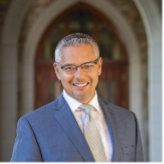
Vincent Phillip Muñoz is the Tocqueville Professor of Political Science and Concurrent Professor of Law at the University of Notre Dame. He is also the Founding Director of ND’s Center for Citizenship & Constitutional Government. His most recent book, Religious Liberty and the American Founding: Natural Rights and the Original Meanings of the First Amendment Religion Clauses (2022), was published by the University of Chicago Press.

.png)
An Unsurprising Term from an Unsurprising Court
The Supreme Court decided almost every case as observers predicted.
.png)
Farewell to the President’s New East Wing
Both Congress and the President have acted in violation of the public trust doctrine.

The Constitution and Birthright Citizenship: A Rejoinder to Professor Yoo
Foreigners can come to America and become “Americans” not by their mere presence on American soil but by embracing the principles upon which this country was founded.

.jpg)
.png)



Get the Civitas Outlook daily digest, plus new research and events.
Get the Civitas Outlook daily digest, plus new research and events.