US, China, and Latin America Relations: Challenges and Opportunities

China’s assertive rise and U.S. protectionism place Latin America at a crossroads, as it balances investments and political influence from both powers while striving to maintain autonomy and long-term development stability.
Following the fall of the Berlin Wall, Francis Fukuyama famously coined the phrase “the end of history” to characterize a new epoch marked by liberal democracy and American-style capitalism’s perceived triumph over Soviet communism. Several decades later, however, this assertion appears increasingly contested, as the United States no longer holds unchallenged dominance in the global arena of ideas and geopolitics.
The End of the “End of History”
China—alongside Russia, asserting its influence from its Eurasian position—has increasingly positioned itself as a challenger to the United States’s once-undisputed global leadership. Once regarded as the West’s “spoiled child,” China’s U.S.-supported accession to the World Trade Organization in 2001 marked a pivotal moment in its ascent. Today, the Asian power openly contests American authority on the world stage. It is essential to recognize that China’s civilizational heritage spans over 5,100 years—well preceding the People’s Republic’s establishment in 1949. In recent decades, China has emerged as a rapidly growing economic power, attracting substantial foreign direct investment, particularly from the U.S., due to its political stability, manufacturing reliability, high productivity, and cost competitiveness relative to Western economies.
This solid economic foundation has enabled China to shift from a defensive posture to a more assertive and expansionist global role. Its geopolitical and geoeconomic engagement in Latin America exemplifies a deliberate long-term strategy aimed at extending its global influence. Under Xi Jinping’s leadership, China has become increasingly aware of its strategic imperative to secure access to markets and natural resources to sustain its over 1.4 billion people, nearly one-fifth of the world’s population. At the same time, China’s political system, rooted in an authoritarian model, stands in stark contrast to the West’s republican democracies. Various international assessments, such as those produced by the non-governmental organization Freedom House, consistently rank China as “not free” in terms of civil and political liberties. This assessment underscores the profound ideological divergence between the Chinese model and the democratic norms many Western nations uphold.
In contrast, the United States has pursued a foreign policy shaped by the imperatives of transparency and the institutional constraints inherent in its democratic system, where each incoming administration often shifts priorities and strategies. Within this framework, principles such as “America for the Americans,” which underpinned the Monroe Doctrine of 1823, sought to limit European involvement in the Western Hemisphere. Over time, however, this doctrine evolved into a policy more focused on fostering private-sector cooperation, particularly in the context of U.S. engagement with Latin America.
Today, the United States remains the leading source of foreign direct investment (F.D.I.) in Latin America, followed by Spain and the Netherlands. In 1994, the U.S. sought to deepen economic integration across the hemisphere through the proposed Free Trade Area of the Americas (FTAA). The initiative did not, however, progress beyond its early stages and triggered intense nationalist backlash in several countries, most notably Venezuela, where President Hugo Chávez denounced the FTAA as "a new attempt at invasion and colonialism." His infamous phrase, “FTAA? ¡Al carajo!”, became emblematic of the widespread opposition in parts of the region. In the wake of this setback, the United States shifted its approach, pursuing a series of bilateral and regional trade agreements. Among the most significant are the North American Free Trade Agreement (NAFTA) with Mexico and Canada, and the Dominican Republic–Central America Free Trade Agreement (CAFTA-DR), which includes Costa Rica, El Salvador, Guatemala, Honduras, Nicaragua, and the Dominican Republic.
Trump’s New Game
These U.S. initiatives were rooted in the post–World War II logic that free trade would serve as the nation’s most effective ambassador, promoting peace, prosperity, and reducing authoritarianism’s global appeal. China’s rise, however, has introduced a far more rapid and assertive development strategy that contrasts starkly with the more cautious diplomatic approaches Western powers traditionally favor. China’s lack of institutional constraints and the absence of clear separations among its branches of power have enabled it to act with greater speed and decisiveness than the United States. Strategic Chinese investments in important infrastructure—such as ports, cold storage facilities, railroads, and energy projects—underscore its commitment to building a “global silk road” aimed at expanding its economic and geopolitical influence.
Since Donald Trump’s election to a second term, U.S. trade policy has taken a marked turn toward protectionism. His administration’s withdrawal from the Trans-Pacific Partnership (T.P.P.) and the renegotiation of the North American Free Trade Agreement (NAFTA) reflected a broader shift toward prioritizing domestic economic interests over multilateral commitments. This “America First” approach has introduced a degree of uncertainty, particularly in Latin America, where many governments fear that reduced access to the U.S. market could adversely affect their export-driven economies.
Latin America finds itself at a crossroads amid China’s growing influence and the United States’s turn toward protectionism, which places the region in a complex and delicate position. Latin American countries are increasingly compelled to navigate among competing global powers to diversify their economic and political partnerships. China offers large-scale investments with fewer governance and transparency conditions than Western democracies typically demand, but the United States remains a key trade and investment partner, albeit with a more isolationist posture. The region’s challenge lies in managing this strategic rivalry without compromising its autonomy and ability to negotiate balanced agreements that serve Latin America’s development goals, without becoming overly dependent on either superpower. Successfully walking this tightrope will be critical for ensuring the region’s long-term prosperity and geopolitical stability.
Gabriel Gasave is director of the Center for Global Prosperity at the Independent Institute and a member of BeLatin. He received his master’s degree in economics and business administration from the Graduate School of Economics and Business Administration (ESEADE) in Buenos Aires and his law degree from the University of Buenos Aires.
Martin Simonetta is executive director of Fundación Atlas para una Sociedad Libre. He holds a bachelor’s degree in international relations (Universidad del Salvador) and an M.A in International Economic Policy. (Universidad de Belgrano). He has completed a Graduate Program in Positive Psychology (Fundación Foro).


On Debt: Two Honest Measures, Two Different Questions
A response to Thomas Savidge's '“Full Faith and Credit” Means a Claim on America.'

Social Mobility Wins
When people live within an environment offering good jobs, good education, social networks, and a culture of self-improvement and hard work, they experience progress in a way that undercuts the philosophical rationale that socialists need to justify the policies they advocate.
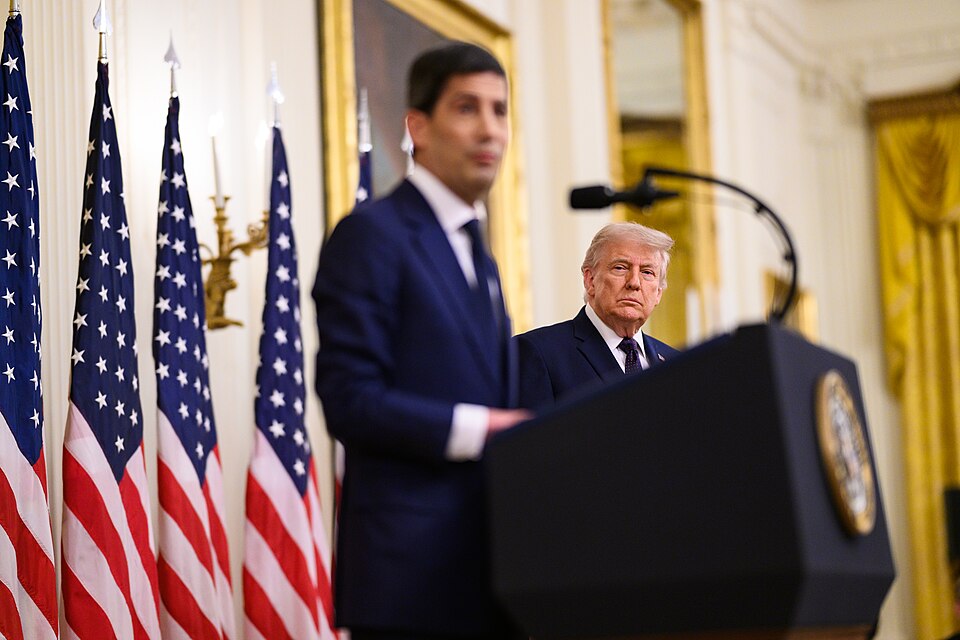
Kevin Warsh and the Future of Fed Communication
Warsh is right that the Federal Reserve should not speak so loudly that it hears only its own echo.




Get the Civitas Outlook daily digest, plus new research and events.
Get the Civitas Outlook daily digest, plus new research and events.