Trump Refights the “War” That Congress and the Burger Court “Waged” Against President Nixon’s Tapes

The OLC's opinion will frustrate, rather than extend, the dangerous cycle of presidential lawfare.
In our current chaotic legal order, it is easy to get lost amid short-term controversies that will likely not endure beyond the present moment. Other far more enduring issues, however, often fly below the radar and garner little interest. Specifically, tensions between the legislative and executive departments persist regardless of which political party is in power. In modern American history, the greatest realignment of powers occurred in the wake of Watergate. Congress responded to President Nixon’s actions by imposing greater oversight over the executive branch and the political process more generally. Presidents Gerald Ford and Jimmy Carter acquiesced to these restrictions. And the Burger Court, stacked with four Nixon appointees, upheld these expansions of legislative authority. In a Civitas Outlook essay from October, I explored how President Trump was refighting the “war” that Congress and the Burger Court “waged” against President Nixon in the context of presidential spending. The latest front in this war centers on presidential records.
Most law students learn that the Supreme Court ordered President Nixon to turn over his secret Oval Office recordings to the Watergate Special Prosecutor. United States v. Nixon (1974) directly led to the president’s resignation two weeks later. But far fewer students study the fights over the recordings after Nixon resigned. Congress asserted control over all of Nixon’s records and those of all future Presidents. However, a recent opinion from the Office of Legal Counsel argues that these five-decade-old laws were unconstitutional. Going forward, Trump will assert his own authority over his own papers, notwithstanding how the Watergate Congress tried to hamstring Nixon.
United States v. Nixon (1974) was one of the Supreme Court’s most significant separation of powers decisions. The case arose when Leon Jaworski, the Watergate Special Prosecutor, issued a subpoena to President Nixon to turn over 64 taped Oval Office conversations. These recordings were requested as evidence for the prosecution of Nixon’s associates. On July 24, 1974, the Supreme Court ruled that Nixon must turn over the tapes to the special prosecutor. This ruling turned out to be the final straw of Nixon’s downfall. Two weeks later, President Nixon resigned.
United States v. Nixon (1974) was largely a byproduct of the chaotic Watergate era. The Justices, like the rest of America, were swept up in Watergate hysteria and issued a decision that would not withstand the test of time. For starters, the Watergate Special Prosecutor was a member of the executive branch. The federal courts had no business deciding what was, in effect, an intrabranch dispute. Moreover, the analysis of presidential privilege gave short thrift to the executive’s important role in the separation of powers. I have called on the Court to reconsider United States v. Nixon, which was an early manifestation of lawfare. Trump v. United States (2024) granted President Trump broad immunity from criminal prosecutions and scaled back the import of the Watergate Tapes case.
As bad as United States v. Nixon was, the war between the executive and legislative branches did not conclude with resignation. Former-President Nixon reached an agreement with the Administrator of General Services to transport more than 40 million pages of documents and nearly 900 tape recordings to a government facility near Nixon’s home in California. Under the agreement, Nixon retained the right to direct the Administrator to destroy tapes. In response, Congress enacted the Presidential Recordings and Materials Preservation Act (PRMPA). This law purported to nullify the agreement between Nixon and the Administrator. Nixon could no longer order the destruction of tapes, which would be made available to the Watergate Special Prosecutor.
The Supreme Court upheld the constitutionality of the PRMPA in Nixon v. Administrator of General Services (1977). The analysis here is doubtful. As a threshold matter, the law punished one and only one person: Richard Nixon. This law would seem to be a prohibited Bill of Attainder. But Justice Brennan’s majority opinion put forward a novel multi-factor test that gerrymandered the Bill of Attainder standard to exclude the PRMPA. Moreover, the Court discounted the risk that releasing these records could have on the executive branch’s deliberations. Advisors might be cautious to give candid advice if their remarks will be disclosed to the public. The separation of powers analysis in Administrator was the proverbial ticket that was good for only one ride.
Something else was afoot in this case. Indeed, Justice Brennan nodded to the Watergate crisis. The Court stressed the importance of “restor[ing] public confidence in our political processes by preserving the materials as a source for facilitating a full airing of the events leading to [Nixon]’s resignation and Congress’ need to understand how those political processes had in fact operated in order to gauge the necessity for remedial legislation.” The Court added that Congress’s power to regulate such documents was “augmented” by the PRMPA’s “important interests.” In other words, the separation of powers analysis turned on the perceived need to preserve Nixon’s secret recordings to calm public unease over Watergate. None of these factors should have been relevant to the Court’s decision, but it is clear what motivated the reasoning of both the PRMPA and the Justices. Before there was Trump Derangement Syndrome, there was Nixon Derangement Syndrome.
The Watergate hangover got even worse. In 1978, Congress enacted the Presidential Records Act of 1978 (“PRA”). This broad law provides that all presidential records belong to the United States, and not to the President. To grossly oversimplify, nearly every relevant scrap of paper that the President touches must be deposited with the federal government when the administration concludes. With narrow exceptions, these documents will eventually become public.
While the PRMPA was narrow legislation that targeted only President Nixon, the PRA applied prospectively to all presidents. And while the PRMPA arguably applied to the specific concern that President Nixon might destroy documents that were relevant to ongoing prosecutions, the PRA was enacted without any actual legislative concern. The law would operate in perpetuity to control the executive branch’s actions. The President is not like some other administrative agency that Congress created, and can therefore compel the production of documents. The presidency was created by the Constitution itself. Congress simply lacks the sweeping power to order the President to take these actions during his administration and to force him to surrender his documents when his term concludes.
More precisely, the PRA flatly violates recent Supreme Court precedent. In Trump v. Mazars (2020), the Supreme Court, by a 7-2 vote, ruled that Congress needed a valid legislative purpose to subpoena Trump’s financial records from before his term began. In other words, Congress had to provide “detailed and substantial” evidence that access to the documents would assist Congress in enacting certain legislation. Congress lacks a free-floating power to demand documents from the President. However, as the Office of Legal Counsel observed, the PRA had no “detailed and substantial” purpose. Congress in 1978 “did not identify any contemplated legislation that it could better evaluate with access to the President’s papers.” Rather, “the PRA obliges the President—and all future Presidents—to create and disclose wide swaths of information, regardless of whether that information serves contemplated legislation.” This law even applies to documents concerning the President’s “exclusive” authorities, such as granting pardons, recognizing foreign nations, and issuing vetoes. Congress has no business meddling with these preclusive powers.
In short, Congress demanded documents that had not yet been created from not yet elected presidents for not yet specified reasons. The PRA squarely violates the rule in Mazars. Keep in mind that in 1977, the Supreme Court had not begun its restoration of the separation of powers. OLC stated that Administrator “reflects the “ancien regime” of the Court’s “mid-twentieth century” approach to separation of powers, not the more thoughtful approach appropriately required by subsequent developments in Supreme Court doctrine.” Should Congress ever need papers from a specific President for a specific purpose, it can issue a narrowly-tailored subpoena, in support of a valid legislative purpose, that satisfies the Mazars test. (I remain persuaded by Justice Thomas’s Mazars dissent, finding that such a congressional subpoena to the President can never be valid.) But the omniscient PRA cannot withstand constitutional muster.
The separation of powers problems with the PRA are striking. But the risk for political abuse is even worse. The PRA would have a meaningful effect only on a former President who does not comply with the law after his term concludes. A sitting President would be immune from prosecution or other civil enforcement actions under the PRA. It would necessarily fall to the incumbent administration to decide whether to take action against the prior President for violating the PRA.
Indeed, that is effectively what happened during the Biden Administration. OLC observed, “attempts have been made to subject a former President to criminal liability for his handling of presidential records that, for most of this Nation’s history, would have been subject to his complete discretion.” Special Counsel Jack Smith prosecuted former-President Trump for storing certain presidential documents at Mar-A-Lago. The PRA was not directly at issue, but Smith charged Trump with possessing allegedly classified documents. Trump countered that he declassified the documents before this term concluded. The Supreme Court upheld the PRMPA in Nixon v. Administrator of General Services (Administrator), but the Justices have not yet interpreted the PRA. The constitutionality of the PRA might have arisen in Smith’s prosecution of Trump, but the Supreme Court’s ruling on presidential immunity postponed that decision. Still, the Trump Administration was not content to idly wait until 2029.
On April 1, 2026, the Department of Justice’s Office of Legal Counsel (OLC) issued an opinion concluding that the PRA was unconstitutional. OLC pointed out, as noted above, that the PRA was inconsistent with Mazars, PRMPA was a novel intrusion on executive powers, and further that Administrator was wrongly decided. It is not common for the executive branch to publicly opine that a five-decade-old statute is unconstitutional. It is even less common for OLC to conclude that a Supreme Court decision was “wrong.” But on both fronts, OLC is correct. Here, the executive branch took an important step in restoring the separation of powers, a balance that had been severely altered by the Watergate Congress and the Burger Court.
OLC wryly pointed out that the Supreme Court would likely disapprove of a Judicial Records Act requiring the preservation of the Justices’ papers. Under longstanding practice, Justices have complete power over when and how to release their records. Justice David Souter blocked the release of his papers until fifty years after his death in the year 2075. Justice Hugo Black told his son to burn some of his records, but the son did not follow his wishes. Many of them wound up in the Library of Congress.
This OLC opinion is the sort of government document that might otherwise fly under the radar, but it is very significant. President Trump’s term will come to an end, but the institution of the presidency will endure, hopefully, for at least another 250 years. OLC attempts to claw back presidential power that was stolen by Congress during a period of tumult, when Presidents Ford and Carter, as well as the Burger Court, were afraid to push back against Congress. OLC wrote, “[t]he seeming acquiescence of the Executive Branch since the PRA’s enactment may be motivated by nothing more than discretionary choices to avoid an interbranch conflict.” OLC took a different position: “Encroachments operate as a one-way ratchet—what the Executive tolerates today becomes a baseline for further incursions tomorrow, slowly but inexorably altering the structure the Constitution establishes.” OLC concluded, “the PRA is unconstitutional, and the President need not further comply with its dictates.”
This opinion, by itself, has no immediate legal effect. Again, the PRA only has a meaningful effect after a President leaves office. (Unsurprisingly, there is already litigation afoot to try to halt this policy.) But the upshot of this opinion is that President Trump and his administration will not feel compelled to comply with the PRA. He will keep whichever documents he preserves, perhaps to be maintained at the future skyscraper Presidential Library in downtown Miami. It will turn to a future administration to decide whether to launch a Jack Smith redux and prosecute a predecessor President. The better course would be for future administrations to agree that PRA is unconstitutional and let these matters go. OLC’s opinion will frustrate, rather than extend, the dangerous cycle of presidential lawfare.
Josh Blackman holds the Centennial Chair of Constitutional Law at the South Texas College of Law Houston, is a contributing editor to Civitas Outlook, and is an adjunct fellow at the Manhattan Institute.

.jpg)
The Declaration Symposium
Civitas Symposium featuring Gregory Collins, Aaron Nielson, Joseph Postell, and John Yoo
The Birthright Citizenship Decision Will Not End the Birthright Citizenship Debate
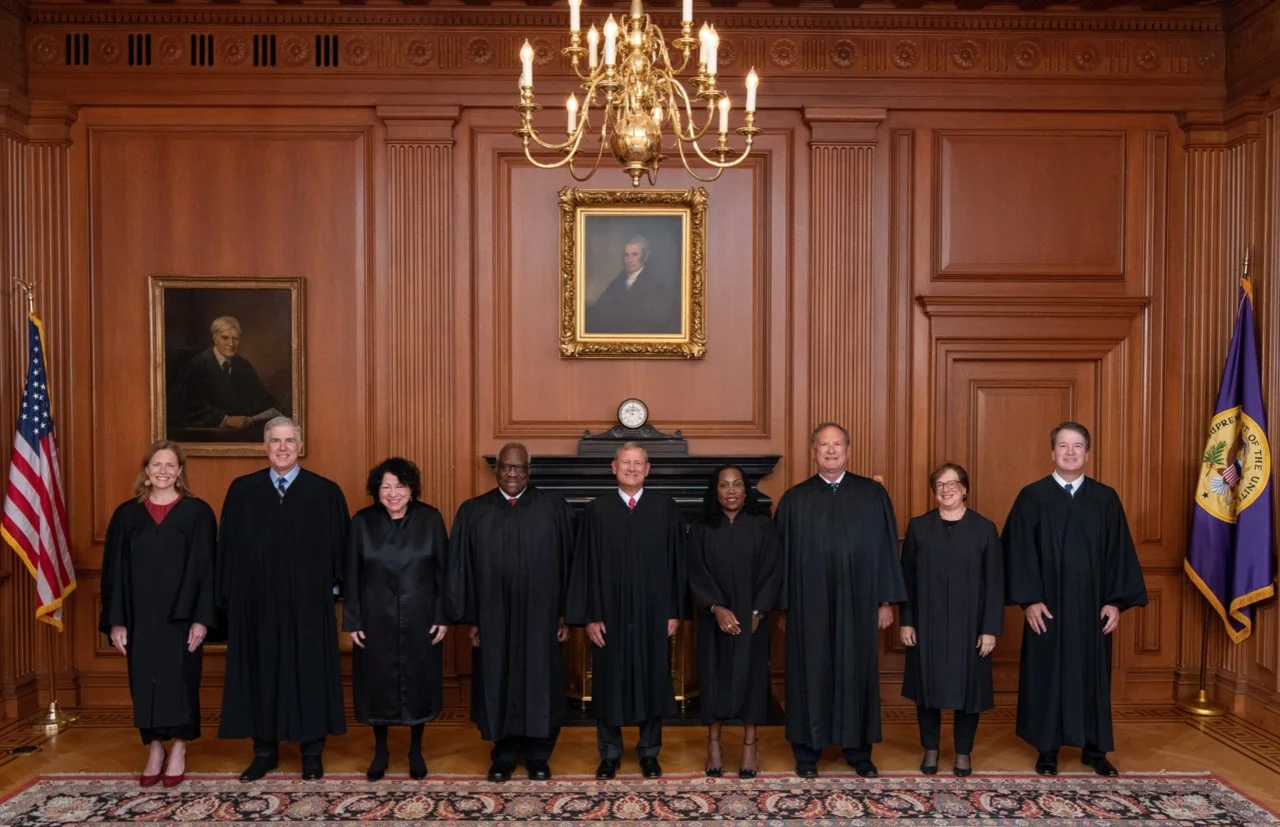
It is unlikely that Trump v. Barbara ended the debate over birthright citizenship. It may have truly started it.
The Declaration and Tradition
As we approach America’s 250th anniversary, we should reflect upon and appreciate the Declaration’s opening paragraphs—but we should not forget to remember the rest of the document or the context in which it was created.

.JPG)


Civitas Outlook


Get the Civitas Outlook daily digest, plus new research and events.
Civitas Outlook
Get the Civitas Outlook daily digest, plus new research and events.