Courting Tyranny

The originalist response to Roe and a host of other decisions strengthened American constitutionalism, spurring a revival of careful legal thought.
“For I agree that ‘there is no liberty, if the power of judging be not separated from the legislative and executive powers.’” Americans should heed Alexander Hamilton’s warning in Federalist 78. Judicial independence and legitimacy are about liberty. When politicians and government officials fulminate about the politicization of courts, they only contribute to the judicial politicization they claim to oppose, and thus court tyranny.
The Framers understood that, while government exists to secure the rights with which individuals are “endowed by their Creator,” it is also always a threat to those rights. Through the Constitution, the Framers designed the federal government to limit the threat the government poses to liberty.
The Constitution is thus, as law professor Randy Barnett has said, “the law that governs those who govern us,” constraining the authority of the government to preserve the liberty of the people. This rule of law, the supremacy of an authority higher than government officials or even the majoritarian will, is thus a fundamental principle of republican government.
Under the Constitution, the political branches of government, Congress and the President, enact, with important limitations, the political will of the people and the states. The role of the federal courts in this system is to ensure that the political branches are kept “within the limits assigned to their authority,” and thereby to preserve liberty. As Hamilton’s Federalist 78 explained, limitations on government power “can be preserved in practice no other way than through the medium of the courts of justice; whose duty it must be to declare all acts contrary to the manifest tenor of the constitution void.” Without this judicial check, the Constitution’s protections for liberty “would amount to nothing.”
As Hamilton understood, without the courts, there would be no rule of law and thus no liberty. However, when courts themselves become political, that is, when they rubber stamp laws enacting policies they like and strike down valid laws that enact policies they do not, rather than applying the law as written, they facilitate and exacerbate government abuse. On the other hand, when they apply the law as written, they preserve the rule of law on behalf of the people, acting as a backstop against illegal government action.
In recent years, politicians and other officials have frequently accused courts of politicized decision making. But when they do so absent careful and dispassionate analysis, they only pave the way for the politicization of the courts.
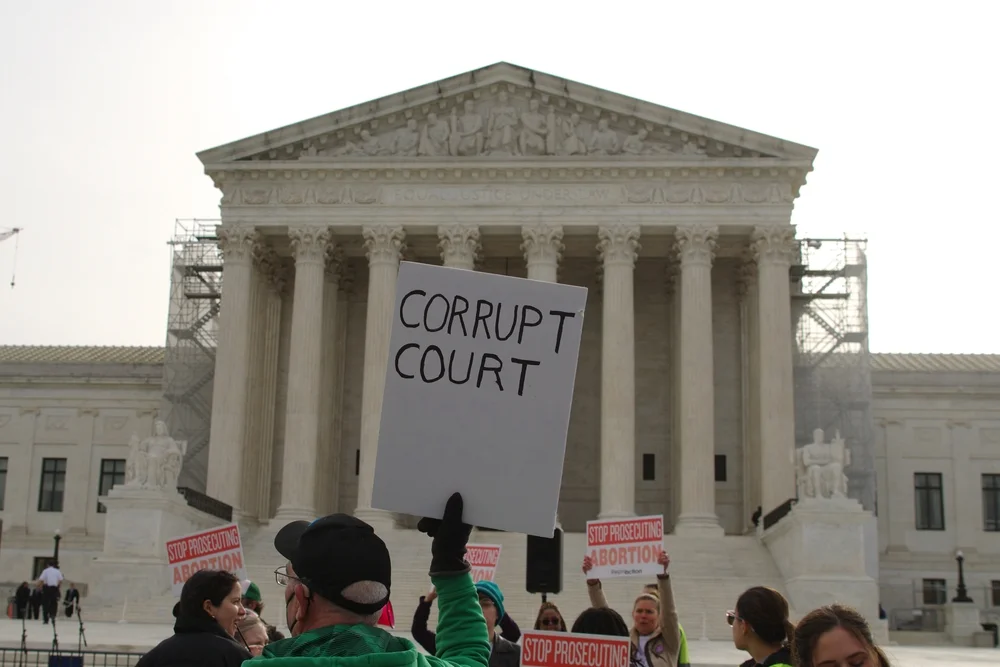
During the Biden Administration, some members of Congress and commentators called for court packing and other “reforms” meant to lessen the authority of the currently more conservative Court. In 2021, members of Congress introduced a bill to add four seats to the Court, which the bill’s sponsors said was necessary to restore “balance” to the Court.
Politicians and commentators later seized on the Court’s 2022 decision in Dobbs v. Jackson Women’s Health overturning Roe v. Wade as an opportunity to renew their calls for court packing.
In 2023, specifically in response to “the Supreme Court’s decision to block the Biden Administration’s Student Debt Relief Plan,” Representatives Ro Khanna of California and Don Beyer of Virginia introduced legislation to impose unconstitutional term limits on Supreme Court justices.
Representative Khanna said the Court’s decision on President Biden’s student loan forgiveness edict, “demonstrate[d] how justices have become partisan and out of step with the American public.” Five other representatives issued statements in which they accused the Court of being “politicized,” or as Representative Adam Schiff of California put it, “deeply politicized.”
Conservatives rightly objected to these efforts, and the 2024 Republican Party Platform included a promise to “block” Democrat court packing efforts “at every turn.”
Yet, since the start of the second Trump Administration, many on the right have done their part to weaken public trust in the judiciary.
When the Court of International Trade found that the President’s tariffs under the International Emergency Economic Powers Act (IEEPA) exceeded his power, Stephen Miller, Trump’s deputy chief of staff, posted on X, “We are living under a judicial tyranny.” In fact, a word search of “tyranny” on Miller’s X account reveals 20 posts that use the word, all about judges or their decisions.
When the Federal Circuit agreed with the Court of International Trade that the President’s IEEPA tariffs were unlawful, the President posted on Truth Social, calling the Federal Circuit a “Highly Partisan Appeals Court,” and claimed that, “[i]f allowed to stand,” the court’s “Decision would literally destroy the United States of America.”
Of course, the Supreme Court allowed the decision to stand (though, without the foretold destruction). In response to the Court’s decision, President Trump accused the Justices in the majority of being “very unpatriotic and disloyal to our Constitution;” of being “swayed by foreign interests.” He said that their decision “must have been [made] to protect other countries.”
White House Press Secretary Karoline Leavitt, in response to judicial action pausing elements of the administration’s agenda, wrote in an X post on March 19, 2025, “These judicial activists want to unilaterally stop President Trump from deporting foreign terrorists, hiring and firing Executive Branch employees, and determining the readiness of our troops.” Her post concluded, “They MUST be reined in.”
Some of the decisions Leavitt criticized were undoubtedly instances of bad judging. The question is, how should public officials respond to such decisions?
When politicians denounce the courts as political actors, they prime the American people to accept efforts to counter that supposed politicization. After all, why should Americans or their elected officials respect the decisions of a judiciary that is “deeply politicized,” out of “balance” with the American people, opposed to the deport[ation of] foreign terrorists,” tyrann[ical],” destroying America, “unpatriotic and disloyal to our Constitution,” and making decisions “to protect other countries”? Surely Americans cannot expect their officials to sit idly by while these usurpers destroy America and the Constitution.
Of course, everyone knows that the most scurrilous of these charges are wild exaggerations. Yet their effect is to lead Americans to welcome the very politicization of the courts that these politicians and officials inveigh against.
Such measures as court packing or ignoring judicial determinations, politicians and officials imply, are necessary to take back power from “activist judges.” In fact, either the sidelining of the judiciary altogether or the installation of “activist judges” who serve the interests of those in power would destroy the judiciary's effectiveness.
Patriots should decline this invitation to “chop down all the laws” in America, to borrow a phrase from Robert Bolt’s A Man for All Seasons. Where will the American people stand when, all the courts having been chopped down, the government turns round on them? The courts, like the Constitution that provides for them, are there for Americans’ “own safety’s sake.”
The answer to bad judging is neither to exacerbate it nor to ignore it, but instead to meet it with careful and thoughtful criticism. By demonstrating that there are constitutional and textual standards by which to weigh judicial decisions, such careful criticism can strengthen and rejuvenate the judiciary and, by extension, the constitutional system of government as a whole. The pro-life and originalist movements serve as a striking example of this principle in action.
The Court’s decision in Roe v. Wade helped expose a major problem in how judges thought about the law to the American public. Rather than applying it as written, the Court was exercising discretion to change the law under the guidance of “living constitutionalism,” the progressive legal theory that judges must “update” the Constitution to reflect modern thinking.
In response to Roe and other judicial overreach, lawyers, including Attorney General Ed Meese, developed, refined, and implemented originalism, the idea that courts should apply the Constitution according to the meaning it had when it was enacted. Originalism holds that a law’s meaning is objective and can be determined by assessing evidence of the meaning of its language at the time of its adoption.
Living constitutionalist judges are politicized judges, changing the law according to their own values. Originalist judges, on the other hand, enforce the rule of law by applying the law as written, not as they wish it were. Such a judge keeps both the political branches and the courts “within the limits assigned to their authority,” to return to Hamilton.
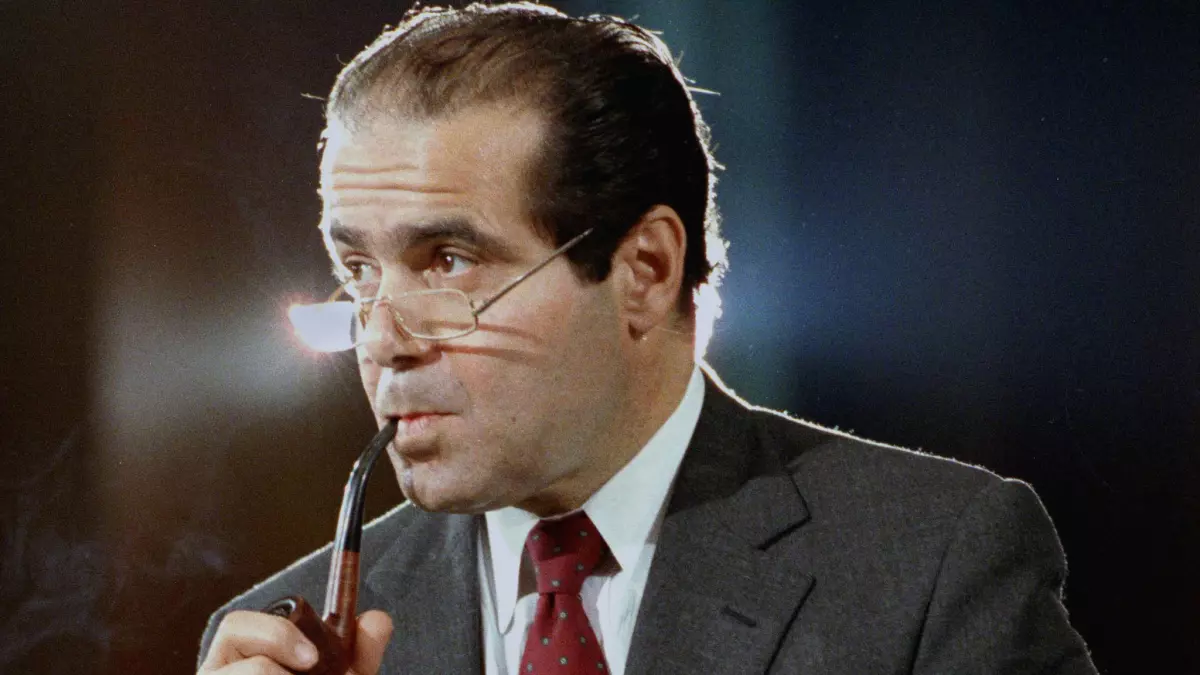
The originalist movement has been highly effective, but that success was a long time in the making. In the 1980s, Meese directed lawyers in the Department of Justice to make originalist arguments even if they were unlikely to carry the day. Over the decades, through the advocacy of people like Meese, Justice Antonin Scalia, and a growing cadre of legal academic thinkers, originalism became mainstream and seemingly de rigueur. Today, an attorney’s failure to make an available originalist argument might verge on malpractice.
In response to judicial decisions grounded in progressive philosophy, Americans who believed in constitutional meaning fought not for outcomes but to build a judicial culture grounded in the rule of law. Originalism does not produce outcomes that either conservatives or liberals will always be happy with. But it is the only system by which both judges and the people’s representatives can be restrained to their proper roles.
In the long run, the originalist response to Roe and a host of other decisions strengthened American constitutionalism, spurring a revival of careful legal thought.
Contrary to the fulmination of many politicians over the last several years, America’s federal courts are not, by and large, politicized. And for bad lower-court decisions, there is an appeals process that culminates in the Supreme Court, which is clearly willing to rule both for and against Presidents of both parties.
The system, being of human operation and origin as it must be, does not, and cannot be expected to, provide the perfect answer in every case. But it is undoubtedly susceptible to improvement, as the pro-life and originalist movements show. Those who would lead Americans to abandon respect for the judicial system seek a shortcut to greater power, not the preservation of liberty.
Politicians who care about preserving American freedom and greatness for another 250 years should speak and write in ways that strengthen Americans’ confidence in the judiciary. Americans, whose liberties the courts exist to protect, must demand nothing less.
Timothy Harper is the Director of Constitutional Studies at Advancing American Freedom.


How to Shorten SCOTUS Oral Argument
Why not give the Justices an allotment of “extra” time to spend as they will across the term?
The Fifth Circuit’s Chance to Expose the Inflation Reduction Act’s Unconstitutionality
Despite the mounting evidence of harm, the Medicare Drug Price Negotiation Program remains law — and the Justice Department continues to defend it in federal court.
.webp)

.png)


Get the Civitas Outlook daily digest, plus new research and events.
Get the Civitas Outlook daily digest, plus new research and events.