

Cut Licensing, Cut Prices, Embrace AI

AI collapses distance, accelerates retraining, and amplifies human expertise — but only if legal barriers do not trap talent behind state lines.
Rent, health care, and groceries all seem more expensive than they should be, and voters are demanding answers. Lawmakers and pundits have responded, perhaps predictably, by searching frantically for a politically convenient target, among them artificial intelligence, self-interested corporations, and, invariably, the opposing party. But there’s a quiet and much more practical reform that could win support from both sides and truly bring down prices: occupational licensing.
The people of Arizona are doing just fine since taking on licensing reform. Seven years after the state adopted a universal licensing recognition framework that lowers barriers for out-of-state license holders to work in Arizona, the sky hasn’t fallen. Residents there have yet to experience a decline in medical care, legal representation, or veterinary visits. And by allowing many out-of-state professionals to obtain Arizona licenses more easily, the state has reduced regulatory hurdles that act as a hidden tax on consumers, estimated at 3-16 percent.
The fact that the desert sky has not fallen in Arizona is not unsurprising. Despite overheated claims that loosening licensing laws will usher in a wave of unqualified professionals preying on hoodwinked consumers, researchers can point to “a growing body of evidence [that] indicates that licensing may have no effect on [service] quality, or may even worsen quality as providers face less competitive pressure from their peers.”
What’s actually surprising is that universal licensing reform has yet to reach all 50 states. Indeed, it’s becoming increasingly necessary.
The case for allowing licensed professionals to compete across state lines is strong enough on traditional labor market grounds, but AI and emerging technologies make it overwhelming. State-based licensing was built on assumptions that are rapidly becoming obsolete. Special knowledge of a single state’s legal code, building standards, and regulatory environment once took years to acquire. Now, AI tools can dramatically shorten that learning curve.
Geographic proximity to clients was once essential for delivering professional services; now, virtual platforms, AI-assisted diagnostics, and remote collaboration tools make a professional’s physical location increasingly irrelevant to the quality of their work. When a veterinary specialist can use AI to consult on complex cases across state lines, or when an AI-powered platform can match skilled tradespeople with projects anywhere in the country, each day of outdated licensing restrictions amounts to a loss in economic value and social well-being.
Yet even if those technologies render licensing regimes increasingly obsolete, these laws still pose a real danger to consumers by actively preventing beneficial technology from reaching the market. If every AI-enabled professional services platform must clear 50 different licensing hurdles before connecting qualified practitioners with those who need them, many of those platforms simply won’t be built, at least in the United States.
States that have piloted regulatory sandboxes for licensing reform have learned an important lesson: you can lower barriers to entry and innovation without sacrificing public safety. But the sandbox model only goes so far. Universal licensing recognition takes that proven insight and scales it to match the scope of the technological transformation already underway.
Future Americans would win under a universal licensing arrangement because increased labor mobility would sustain the dynamic economy necessary for individual and collective economic growth. We’re entering the era of the Portfolio Economy in which workers will maintain a portfolio of skills they can offer to a range of employers, often in temporary and flexible arrangements. This new economic era can expand economic opportunities for current and future generations, provided labor and employment laws are adjusted accordingly. Licensing reforms are one part of that necessary overhaul. When workers can more easily leave jobs and gamble on new roles, entrepreneurs and small businesses can find better qualified and capable workers. Such dynamism has and will sustain America’s economic growth.
Someone must lose, right? Yes.
The losers here are licensing boards and their lobbyists. They’ve benefited from legal barriers to competition. Across several states, these entities have become powerful and profitable by ensuring their respective professionals are shielded from the full effects of new technologies and new entrants. While they can and should play a role in ensuring professionals perform sensitive tasks adequately, they shouldn’t be able to use their state-sanctioned monopolies to withhold the benefits of AI from consumers, workers, and employers.
Arizona proved universal licensing recognition works without compromising quality or safety. The empirical case is settled, the economic logic is clear, and the technological context has shifted. AI collapses distance, accelerates retraining, and amplifies human expertise, but only if legal barriers do not trap talent behind state lines. The only remaining barrier is whether lawmakers will align regulatory architecture with the technological reality already transforming work.
Kevin Frazier is an Adjunct Research Fellow at the Cato Institute, a Senior Fellow at the Abundance Institute, and the Director of the AI Innovation and Law Program at the University of Texas School of Law.


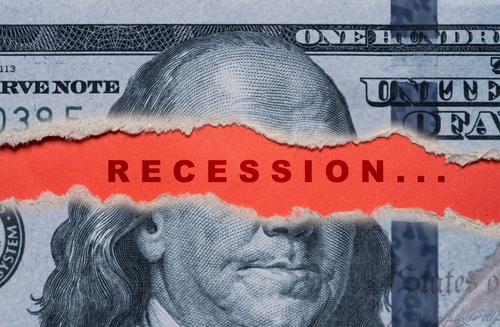
Diagnosis: Recession
'Recession' reads less like a technical macroeconomics monograph and more like intellectual history conducted with an economist’s data discipline.





.png)
.png)
Get the Civitas Outlook daily digest, plus new research and events.
Get the Civitas Outlook daily digest, plus new research and events.