
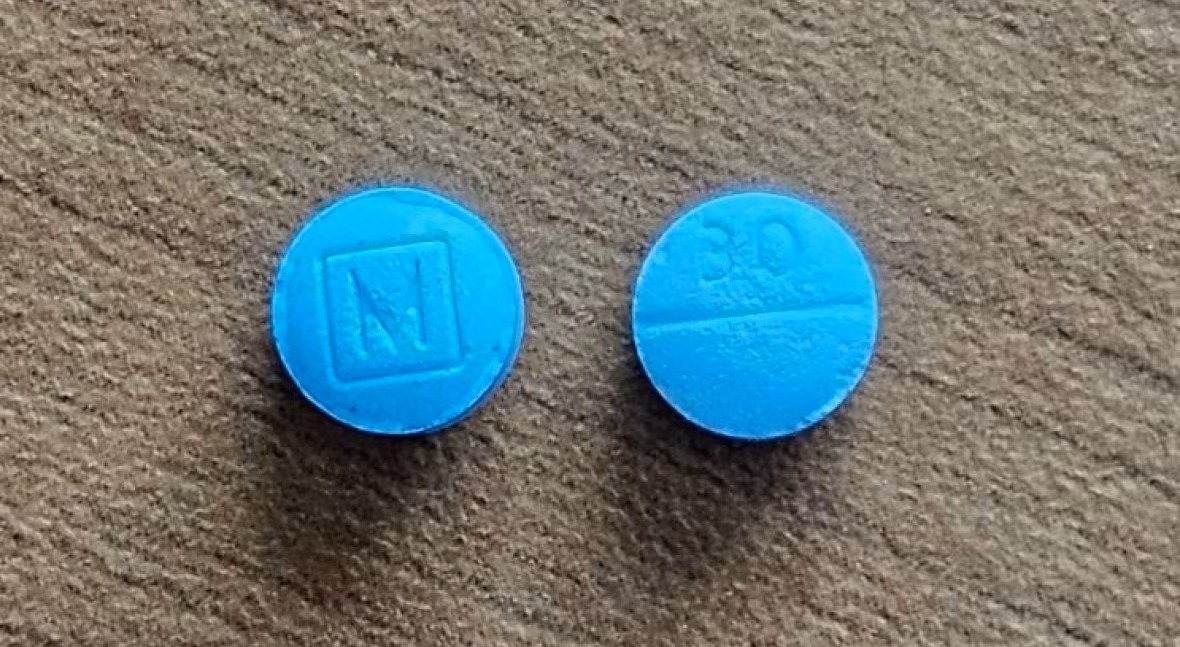
Fentanyl’s Deadly Successor Emerges

Synthetically produced drugs have largely replaced heroin and morphine as our primary lethal toxicants.
Opioids are medicine’s premier analgesic. Capable of making the conscious brain feel celestially sublime, opioids make surgery a life-saving medical procedure, and end-stage cancer pain a physically bearable experience, rather than an excruciatingly painful Nazi-like form of torture. Unfortunately, the euphoria brought on by opioids can have a corresponding abysmally awful effect on long-term users. They can become physically dependent on the drug (viz., they suffer the pangs of withdrawal from discontinuing its use) or become addicted to it (viz., their entire life is singularly devoted to acquiring the drug to fend off withdrawal’s agonies). Americans are quite familiar with opioids’ potential downsides from decades of news reports, books, and films about heroin use (e.g., “The Man with the Golden Arm,” “Trainspotting,” and “The Hardest Drug: Heroin and Public Policy”). American society deems our overuse of lawful opioids like OxyContin and illicit use of prohibited opioids such as heroin an “epidemic,” but, as one physician described it, a better term to use might be “metastatic cancer.”
What the public might not realize (perhaps because our elected officials haven’t taken the time to educate themselves or their constituents about it) is that synthetically produced drugs—what science denominates as Novel (or New) Psychoactive Substances (NPSs), colloquially called “designer drugs”—have largely replaced heroin and morphine as our primary lethal toxicants. While heroin and morphine are derived from the opium poppy, NPSs are born in laboratories from precursor chemicals that themselves lack any botanical lineage. That creates additional problems for us not present in the historical “hard drugs” that we have used.
The provenance of NPSs is central to their very problematic nature. Morphine and heroin are derived from the latex found in opium poppy capsules, which are grown in places such as Southwestern Asia (e.g., Afghanistan and Turkey) or Southeastern Asia (e.g., regions of Myanmar, Thailand, and Laos, known as the “Golden Triangle”). Resorting to non-opium-based drugs avoids several major logistical difficulties. Opium must be grown, nurtured, protected against adverse weather and robbers, and processed into an easily smuggled form before it even begins the transoceanic trip to the United States for domestic distribution. Each stage is costly and people-intensive. By contrast, reasonably proficient chemists, even ones not schooled at the California Institute of Technology, can synthesize NPSs using known cookbooks. The Mexican Transnational Criminal Organizations (TCOs), known colloquially as the Cartels or El Narco, have a proven ability to do just that.
These days, the best-known NPS is fentanyl. In 1968, the U.S. Food and Drug Administration (FDA) approved fentanyl as a fast-but-short-acting complement to anesthesia and as an analgesic treatment for extreme pain. When lawfully synthesized and used, fentanyl has helped save lives in surgery or has eased crossing the River Styx. But when it is illegally synthesized and used, fentanyl has caused overdose fatalities on a Biblical scale. Since 1999 in the United States alone, more than 800,000 people have overdosed and died from using illicit fentanyl (nearly two-thirds of the total), an amount that exceeds the number of American fatalities in all our post-World War II military conflicts. Fentanyl works so quickly that it kills some users before they can even extract a hypodermic from their veins. Illicit fentanyl has become our domestic Public Enemy No. 1—and people are justifiably scared that it will kill more of us than the most prolific human serial or mass killer
Yet fentanyl is not the only synthetic opioid modern science has produced. Twentieth-century chemistry, informed by scientific studies available on the Internet, enables scientists to synthesize entirely new opioids from readily available laboratory chemicals that can greatly exceed the potency of morphine and even fentanyl. One such new category of drugs is nitazenes.
Technically known as 2-Benzylbenzimidazole opioids, a Swiss pharmaceutical company first synthesized nitazenes in 1959 to develop a more powerful but less addictive analgesic than morphine. The company got it half right; some nitazenes are 500 or 1,000 times more powerful than morphine, but also far more addictive, and have a far smaller “therapeutic window”—i.e., the range between the maximum therapeutic dose and the minimum lethal dose. As a result, the FDA has never approved their use, and they are considered contraband under American law. Consequently, nitazene use increases the risk of addiction and a fatal overdose, particularly when used in illicitly produced drugs.
Nitazenes were dormant for decades but emerged in the illicit drug markets of the United States, Canada, and Europe in 2019. In its powdered form, nitazenes can be used in various ways—intranasally, intravenously, sublingually, by vaping and insufflation, and so forth. More insidiously, nitazenes can be added to other powdered drugs, such as cocaine or heroin. Perhaps even more insidiously, by using pill-press devices, nitazenes can be made into counterfeit forms of legitimate-looking pharmaceuticals, such as Adderall, a stimulant that can be legitimately prescribed to treat (for example) Attention Deficit Hyperactivity Disorder but also can be used to enhance athletic or cognitive performance, to suppress appetite, or merely for their stimulating effect. Just as individuals can unwittingly consume fentanyl-laced cocaine, high school and college students can unknowingly ingest nitazenes when using Adderall purchased over the Internet if trying to cram for final exams or complete term papers. Nitazenes therefore can be lethal even when used for academic-related purposes rather than when trying to become a “psychonaut”—viz., someone searching for the “ultimate high.”
Here, as with fentanyl, China and Mexico bear ultimate responsibility for much of the harm. According to Ben Westhoff, author of Fentanyl, Inc., China’s chemical industry “has become a Frankenstein’s monster, powerful, destructive and uncontrollable.” As in the case of fentanyl, chemical companies in China manufacture precursor chemicals for nitazenes, or clandestine laboratories create the final product, which then makes its way into Mexico as a disguised shipment of other chemicals for final synthesis or immediate smuggling into the United States.
To be sure, China has twice agreed with the United States to curb the production and sale of illicitly produced fentanyl or its precursor ingredients to organized crime groups in Mexico. Yet, it is most unlikely that China agreed to assist the federal government in battling illicit fentanyl out of humanitarian impulses. As Vanda Felbab-Brown of the Brookings Institution has noted, “Unlike the U.S. Government, which seeks to delink counternarcotics cooperation with China from the overall bilateral geostrategic relationship, China subordinates its counternarcotics cooperation to its geostrategic relations.” China’s goal is to surpass the United States as the world’s strongest military and economic power, and increasing the number of people addicted to or killed by illicit drugs is one way for China to weaken this country without taking direct military or economic steps, or any other action that would leave its fingerprints on them. More likely, during its negotiations with this country, China agreed to help the United States fight illicit fentanyl because China received something in return. On top of that, China can continue to weaken America from within by substituting nitazenes and other designer drugs for reduced fentanyl production and sales. Put colloquially, China got something for nothing.
The consequence is that the United States must act, independently and with “friendlies,” to address this problem. Fortunately, there are steps that the United States and other nations, both within and outside of NATO, beset by illicit drug problems, can take in collaboration to address this problem.
Start by admitting both that there is a growing NPS problem and that responsibility for its harms lies not only with nations like China and Mexico, but also with our own drug users and society. China and Mexico might be responsible for the creation and smuggling of illegal NPSs into our nation, but America’s own citizens are guilty of voluntarily using illicit drugs. The latter is, in part, a consequence of a lost sense of the value of making sacrifices for the greater good as part of a shared communal responsibility. For the last 60 years, we have failed to instill in our younger members the importance of being willing to make personal sacrifices for the benefit of our neighbors, communities, and country. Self-advancement and self-gratification have been touted as the principal goals of a modern Western society, while the value of self-sacrifice is barely murmured and, even when it is, is often spoken with reluctance. To be sure, addictions to substances (e.g., alcohol, nicotine) and activities (e.g., gambling) have been with us for centuries, ever since Noah became the first vintner, Roman soldiers who participated in Jesus’s execution cast lots for his clothes, and the tobacco industry learned how to mass produce cigarettes. For the last several decades, however, we have seen a series of new Grim Reapers emerge, with fentanyl and nitazenes being only their most recent form. It is time for the Trump Administration to make preventing drug use a priority.
At the same time, in the short run, we need to address the fatal-overdose problem that nitazenes’ use poses. Like fentanyl, nitazenes are far stronger than morphine or heroin, which means that multiple doses of naloxone might be necessary to revive someone who has not yet gone past the point of no return. That requires equipping first responders with a greater supply of such “off switches.” Plus, we need to step up our post-mortem drug testing and information exchange—locally, nationwide, and internationally—so that every jurisdiction has up-to-date information about the presence of nitazenes in their communities. Finally, another short-run (and long-term) step that we should take is to maintain our current closed-border policy with Mexico.
Mexico has served as a source of illicit drugs from cannabis to hashish to methamphetamine to fentanyl, and the TCOs have no interest in stopping their profit-making enterprises. Like those last two, nitazenes, and other not-yet-invented NPSs, can be synthesized in makeshift laboratories by non-Ph.D.-level chemists, so an open-border policy will just lead to the same infiltration we saw in the Biden Administration. Closing our Southwest Border, of course, will not stop the TCOs’ efforts to smuggle NPSs into this nation, if only because our border with Canada is an available alternative, but securing our border nevertheless can save lives otherwise lost to drug use.
Long-term steps include tracking of NPSs’ precursor chemicals and educating the public about the dangers posed by the increasing supply of those drugs. The former step will require the federal government to take the lead. Many precursor chemicals are manufactured overseas in China, India, or elsewhere, and only our national authorities can make international agreements with foreign governments to address this problem, even though its effects occur locally.
Will those steps end the series of tragedies we have witnessed in this century? No. Honesty compels us to admit that. But these steps can save lives. Honesty should compel drug legalization advocates to admit that as well. Whether they will and will join us in this effort remains to be seen.
Paul J. Larkin is a Senior Legal Research Fellow in the Meese Institute for the Rule of Law at Advancing American Freedom.

Fentanyl’s Deadly Successor Emerges
Start by admitting both that there is a growing Novel Psychoactive Substances (NPS) problem and that responsibility for its harms lies not only with nations like China and Mexico, but also with our own drug users and society.

What Is Wrong with Americans?
Tocqueville warned us against binding ourselves together under the allures of soft despotisms.






Get the Civitas Outlook daily digest, plus new research and events.
Get the Civitas Outlook daily digest, plus new research and events.