
James Q. Wilson and the Crisis of Our Time

James Q. Wilson's 1975 book Thinking About Crime offers relevant lessons for our own day.
In 1975, James Q. Wilson published Thinking About Crime, one of the classics of American social science. He refined the book in the 1980s, which became famous for introducing the key concept of conservative social policy, “broken windows policing.” Fifty years later, it is wise to turn back to Wilson, not only because he was the greatest thinker we had on these issues, but because his subject is very important — crime, that is, to say, law — and because we need guides for an education about fundamental political problems.
In recent years, we have endured social crises reminiscent of those Wilson addressed in the 70s. It’s everywhere you look, from opioids — whether Oxycontin or fentanyl — to race riots to campaigns to delegitimize the police, from the more recent “defund the police” back to the already-forgotten #ACAB, i.e., All Cops Are Bastards. These are never trivial matters, but it is especially worrisome that they are now the ideology of a new generation of Progressives (or Democratic Socialists) whose figurehead, if not perhaps leader, is Zohran Mamdani, the mayor of New York City. He has emboldened and will undoubtedly incite many mad people, especially in colleges and among activists and NGO types.
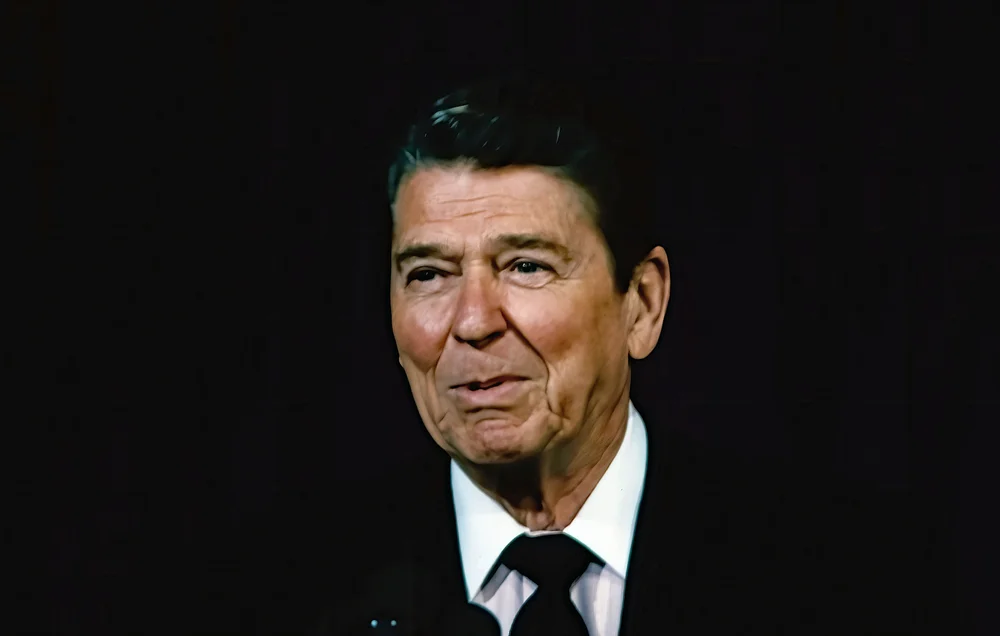
Between Wilson’s heyday and our moment, we had Ronald Reagan, New York City leaders like its mayor in the 90s and early twenty-first century, Rudy Giuliani, and Bill Bratton, the commissioner of the New York City Police Department from 1994 to 2002. Crime seemed to be a solved problem, both practically and ideologically. We have since learned otherwise. Therefore, we have to reconsider the elites in media, education, and politics if we are going to address our predicament. Wilson offers the best introduction to such an education in Thinking About Crime because he discusses the major schools of liberal thought, highlights their principles, explicit and implicit, then confronts those arguments and the policy programs built on them with evidence from American life, and, finally, puts liberal ideology in the context of American politics, historically and philosophically. The essays bring together the intelligent citizen, the policy expert, the philosopher, and all types of community leaders, enabling clarity, informed decision-making, and action.
Self-government is again theoretically possible on this basis, rather than by ideology, experts, or bureaucrats. Self-government is also Wilson’s goal. He insists that citizens want, and are right to want, policing for the sake of order in the community rather than merely preventing or punishing crime. Elites have simply alienated themselves from that view.
“The criminal law has acquired in practice if not in theory an individualist focus—the law defines my rights, punishes his behavior, and is applied by that officer because of this harm. This fits well with our philosophical inclinations and makes easier the task of detecting violations of our rights, but it obscures somewhat the earlier view that the criminal law was designed in part to shape conduct and sustain communities.”
Law is prior to order, and both are prior to the ambitious schemes of the educated class. I cannot summarize his study of crime in a brief review essay, but I can at least establish its importance and its specific character. Wilson starts with a Tocquevillian observation: Americans are restless in the midst of prosperity — part of that restlessness is crime (Chapter 1), but another, more important part is enthusiasm for social reform. Therefore, we should look for his understanding of American society. Although Chapter 5, Broken Windows: The Police and Neighborhood Safety, is the most famous in the book, I suggest we turn instead to the concluding chapters on the American Regime and on culture and public policy, respectively.
Wilson offers a history of America in these chapters, one that features a striking mix of conservative and liberal attitudes. He goes out of his way to consider the anti-Federalist criticism of the Constitution of 1787, which argued that the Federalists did not take moral demands seriously enough. He agrees with that criticism and blames our demoralization on the gradual working out of the principles of individual freedom enshrined in our founding documents. He looks to “Victorianism” instead for a moral corrective to the loosening of social ties. From the Second Great Awakening to the Temperance movement to the YMCA, it is religion that allowed Americans to deal with the dangers of too much freedom for too many, especially young and improvident people in especially “progressive” urban settings. He blames the twentieth century ethic of “self-expression,” and therefore the elites, for unraveling the social fabric of America, leaving people exposed to the crises of the mid-century.
Wilson is a social scientist rather than a moralist, so I want to give some quotes to substantiate these claims. Wilson has very strong views about the social transformation of our times: “What is distinctive about the contemporary period, in my view, is the collapse of the Victorian popular culture and of the moral legitimacy of the institutions embodying it. The psychology of radical individualism and the philosophy of individual rights has triumphed.” He clarifies what this means by antithesis: “The contemporary public philosophy emphasizes rights, not duties. A commitment to rights implies a preference for spontaneity over loyalty, conscience over honor, tolerance over conformity, self-expression over self-restraint.”
On the philosophical side of the argument, Wilson presents a view of a major clash of ideas in American life, opposing Hobbes to Rousseau. Politically, this means Publius, chiefly Madison, versus the anti-Federalists. Hobbesian politics is about the mechanics needed to appeal to the strongest passion — fear of violent death — to prevent violence at the individual level. Rousseau represents an attempt to return to ancient politics, in which morality belongs to the community, indeed defines the community, or is identical with law. The voluntary Christian associations that defined and defended the American way of life as much as the Progressives are on the side of Rousseau in this schema.
Wilson, however, also thinks that what’s done is done, and we must work with the society, elites, and institutions we have. His highest promise is modest, but courageous: “If we are to make the best and sanest use of our laws and liberties, we must first adopt a sober view of man and his institutions that would permit reasonable things to be accomplished, foolish things abandoned, and Utopian things forgotten.” His attempt, therefore, is to prepare and arm people to deal with the crisis of our time. This would be a long struggle, without revolutionary hopes — a chastised, but stronger academia and citizenry might be formed by such an education as Wilson offers in his most famous book. This education would offer people a general knowledge about the programs attempted statewide or nationally to curb crime and scrutiny of the ideologies underlying the soft-on-crime attitudes of liberals. But it would also demand that people should make choices politically, in awareness of the partisan divides in America, including the divide between elites (including judges) and ordinary people, and in awareness of the resource limitations of the justice and law-enforcement system.
The clearest example of the crisis he diagnoses is the problem posed by heroin, treated by Wilson in Chapter 11. That’s the one problem that doesn’t seem to belong to the proper concern of the study—indeed, no other chapter has such a narrow and peculiar focus. The discussion of heroin closes Part III, which is dedicated to criminal justice, a section that seemed to conclude with Chapter 10, The Death Penalty. What more can justice achieve? Only when we realize that the entire question concerns matters that go beyond what justice can achieve, do we begin to wonder whether this discussion is actually an introduction to Part IV, which is dedicated to the American Regime.
Heroin made it incredibly obvious that something in liberal thought was fundamentally wrong. Science, commerce, money, and individual freedom to make choices are supposed to lead to peaceful prosperity. If science invents and commerce distributes products that encourage people to make suicidal choices, the fundamental presupposition of liberalism, the right to life, is called into question. The crisis is systemic, and hence it’s difficult to address any part of it, from policing to public opinion on recreation to medical implications. Enlightenment and Progress cannot be what we expect them to be if they lead to the destruction of vast numbers of our fellow human beings — freedom, making one’s own choices by one’s best lights, cannot mean death and still be choice worthy. Society, Wilson says, cannot admit that heroin is evil but that its use should be legal.
Of course, this is not merely a matter of argument — lives as well as legitimacy were lost. The credibility of modern institutions and modern education are still on the line. Above all, elites were tested and found wanting, since they administer institutions that promise a better future. The inability to predict, prevent, or manage the drug crisis showed the transformation of liberalism into a rather thoughtless hedonism; worse, elite morality became an indignant rejection of the responsibility for life assumed by elites in every aspect of policy, from education to medicine.
As far as claims of Progress go, America has not recovered from that crisis. Wars on drugs and drug epidemics have continued without a solution; demoralization followed suit, which involves various kinds of corruption, from indifference to mass death that in other times would have shocked the nation to denying that the American way of life intends to protect life. Wilson quotes a particularly contemptible case of an intellectual claiming that America is all about allowing Americans to choose their own path to hell, if that’s what they want. We stopped “thinking about crime” in certain aspects, because we lacked the sobriety to face events.
The overall trend of liberal thought and politics, as Wilson documented, is to decriminalize most behavior previously considered wicked, even in the face of “crime waves,” a somewhat unfortunate way of describing the murder of vast numbers of human beings and violence against so many more. Indeed, our language itself degenerates, showing that people in previous times, who used stronger words, were more civilized than we are. Confronted with the therapeutic and liberationist ideologies of his time, Wilson waged a nearly hopeless war — but not an entirely hopeless war. His patient analysis of deluded sociologists, therapists, activists, and other categories of liberal aspiring elites was meant to reinforce common opinion, to encourage recourse to the study of American history, and thus to embolden and guide politicians. He lived to see much of his teaching vindicated, and some of his advice accepted.
Let me therefore conclude with the clearest single statement of his moral seriousness, which mixes analytical clarity with exhortation:
“Wicked people exist. Nothing avails except to set them apart from innocent people. And many people, neither wicked nor innocent, but watchful, dissembling, and calculating of their chances, ponder our reaction to wickedness as a clue to what they might profitably do. Our actions speak louder than our words. When we profess to believe in deterrence and to value justice, but refuse to spend the energy and money required to produce either, we are sending a clear signal that we think that safe streets, unlike all other great public goods, can be had on the cheap. We thereby trifle with the wicked, make sport of the innocent, and encourage the calculators. Justice suffers, and so do we all.”
Titus Techera is the Executive Director of the American Cinema Foundation and a culture critic for think tanks including Liberty Fund and the Acton Institute. He teaches in the Manhattan Institute Logos Fellowship and is a Visiting Fellow at the Mattias Corvinus Collegium in Budapest.


The Active Dead
Helprin’s refusal to flatter the tastes of our prize-encrusted literary establishment merits three cheers from thinking people on the right.

Harvey Mansfield, Radical
For many academics, students are mere tools to advance an agenda. Mansfield, however, is part of an older tradition that cares for their souls.

Arthur Brooks’ Pursuit of Happiness
'The Meaning of Your Life' centers on a simple question that extends far beyond the liberal/conservative divide. Why are some people happy, and others unhappy?





Get the Civitas Outlook daily digest, plus new research and events.
Get the Civitas Outlook daily digest, plus new research and events.