DOGE & USAID

Musk’s dealings with USAID illustrate the possibilities and limitations of DOGE.
“USAID is a ball of worms. There is no apple. And when there is no apple, you’ve just got to basically get rid of the whole thing.” “We spent the weekend feeding USAID to the wood chipper.” So, Elon Musk.
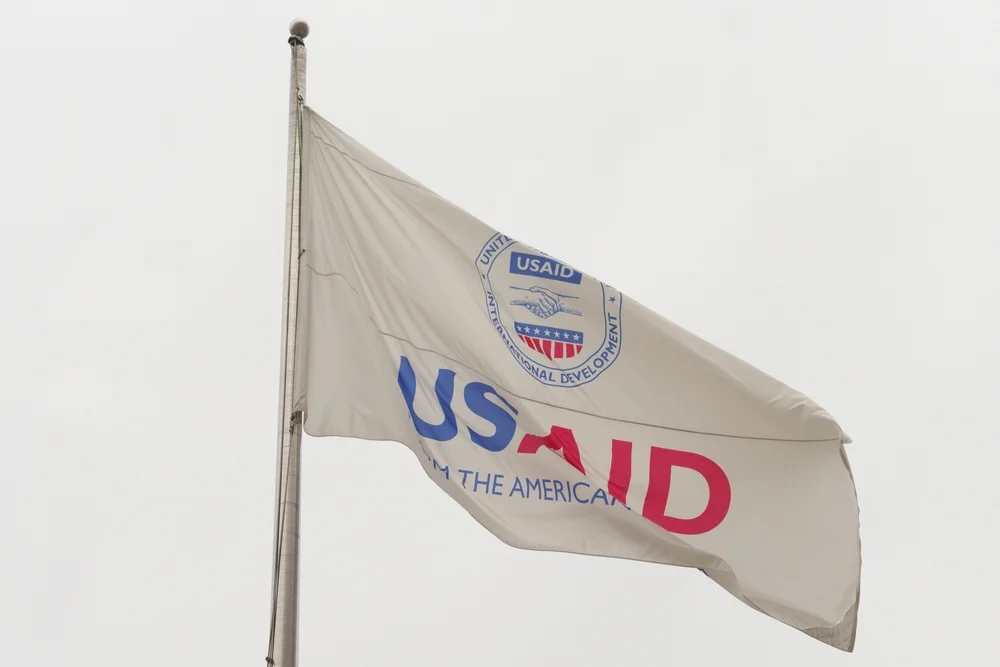
Musk’s dealings with the United States Agency for International Development (USAID) illustrate both the stunning achievements of his Department of Government Efficiency (DOGE) and the limits of what it can achieve.
President John Kennedy created USAID in 1961 to counter the spread of Communism in the Third World, support development, and provide humanitarian relief. In the 1998 Foreign Relations Reform and Restructuring Act, Congress established USAID by statute as an independent agency within the executive branch. The same statute authorized the President to propose the abolition of USAID or transfer it to the State Department, but that authorization expired at the end of 1998.
For most of its existence, USAID enjoyed broad bipartisan support in Congress and the trust of the American people. But beginning in the Clinton Administration, and thereafter under Presidents Obama and Biden, USAID added a radical social agenda to its functions, including abortion, environmentalism, and transgenderism – even when it came to famine relief. By the end of the Biden era, USAID had become (as a Heritage Foundation report put it last February) “a taxpayer-funded haven for radicals controlled by an industry of global elites composed of former aid officers and officials from past Democratic Party Administrations.” In other words, USAID furnished a platform that used taxpayer funding to export the ideological toxins of the domestic Left overseas and to provide lucrative grants, contracts, and employment for an entire aid-industry often linked to the Democratic Party. A ball of worms, indeed.
USAID stonewalled efforts by Congress to investigate its use of taxpayer funding for waste and inefficiency. USAID stymied Senator Jodi Ernst’s (R.-Iowa) attempts to discover whether the overhead charges USAID was paying to companies and NGOs for implementing its programs were excessive. Sometime later, a government audit found that USAID could not account for overhead charges of $142.5 billion in awards.
As DOGE’s investigation brought to light, USAID was funding projects that were not only wasteful, but also offensive to the values of most Americans and contrary to our national interests. The White House has listed some of them: $1.5 million for a DEI program in Serbia; $70,000 for a DEI musical in Ireland; $47,000 for a transgender comic book in Peru; $2 million for sex changes and LGBT activism in Guatemala.
USAID has also been subsidizing journalism both here and abroad. USAID’s 2023 Fact Sheet (which has been taken offline) revealed that it funded some 6200 journalists, 707 non-state news outlets, and 279 media-sector civil society organizations. Independent journalism is no doubt a worthy cause, but the extent of USAID’s (and other agencies’) financial support for journalism, and the media to which that money was directed, suggest that the Biden Administration was in fact promoting its favored narratives. Should the Left-leaning domestic publication Politico be receiving (as the White House claims) more than $8 million in subscriptions from the federal government? According to another source, USAID has funded The New York Times to the tune of $3.1 million, the BBC $3.2 million, and Politico $32 million. And this is not to mention funding for slanted journalism in places like Poland, Hungary, and Ukraine. As Matthew Gasda writes in The Artificial Culture, before these and similar disclosures, media outlets may have been corrupted by federal funding to “produce certain narratives cultural victories and defeats.” The outsized cultural influence of the Left, both here and abroad, may be due in large part to such largesse and will shrink once it is withdrawn.
How, then, did DOGE’s interactions with USAID reveal the limits of DOGE?
The answer came in the form of a suit by 26 current and former USAID employees and contractors against Musk and DOGE. The plaintiffs claimed that several of DOGE’s actions, including cancelling USAID contracts, placing employees on leave, reducing the force of the agency, closing its headquarters, and shutting down its website, were unconstitutional. They based these claims on two premises: that Musk was acting as DOGE’s administrator without being properly appointed under the Constitution’s Appointments Clause, and that in dismantling USAID, Musk and DOGE were infringing on Congress’s power to establish and disestablish agencies.
District court judge Theodore Chuang agreed with several of the plaintiffs’ contentions and granted them some of the requested relief, including enjoining Musk and DOGE from taking any action related to shutting down USAID. On March 28, the Fourth Circuit stayed that injunction, disagreeing sharply with the district court’s reading of the evidentiary record.
Regarding the Appointments Clause argument, the Fourth Circuit ruled that the actions challenged by plaintiffs were approved or ratified by properly appointed USAID officials. The court accepted the Administration’s evidence that Musk had not functioned as an “officer” requiring constitutional appointment. On the evidence before it, it agreed that “in all pertinent actions [including moving USAID out of its headquarters and closing down its website], Musk acted as a Senior Adviser to the President and not as the Administrator of DOGE, and that all decisions pertaining to USAID were either made or approved by those so authorized.”
The more fundamental constitutional problem was whether Musk and DOGE took steps to shut down USAID without congressional authorization. The Fourth Circuit held that those were the wrong defendants. If anyone were to be acting unconstitutionally in shutting down USAID, it would have to be some “officer” in the executive branch – and plaintiffs had not sued any such persons.
While DOGE won this round, the court was careful to note that the plaintiffs might be “able to develop evidence of unconstitutional conduct as the case progresses.” The State Department has now formally notified Congress that it intends to close USAID, and unless Congress goes along, that action may well violate separation of powers. (As mentioned above, Congress’s earlier authorization to reorganize USAID has expired.) Supreme Court precedent seems to support Judge Chuang’s opinion that the Administration’s attempt to abolish USAID unilaterally would “conflict with Congress’s constitutional authority to prescribe if and how an agency shall exist in form and function.” And what the Administration cannot constitutionally do, DOGE by itself certainly cannot do.
The lesson? Donald Trump surely aims to become a great President – a latter-day FDR – who revolutionizes and modernizes a flabby, dysfunctional federal government. He may well succeed in this ambition. And in pursuing it, Musk and DOGE have provided him with invaluable help, including exposing USAID as a cash-cow for Leftist causes. But their achievements will prove ephemeral unless Trump persuades Congress to codify them into law.
Robert Delahunty is a Washington Fellow of the Claremont Institute Center for the American Way of Life.


Originalism and the 'Barbara' Dissenters
When one steps back and assesses the methodological approach of 'Barbara' dissenters, it’s clear that it was, at its core, originalist.

.jpg)
The Declaration Symposium
Civitas Symposium featuring Gregory Collins, Aaron Nielson, Joseph Postell, and John Yoo

.png)


Get the Civitas Outlook daily digest, plus new research and events.
Get the Civitas Outlook daily digest, plus new research and events.