.JPG)
Consumer Protection Lawyers Chasing Climate Change Bonanza

The Court’s opinion in Suncor v. Boulder should signal to future courts the importance of shutting down consumer protection claims.
The Suncor v. Boulder County case is among the most anticipated of next year’s United States Supreme Court term. As is well known, the case turns on the efforts by Boulder County, Colorado—the hippie jurisdiction—to use state tort law to regulate national and global carbon emissions. As I have explained elsewhere, those efforts are likely to fail at the Supreme Court, just as they have in most courts around the country (Colorado is an exception to the general rule). After repeatedly failing to establish liability via the tort system, however, plaintiffs’ lawyers have conjured up new theories grounded in consumer protection. Those claims were dismissed early in the Colorado litigation and are not before the Court now. Nonetheless, the Court’s opinion should signal to future courts the importance of shutting down these consumer protection claims—as well as whatever cockeyed theory they come up with next.
Virtually every court that has considered the consumer protection theories has dismissed those claims as well. And on the merits, the cases are absurd. However, the real issue in the case is not whether some consumer protection laws have been violated, but whether they can be shut down early in a case on the same grounds on which the cities’ nuisance claims have been crushed.
In the end, the absurdity of the consumer protection claims reveals they are just about emissions dressed in a new green costume, not consumer protection. If courts exercise diligence and commitment, it won’t be difficult for them to look beyond that superficial label to see what is really going on. As the Maryland Supreme Court observed recently while disposing of the bogus consumer protection claims, “[n]o amount of creative pleading can masquerade the fact that the local governments are attempting to utilize state law to regulate global conduct that is purportedly causing global harm.”
The plaintiffs’ template mirrors the tobacco cases, in which they brought multiple cases in multiple states, hoping to hit the jackpot on one of them. The plaintiffs could lose 10 cases in a row and still be successful if just one wins. For the defendants, however, given the stakes, every case is a bet-the-company case. More importantly, this is a situation where the process is the punishment—the plaintiffs, the environmental law firms, and the trial lawyers they employ are funded by deep-pocketed billionaires like Tom Steyer. Simply dragging the companies through court and forcing them to spend millions of dollars on legal fees helps to achieve the plaintiffs’ purposes of driving up costs and deterring future production.
The plaintiffs advance three theories. The first is a “greenwashing” theory. Here, the plaintiffs exploit the irony that for years, energy companies tried to pander to the very environmental zealots who are now suing them by touting their products as reducing emissions and their corporate commitment to green energy investments. The plaintiffs say those boasts were false, but they still allegedly materially induced consumers to buy those products on the belief that they were good for the environment. Second, the plaintiffs claim that the companies misled regulators, legislators, and the voting public by denying that burning fossil fuels contributes to climate change. Finally, the defendants allegedly violated a duty to warn the public that burning oil and gas can affect the atmospheric climate.
Plaintiffs cleverly argue that these are garden-variety consumer-protection claims about fraud and deception in connection with the sale of the products, not an effort to regulate emissions. And at first glance, the argument appears harder to dispose of than the tort claims. Under established consumer protection law, a plaintiff need only show that the companies’ statements were “material” in that some buyers might’ve made a different choice about whether to use oil or, presumably, would buy a different car if they knew the truth. No fraudulent intent (or what is called “scienter” in law) is necessary to state a claim for a consumer protection violation. Consumer protection claims aimed at protecting in-state consumers also appear closer to the state’s traditional police power than to a clear attempt to regulate emissions interstate and internationally.
In addition, the fundamental problem with the plaintiffs’ tort claims is the longstanding presence of general federal common law that has long precluded state activity in that area, a fact codified by the Clean Air Act. But the Clean Air Act and preexisting federal common law are largely silent on consumer protection claims. In large part, it is because of the novelty and frivolous nature of trying to pound the round peg of pollution control into the square hole of consumer protection. Still, because of the novelty of the claims, some courts could be misled into treating them as distinct from the larger claims. Finally, some judges have noted that, for purposes of federal jurisdiction, under the so-called well-pleaded complaint rule, federal courts have held that looking just at the face of the complaint, the consumer protection claims are not federal claims and do not implicate the Clean Air Act or any other federal law.
But it requires minimal effort to see that, regardless of what the plaintiffs call them, these claims are about regulating emissions, not consumer protection. Once it is realized that neither the claims nor the remedies sought have anything to do with consumer protection, and this is really just a poorly disguised effort to regulate emissions, courts should find these claims precluded on the same basis as the tort claims.
First, consumer protection law exists to address situations in which products are defective or fail to perform as promised. The foundational remedy for deceptive or unfair practices is a refund of the consumer’s purchase price or a reduction in value for any failure of the product to perform as promised. But here, the cities that are suing are not saying the products failed to perform as promised. In fact, as the court noted in the City of Charleston, SC, case, the plaintiffs continue to use these products to drive their cars, heat their buildings, and fly in planes. This is different from the tobacco cases a generation ago, when the plaintiffs argued that had they known of tobacco’s risks, they never would have started smoking. Here, the plaintiffs continue to use the products and will continue to do so. Their complaint, and the billions of dollars they seek in damages, arise from emissions caused by the products’ use, not from defects in the products themselves.
Second, even if emissions are considered a problem, suing a handful of energy companies chosen at random makes no sense either. In fact, the mere existence of fossil fuel products doesn’t cause any environmental harm. It is only when the products are burned and produce emissions that the alleged harm occurs. As the judge in the Charleston case noted, this means every single person in the world could be both a plaintiff and/or a defendant in these cases. In fact, the plaintiff City itself could be named as a defendant in another case for its continued burning of fossil fuels to power its cars, buildings, and other facilities.
Third, many of the supposed deception claims have nothing to do with the economic transaction of purchasing the products themselves, but instead are theories of deception on the public understanding of climate change issues. These claims are not just ridiculous because consumer protection issues concern the purchase of products, not efforts to influence politicians and voters. But even more, they are downright dangerous in their implications for protected speech under the First Amendment.
Earlier this spring, a District of Columbia trial judge greenlit continued litigation by the DC Attorney General against several energy companies, not just for their direct advertising statements but also for generic statements posted on their website, and even for supposed “front groups” that support the industry, such as the American Petroleum Institute and Global Climate Coalition. Moreover, under the DA’s theory, merely posting statements on a website was sufficient to claim a jurisdictional nexus to drag the defendants into the DC court. Under these theories, every company, think tank, or even individual with a website anywhere in the world that advances a position contrary to green orthodoxy could be hailed into the DC Superior Court for multi-year litigation.
The Supreme Court doesn’t need to reach the consumer protection issue in Suncor. But the history of these cases to date has shown the relentlessness and deep pockets of cities and their billionaire backers, who are simply shifting from one theory to another. When it comes time to decide, the Supreme Court takes care not to slam the door on traditional tort liability claims only to leave open a window that will continue these interminable cases with yet further far-fetched theories of liability.
Todd Zywicki is the George Mason University Foundation Professor of Law, Antonin Scalia Law School, and Co-Director, Institute for Consumer Financial Choice. Professor Zywicki filed an amicus brief in the Suncor case at the Supreme Court.

.jpg)
The Declaration Symposium
Civitas Symposium featuring Gregory Collins, Aaron Nielson, Joseph Postell, and John Yoo
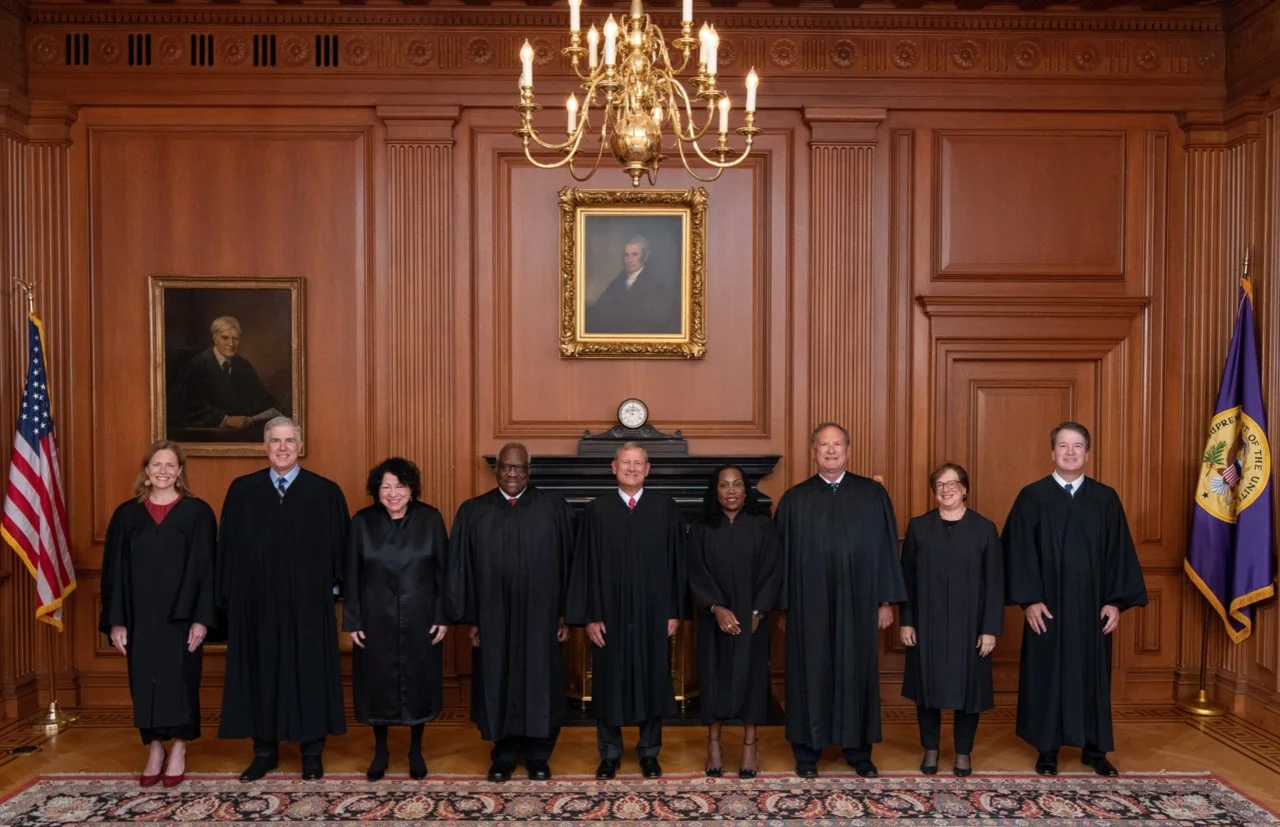
The Birthright Citizenship Decision Will Not End the Birthright Citizenship Debate
It is unlikely that Trump v. Barbara ended the debate over birthright citizenship. It may have truly started it.
The Declaration and Tradition
As we approach America’s 250th anniversary, we should reflect upon and appreciate the Declaration’s opening paragraphs—but we should not forget to remember the rest of the document or the context in which it was created.



Get the Civitas Outlook daily digest, plus new research and events.
Get the Civitas Outlook daily digest, plus new research and events.