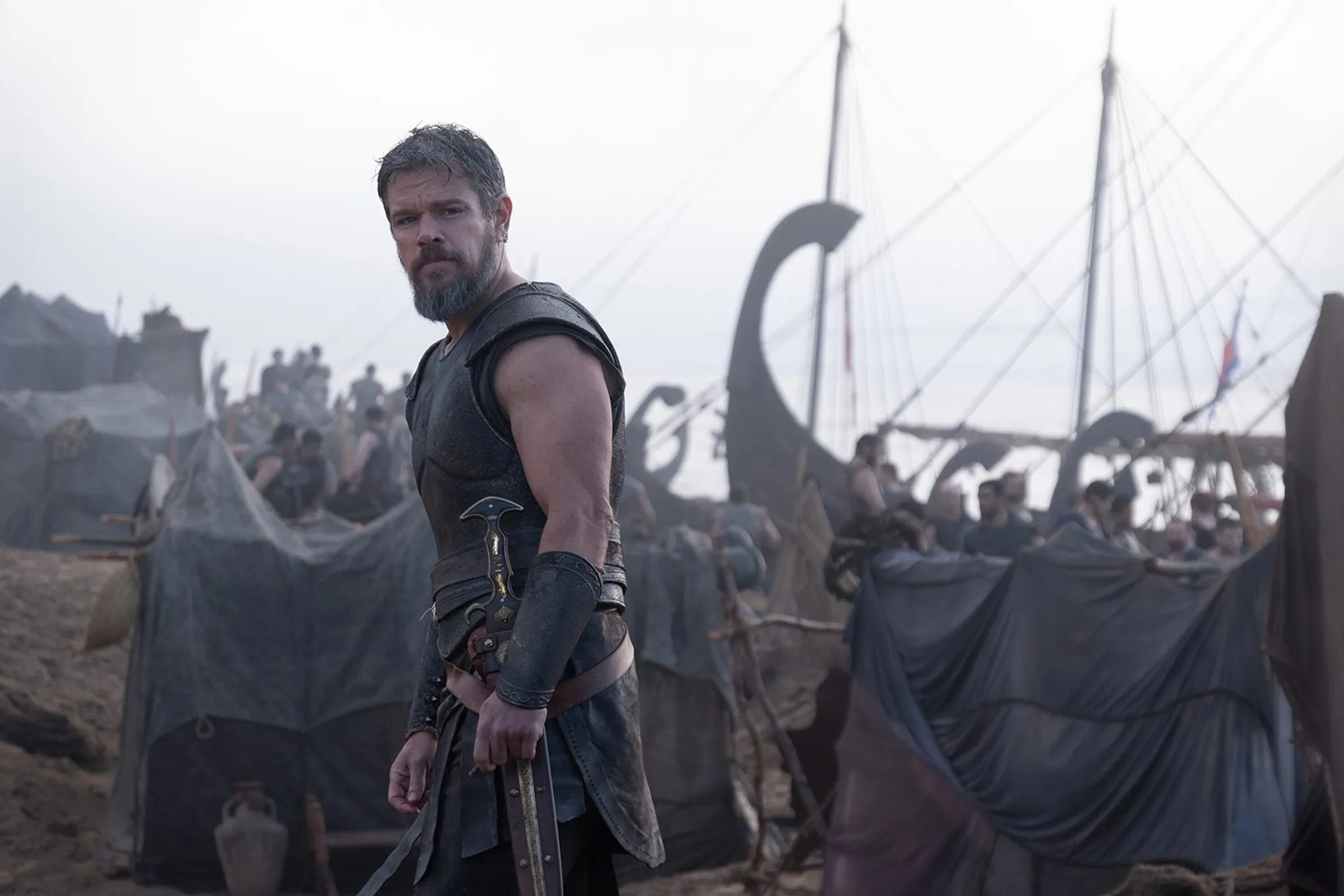
Nolan’s Odyssey and the Search for Wisdom

In the face of the collapse of all our intellectual authorities, Christopher Nolan's Odyssey attempts to make cinematic sense of Homer's place in our poetic tradition.
The last major director in Hollywood is Sir Christopher Nolan. We have other famous names—think of Tarantino—but they’re not working. There are more prestigious men still alive and working—Scorsese—but they seem lost in their own art, uninterested in the viewing public, never mind the future. Nolan dedicated his career to finding out what the future holds and making that future a reality. He was early to the superhero genre and made his definitive contribution to cinema with The Dark Knight. He also made the most successful sci-fi movies of our time with Inception and Interstellar.
His astonishing success is more clearly seen if we ignore the Oscars (18 wins out of 49 nominations for his movies) and the exorbitant fortunes made (over $6billion) in order to look at the effect on the audience, which skews male (very rare in any endeavor nowadays outside of tech), younger, and more interested in digital technology. He tries to bring together the interest in tech and manliness, in innovation and popularity—his admirers call his protagonists heroes and are spellbound by his spectacular IMAX movies. Accordingly, he dominates the IMDb Top 250 (with a unique 8 movies on the list).
Therefore, it should surprise us to see his turn to the past in the last decade. In 2017, Nolan made Dunkirk, his only war movie, a gripping vision of the British retreat from France in 1940, “the end of the beginning,” as Churchill famously called it. In 2023, Oppenheimer, also set in WWII, his only biography, was a remarkably successful movie about the making of the atomic bomb (just shy of a billion dollars) that reminded everyone that men want to work hard and save the world, women want to look pretty and rule the world, or so it was seemingly advertised in conjunction with Barbie, a much bigger success.
Now, Nolan made The Odyssey, his only epic, which goes back all the way to the beginning of our storytelling tradition, to Homer. If WWII was the end of history, the last major war, the moment war became, potentially, a power to end all life, the Trojan War was the beginning of history, the moment war made the difference between the Greeks and the barbarians. The Odyssey is also unusual because of the character of the marketing: If there were giggles with Barbenheimer, there is culture war with The Odyssey, from casting controversies (we have a black Helen and Clytemnestra, played by Oscar winner Lupita Nyong’o in a double role, a trans actor, Oscar nominee Ellen/Elliot Page, and any number of other unusual choices—to begin with, everyone is too old) to a very popular and hated trailer (50M views in six months, 600k dislikes) to disagreements about the translation used (since liberal elites have spent about a decade trying to foist the mediocre feminism of Emily Wilson on readers) or the spectacle (Viking longboat, American accents to make sure nobody confuses Nolan with Shakespeare or Tolkien).
Nolan’s interpretation itself is the cause of this controversy—what The Odyssey is about and why it is important for us now. I believe he will be heard loudly—I expect this to be an incredible hit—but I do not believe that he will be understood, so I will try to lay out his major choices and show the intention behind them. The first thing to say is that he has no interest in conveying either the form or the tone of the epic—there is almost nothing noble or heroic portrayed in the film. He offers a deconstruction: the most predictable thing. But if even our most prestigious artist can’t avoid the most predictable thing, isn’t that very telling?
Surprisingly, for the “gritty reboot”, Nolan starts from Christian premises. Agamemnon, the leader of Greek forces against Troy, is portrayed as a giant among men, a master, a tyrant, cruel, demanding, and destructive. Everyone, but especially Odysseus, is a slave to him. What Homer calls heroes are also what Homer shows these men to be: Murderous pirates who live by plunder, putting everyone to the sword, raping and enslaving. Inasmuch as we admire our intellectual and poetic tradition, we must choose between the beauty in Homer, a splendor built on murder and theft, and the ugliness in Homer. Nolan chooses the latter, as people have in our times. He takes the victim’s side against the perpetrator. Almost every woman in this movie has many grievances, and they’re more than justified. The males who are not damned are ashamed before these women. By the time Penelope complains that the patriarchy is ruining her life when she should rule, you feel like you’re back in 2026 America.
The movie is based on the important observation that the Odyssey depicts the world after the Trojan War, which was catastrophic and caused many subsequent calamities, according to Homer as well as later poets, for example, the tragedians. Nolan simply concludes that the Trojan War was unjust. The Christian source for the argument is venerable: Augustine in The City of God Against the Pagans IV.4 says: “Justice being taken away, then, what are kingdoms but great robberies? For what are robberies themselves, but little kingdoms?” Men are defined by the desire for domination. The violence that follows is most of what we see of the Greeks—they self-destruct.
Nolan has noticed, as all attentive readers have, that the monsters and fabulous voyages of The Odyssey are stories told by Odysseus himself, as well as that Odysseus is famously a liar. But Nolan brings these two observations together in a search for therapy: Odysseus is just talking to himself, after he wastes years of his life, like a soldier suffering from PTSD, failing to take responsibility for the evil he has done because it is too much, taking drugs instead (the lotus flower) to forget. Odysseus won the war for the Greeks by desecration: The meaning of the Trojan horse is the willingness to kill people in a temple. The sack of Troy is emotionally depicted from the Trojan point of view.
The problem of returning Odysseus to his home is how to see through the delusions and destruction of the war. It goes without saying, therefore, that Odysseus declares for atheism—“defy the gods” may be taken to be his motto, justified by his guilt over his dead soldiers, his only concern. The problem of naming a poem for this man is accordingly interpreted as an attempt to teach people to live after they’ve lost everything they admired or aspired to be, which is not unlike Homer’s depiction of life after heroism was wiped out on the plains of Troy. As in all his movies, Nolan is trying to confront the nihilism of our times by promising to get Odysseus back home.
The movie largely lacks the poem’s interest in home or strangers. But it is very interested in xenia, the duty of friendship that makes a man a host to a stranger, whom it makes a guest, which is guaranteed by Zeus. Nolan freely reinterprets it as the command of Jesus in the Gospel: “So in everything, do to others what you would have them do to you, for this sums up the Law and the Prophets” (Matthew 7:12). The act of reinterpretation itself we may compare to St. Paul’s defense before the Areopagus in Athens (Acts 17:23), introducing Christ to the Athenians as the unknown god they were already worshipping.
It goes without saying that there is no Achilles in this story. His place is taken by a reinterpreted Sinon, a gullible innocent who judges and blames Odysseus for his iniquity (the Homeric basis would be the sailor Elpenor). The movie is altogether humorless, attempting to brutalize the audience in both sight and sound. The major reassurance offered is that Odysseus cannot escape the consequences of all his cleverness, because he’s not fundamentally cleverer than anyone—unless his cleverness means he is the first to learn that his speech about his famous deeds should be apologizing.
The greatest innovation in the story seems to be an attempt to reconcile the Enlightenment with its end. We owe many things to the Enlightenment, including philology—the study of ancient texts, the spur to archaeology, including the discovery of the ruins of Troy, and an entire vision of the Bronze Age collapse, which is woven into the movie. But altogether, the movie is about the collapse of civilization and its recovery through poetry, written and uttered. Somehow, this is all about America: The framework in which we come to see Ithaca is a desire or demand to sail into the setting sun and find a new world.
Unquestionably, Nolan’s Odyssey is a work of decadence. His art is an attempt to make sense of Homer's art, of its place at the head of our poetic tradition. Nolan attempts to do so in the face of the collapse of all our intellectual authorities, but the attempt fails. What we see onscreen that causes scandal is our own decadence, which we call a culture war, deluding ourselves that we know what we might win or what we might defend. Nolan is admittedly honest about all this, but he lacks wisdom. He may resemble us in that regard, having forgotten to seek wisdom.
Titus Techera is the Executive Director of the American Cinema Foundation and a culture critic for think tanks including Liberty Fund and the Acton Institute. He teaches in the Manhattan Institute Logos Fellowship and is a Visiting Fellow at the Mattias Corvinus Collegium in Budapest.

Nolan’s Odyssey and the Search for Wisdom
Nolan’s 'Odyssey' will be a tremendous success, but it is also a work of decadence.
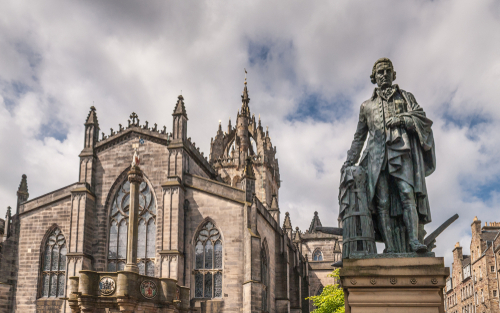
Adam Smith, Economist of the American Revolution
Clear-eyed economic thinking remains one of humanity’s most powerful instruments for understanding our problems and advancing our possibilities for improvement.
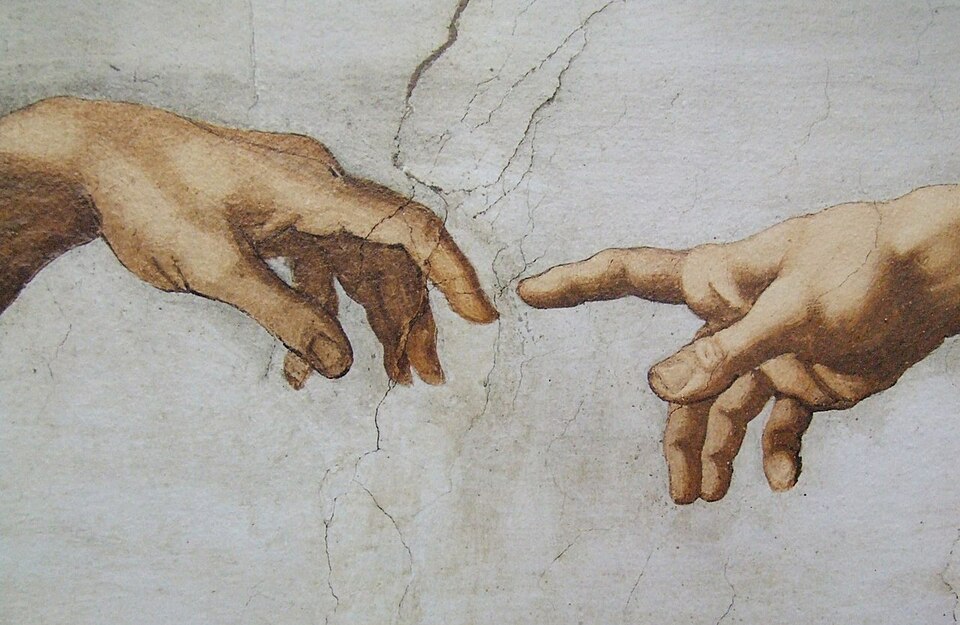
Made in the Image of Nothing
We need a sequel to Carl R. Trueman's 'The Desecration of Man: How the Rejection of God Degrades Our Humanity.'
.jpeg)


Get the Civitas Outlook daily digest, plus new research and events.
Get the Civitas Outlook daily digest, plus new research and events.