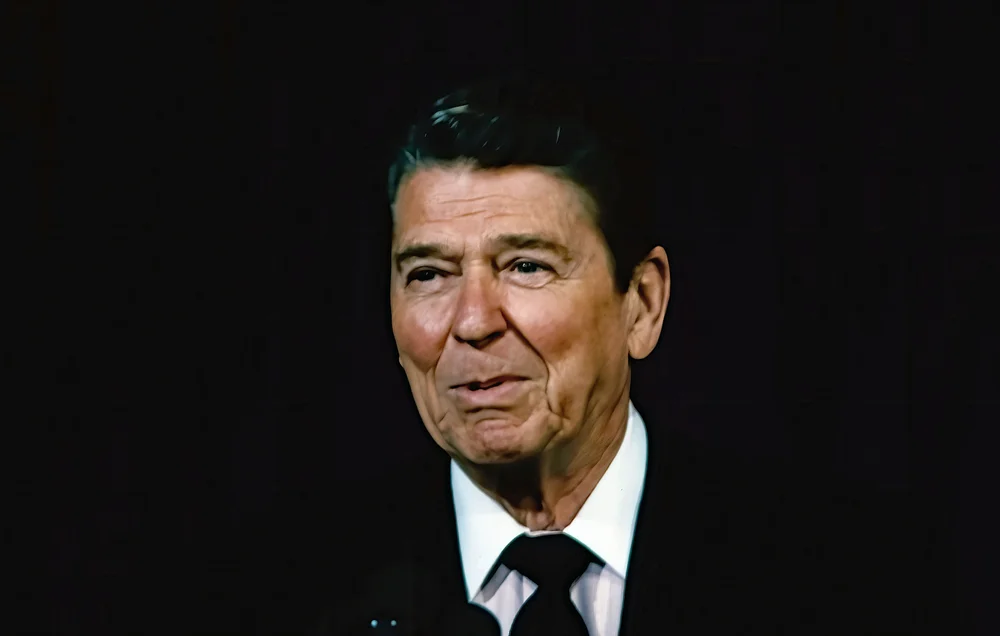
Why Historians Have Abandoned the Presidency—And Why It Matters

Academics’ abandonment of the presidency is the outcome of deliberate disciplinary choices.
Americans simply cannot escape the presidency. Donald Trump owns Truth Social and is a singular force in news cycles. Barack Obama’s Netflix deal gave him access to 325 million subscribers. Each directly reaches well over 100 million social media accounts through X. The Clintons dramatically scaled up the post-presidential speaker circuit into an endeavor worth hundreds of millions of dollars. The presidential library system transformed the commemoration of past office holders into a sprawling network of regional cathedrals of American history. Presidents even penetrate our dreamworlds, with Americans increasingly reporting that presidents have strolled into their subconscious.
But one group isn’t paying attention: historians.
The historical profession’s neglect of the Oval Office is contributing to its growing irrelevance, which in turn fuels a civic crisis characterized by major deficits in Americans’ knowledge of the past.
Academics’ abandonment of the presidency is the outcome of deliberate disciplinary choices. You will not find much attention given to the American presidency at the annual meetings of the American Historical Association or the Organization for American History, where this year the subjects of Catholicism, environmental change, Palestine, and sexuality far outpace discussion of the executive branch. Rarely are best-selling presidential biographers such as Dorris Kearns Goodwin or Michael Beschloss among tenured university faculty. Books on presidents or the presidency face long odds of winning the prestigious Bancroft, Beveridge, or Pulitzer Prizes.
Each of these incentives reflects a shift in historians’ methods that began in the 1960s. McCarthyism, the Civil Rights movement, and other fractures in the social contract compelled historians to reconsider their obligations to American society’s past and present. Paramount today are modes of analysis that emphasize the structural forces of social, cultural, material, and environmental factors, while deemphasizing individuals and ideas.
Consequently, biography – the primary vehicle for exploring the presidency - suffered. Gone were the days when leading historians such as Allen Nevins or Daniel Boorstein could offer a reflection on the American political tradition through presidential biography that simultaneously sold well, challenged popular myth, and rebutted a major school of scholarship. Nevins’ and Boorstein’s arguments that history should serve democracy by expounding moral values to form a common understanding between the intellectual classes and the masses overthrew the progressive historians of the early twentieth century, who had emphasized economic conflict as the defining feature of American society. Their history was criticized as hero worship or popular history that aimed to build a consensus around a homogenous and conservative view of the past.
And so, it became an entrenched assumption within the increasingly left-leaning historical profession that presidential history was popular history and that writing popular history was an act of conservative consensus building. With those assumptions in play, even nuanced biographical studies of American presidents, like those found in Richard Hofstadter’s American Political Tradition, were criticized as serving a fictional social unity brought about by New Deal liberalism. Ironically, nostalgia, viewed by Hofstadter as an opportunity to turn the practice of critical history into a civic good, quickly became the instrument of the demise of presidential history.
Nostalgia is now core to the dismissal of the presidency. The term gained traction at the moment that the historical profession pursued its social and cultural turn in the 1960s and 1970s; it has become the point of contention in confrontation after confrontation over presidential commemoration. By the start of the millennium, to be labeled a practitioner of nostalgia—as the Princeton historian Sean Wilentz tagged David McCullough and Ken Burns for the depiction of presidents in heroic light—was to be engaged in historical malpractice.
Other dustups followed. After the Richard Nixon Presidential Library came under the jurisdiction of the National Archives and Records Administration in 2007, a battle raged for years over its mission. Should it be a celebration of Nixon or a site of critical historical inquiry? To many historians, the Nixon Library controversy appeared as yet another data point supporting a long-running critique of conservative presidents accused of trafficking in the “politics of nostalgia.” The phrase itself was first used in 1955 by the influential historian Arthur Schlesinger Jr. to criticize the intellectual foundations of “New Conservatism.” The very Schlesinger who served multiple Democratic presidents, helped launch the Camelot school of history that cultivated the Kennedy mystique, and authored The Imperial Presidency that condemned Nixon’s executive overreach in terms that later became a primary lens for evaluating the Trump presidency.
More than a few Cassandras have warned that the continued neglect of the presidency would exacerbate disciplinary irrelevance. In 2015, the acclaimed University of Virginia historian Brian Balogh confessed his role in a decades-long, discipline-wide project to “reduce presidents to bystanders in the march of history.” Balogh’s self-imposed penance had been to assemble a group of scholars to invigorate an interdisciplinary research agenda for the presidency that integrated historians’ social and cultural approaches with a social-science focus on American political development. The social sciences were not equipped to rescue presidential studies, either. In 2017, George C. Edwards III, a preeminent expert on the American presidency, declared that the field of presidential studies had been “a backwater of the discipline” for decades. That trend has persisted, with a continued decline in the number of published papers on the presidency in premier political science journals.
In courting wider audiences, historians’ pursuit of balance between intellectual accessibility and banality has led to outright politicization. Nowhere is this more apparent than in presidential ranking surveys, the first of which was created by Schlesinger Jr. in 1948, which devolve into partisan exercises. Reacting to the perceived liberal bent of surveys organized by Schlesinger Jr. and C-Span, conservative institutions such as the Federalist Society, the Wall Street Journal, and Prager U. established their own rankings. These ranking games suggest a search for a usable past to block or bolster contemporary political agendas rather than disinterested scholarship.
Another issue is the way the profession trains new historians. By creating specialists who focus on periods lasting only a few decades, the discipline of modern American history is not designed to produce experts who can evaluate 250 years of office holders on equal terms. The office has never operated with a fixed set of powers, expectations, responsibilities, or standards of success since its creation; what counts for success in one era may be judged a demerit in another. Specialists focus on periods lasting only a few decades, such as the Early Republic, the Gilded Age, the Progressive Era, or the Cold War. Historians who understand in granular detail the successes and failures of presidents of their era of specialization are not well-positioned to rank them against executives with whom they are only superficially acquainted.
Since Trump’s first term, accusations of cherry-picking through history to support political agendas have only intensified. The Princeton University controversy over Woodrow Wilson raised concerns among historians about the tendency of renaming efforts to narrow the focus of historical judgment through the lens of contemporary politics. That line of argument grew into a full-blown crisis in 2020 at a meeting of the Society for the History of the Early American Republic, where Daniel Feller, editor of the Andrew Jackson Papers, accused fellow historians of smearing Jackson as an indirect attack on Trump. The episode spotlighted the hazards of presidential scholarship at a time when the dueling efforts of the 1619 Project and the 1776 Commission further politicized historical narratives.
Historians have been in a panic over the last two decades that people are not paying enough attention to their work. History majors and course enrollments have fallen precipitously, creating a crash in the labor market. A 2021 survey from the American Historical Association reported that by a wide margin, more Americans get their history from documentaries, museums, television news, and magazines than from history courses, lectures, and academic texts. To say nothing about YouTube, video games, or AI chatbots. More troubling still for the professoriate, the 2021 AHA survey shows that the accused traffickers of nostalgia—museums, historic sites, and documentaries—are considered more trustworthy than college faculty.
Green shoots of presidential scholarship have emerged amidst 2026’s yearlong celebration of America’s 250th birthday. Meanwhile, ongoing reforms in higher education offer an opportunity to pursue historical research for civic renewal. Those efforts are bending the humanities back toward the stock and trade of political history: the study of forces and ideas shaping the presidency and everyday life alike in modern America. The push has been most pronounced among historians of U.S. foreign relations who see applied history as the best bet for rescuing the broader discipline and influencing the highest echelon of policymaking. While “new presidential history” has come into vogue at Southern Methodist University, Vanderbilt University, and the Ronald Reagan Presidential Foundation and Institute’s flagship Age of Reagan conference. What it entails is an integration of the study of presidents’ ability to command the attention of the public and wield the power of the state with a better understanding of the general public’s ability to shape presidential action and contain or inflate its effects through various cultural and informational mediums and patterns of social organization, be it online or on the streets.
The embrace of new presidential history by historians will be a bellwether of their future fortunes in the civics-focused era in higher education and among the disoriented, yet information-hungry American public. Historians studying the presidency will seize an opportunity to forge a stronger connection with the American public, who increasingly believe the president directly impacts their happiness and personal lives. Rejection of consensus historians stemmed from social and cultural historians’ view that their predecessors had neglected the major forces shaping American life. In that same spirit, the impoverished state of presidential history—and by extension political history—amounts to a neglect of the singular effect of the presidency on the inhabitants of the United States. Historians must now overcome their resentment toward nostalgia and consider how presidential history might be crafted with nuance, infused with the innovations of their discipline, and used to push back against pessimism and the collapse of institutions underpinning civic life. In short, such historians will use evidence and arguments, as any historian can, to help readers understand exactly what presidents have accomplished during their elected office. Pithy columns and partisan denouncements need to be matched by structural adjustments to the professional incentive structure that help to renovate the public’s understanding of the presidency. If this helps historians focus on the presidency, the public might start paying more attention to historians.
Anthony Eames, Ph.D is the Director of Scholarly Initiatives at the Ronald Reagan Presidential Foundation and Institute.

.jpeg)
Deliberative Republicanism and the Triumph of the American Founding
Instead of rejecting the moral urgency of the postliberal right and left, it is fitting and proper that we redirect it through the right kind of education—both formal and informal—that can inspire affection for our Constitution.
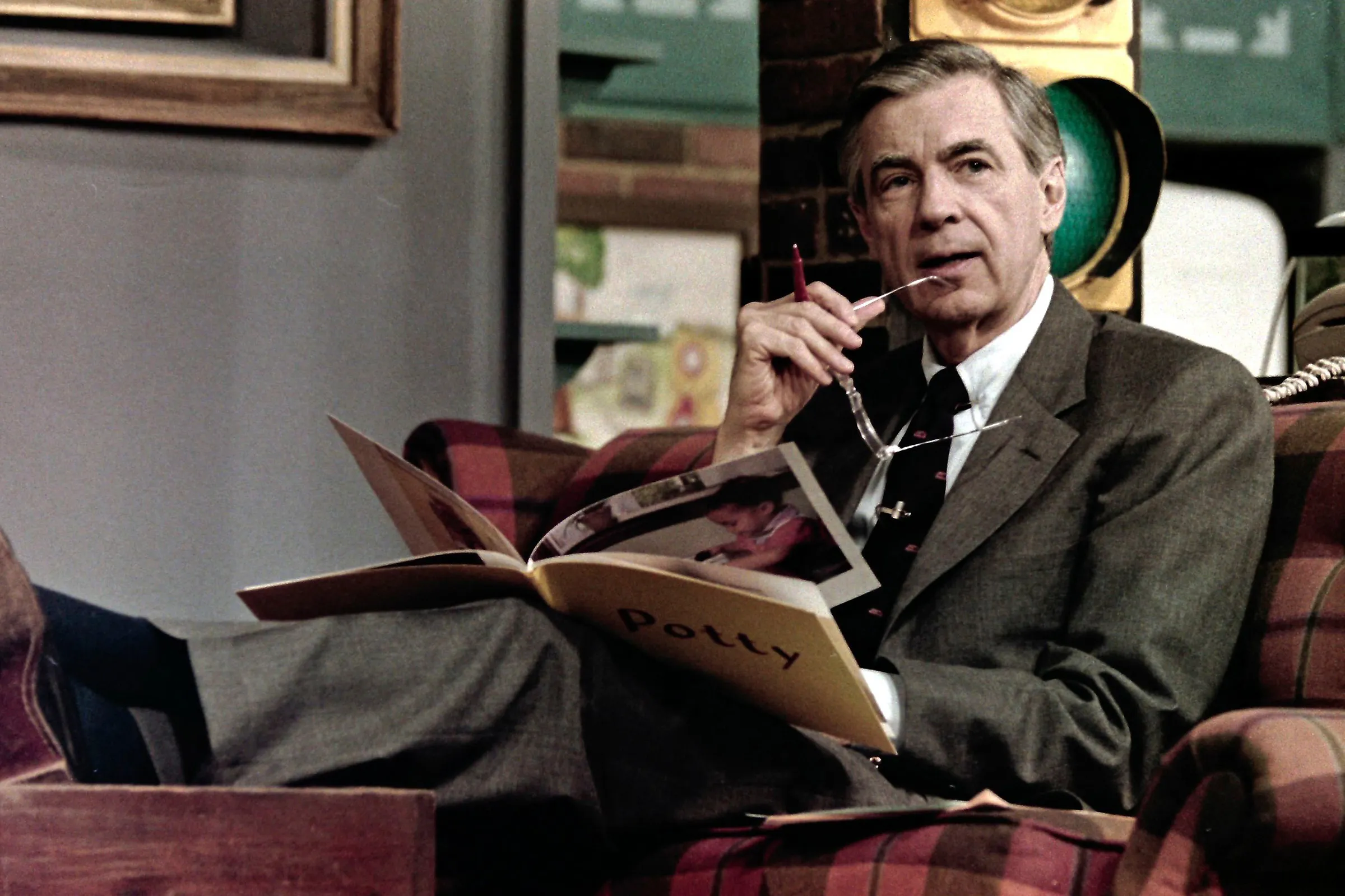
Can Civic Friendship Save America?
Start with “civic assimilation” on the way to a more peaceful Union.

Mansfield’s Insufficient Protest
Harvard’s failings are not episodic but systematic and rooted in a view of the human person that Mansfield himself has consistently tried to resist.
.jpg)
Civitas Outlook


.avif)
Get the Civitas Outlook daily digest, plus new research and events.
Civitas Outlook
Get the Civitas Outlook daily digest, plus new research and events.