Ken Burns' Egregious Omission

Burns’ objective is to claim that principles played no role in the founding of the United States.
The name “Ken Burns” is synonymous with the retelling of many great American stories. Indeed, Burns has been a documentary filmmaker and chronicler of American history since his first PBS special in 1981. He chose the Brooklyn Bridge as his subject, based on David McCullough’s eponymous bestselling book.
Burns has continued this trajectory for more than four decades, giving an audience not just historical information but education in different ways of being an American. His nine-episode, 1990 PBS series, The Civil War, is another example of fine and extensive exploration of this complex history in America. It rightfully won numerous awards and became extremely popular among regular Americans who wanted to learn more about their country.
Burns’ latest PBS six-episode documentary, The American Revolution, explores the founding of the United States and the subsequent war with the British Empire. It could have been an excellent start to the upcoming celebration of America’s 250th anniversary of the founding, but sadly, it steers away from celebration and emphasizes both explicit and implicit criticism of the Founders.
Within the first five minutes of the first episode, we are told that the Founders (specifically Benjamin Franklin) used the Iroquois “flourishing democracy” as a blueprint for the United States Constitution. The evidence, however, is sparse, if non-existent, in the documentary.
Franklin frequently commented on the lives of Native Americans, but we have to be careful how we evaluate Franklin’s words on the subject. He was famously satirical, whether he spoke about the British, Americans, or Indians. In a letter to James Parker, dated 20 March 1751, Franklin writes,
It would be a very strange Thing, if six Nations of ignorant Savages should be capable of forming a Scheme for such an Union, and be able to execute it in such a Manner, as that it has subsisted Ages, and appears indissoluble; and yet that a like Union should be impracticable for ten or a Dozen English Colonies, to whom it is more necessary, and must be more advantageous; and who cannot be supposed to want an equal Understanding of their Interests.
Much later, in 1784’s “Remarks Concerning the Savages of North America,” Franklin speaks highly of the “Civility” of Indians in comparison to the Americans. However, he ends up satirically and equally alluding to a hypocrisy of both groups, as well as the human need to praise the group that he or she is part of.
But Burns doesn’t seem to be interested in nuance and leaves out certain complexities of political and philosophical thought. The entire series is devised around an oppressor-oppressed dialectic. Who the oppressor and the oppressed are rarely change, and this remains static for Burns and his co-directors, Sarah Botstein and David Schmidt. Unfortunately, the documentary is mainly driven by ideology and omission at the service of different oppressed voices.
Much like Howard Zinn’s A People’s History of the United States, Burns focuses on different groups of people, other than the Founders. Working within the oppressor-oppressed dialectic, Burns tells the stories of Native Americans, Blacks, and, sometimes, women. The ideas presented are solely based on race and identity politics, and as a result, history as a discipline doesn’t seem stable or rooted in facts. Every historian must indeed engage in some interpretation to reach specific conclusions. However, interpreting and evaluating facts is different from turning history into ideology.
Everyone can readily agree that slavery is evil, yet watching The American Revolution, this is what the audience hears repeatedly in painful schoolmarm fashion. The narration (superbly executed by Ken Burns' regular, Peter Coyote) and the story are incredibly disjointed. Telling the story of the Revolution requires a certain timeline, and the series adheres to it, but the perpetual tangents and reminders of slavery feel stylistically awkward and clunky. The viewer loses the thread of the story and the argument, especially when the quoted speakers are introduced with no context at all.
Sadly, Burns doesn’t spend a lot of time on the very document that the sovereignty of this country is based on – The Declaration of Independence – and when he does mention Thomas Jefferson writing it, we hear that his writing was “fueled by cups of tea brought to him by his 14-year-old valet, Robert Hemmings, the son of an enslaved servant, Elizabeth Hemmings and Jefferson’s father-in-law.” This mere mention throws the story into a different dimension, which undoubtedly needs to be addressed, but Burns picked the wrong moment to do so.
The series is filled with moments like these, and it contributes significantly to the slow pace and difficulty in holding onto at least one thread of the story. The emphasis on the oppressed groups omits the accomplishments and tireless work of the Founders, especially John Adams. Alexander Hamilton, James Madison, and John Jay are hardly mentioned, and Samuel Adams may have been a Patriot, but was mostly "a propagandist.”
Another thrust of the series is to reduce the difference between good and evil. Although slavery is evil (something which all of us can agree on), there are no “good guys or bad guys,” especially when it comes to the British (Loyalists) and Patriots. Without a doubt, thousands of British soldiers fought a war that they didn’t want to fight, and brutalities were committed on both sides. But when either the British or Native Americans commit acts of atrocity and dehumanization, somehow such actions are excused, whereas the Americans ought to always have something to apologize for. It’s a tiresome leftist ideological trope, including the assertion that “the United States came out of violence,” as one interviewee, Maya Jasenoff, says. This is supposed to be a criticism of America, but perhaps it is lost on Jasenoff that, politically and philosophically, any revolution will result in violence. This is the very nature of revolution. If we want perpetual, static, and illusory stability, then a totalitarian state would be the answer to our existence. There is nothing new under this ideological sun. Everything is filled with incomplete stories and skewed interpretations.
There are redeeming aspects of The American Revolution, namely its focus on military history and the use of famous actors for dramatic reading purposes. (It was pleasant to hear Paul Giamatti reprising his role as John Adams.) It leans heavily in the military direction, and it may not be to everyone’s taste, but for the most part, Burns presents important battles clearly. Naturally, General George Washington is part of this, but if the viewers are expecting a fully embodied picture of Washington, they will be disappointed. Washington is presented as a power-hungry slave owner who happens to lead the Continental Army. However, Burns’ extensive inclusion and sympathetic portrayal of Major General Nathanael Greene’s persistence to win over the British is to be applauded. No revolution required.
After watching the entire series, Burns’ objective is to claim that principles played no role in the founding of the United States. Rather, it was based on low self-interest. But this creates a contradiction for Burns and his co-directors. One does not speak of liberty and yearning for it unless one has experienced tyranny. Tyranny creates destructive conditions for an individual, be it existentially, economically, or politically. As historian Bernard Bailyn says in the documentary, the creation of the United States is about the “struggles between the possibilities of power and liberty.” It still is. It would have behooved the filmmakers to include a few philosophical points about what the American mind truly is. And why the Americans have loved liberty and limited power.
Including the previously unknown voices was an excellent choice. It’s important to know the point of view of a woman who is making her own wool to protest the British “taxation without representation,” or a black enslaved man or woman, not knowing what kind of freedom lies ahead. But the documentary has done all these groups a disservice by treating them as a tangent on a historical line. By attempting to give them more importance, the filmmakers diminished it, and now further divide Americans along these ideological lines.
Liberty is fragile, and the Founders knew this. But the fact that one document–the Declaration of Independence–gave birth to the Emancipation Proclamation and the Women’s Right to Vote is proof that it is a perennial reality, a political document that enshrined a truth worth fighting for because it leads to human thriving. Shouldn’t we be more in awe of this? What is missing in The American Revolution is joy, zest for life, and the importance of “the pursuit of happiness.” Watching the series, one is not left hating or loving America. One is left with something far darker: indifference. As an immigrant myself who came to America following the Bosnian war in the 1990s, I cannot accept such a lack of awe and patriotic passion for this country, which ought to be part of every American’s existential constitution. By no means is America a perfect country, and I have experienced countless difficulties, especially in the first years after my immigration. But I am no longer mired in those difficulties, and only a place focused on “the pursuit of happiness” could have changed my circumstances.
At the end, it seems the filmmakers are saying there was no reason to declare independence, and that it was for nothing. This doesn’t help us, and it will not renew the American patriotism that we need today. But how does American patriotism look in 2025, eight months away from America’s 250th birthday? Who are we as Americans? What is this national identity? Can we unite, or were we ever truly united? One thing that is needed is virtue.
In a letter to Lucy Ludwell Paradise, dated 6 September 1790, Abigail Adams wrote:
Under the present administration our Government daily acquires strength and stability. The union is compleat by the late Adoption of the constitution by Rhoad Island. Nothing hinders our being a very happy and prosperous people provided we have wisdom rightly to estimate our Blessings, and Hearts to improve them.
The question today should not be about the continuous cycle of the oppressor and the oppressed, but about how we, as Americans, can continuously become and remain virtuous people?
The intention of this series, as many interviewees said, is to strip away an idealized picture of the Founders and present an unvarnished truth. A real historian, no matter what his personal politics may be, will not engage in either an idealization or smearing of the said subject. Ken Burns doesn’t smear the Founders, but he egregiously omits the courage and tireless work it took to not only declare independence, but to fight for it. As Americans, we do not worship the Founders. That would be most un-American. But we are called to express gratitude for the toil of all the people involved in this effort and the awe-filled “expression of the American mind.”
Emina Melonic writes about culture, film, and books. Her work has been published in American Greatness, Claremont Review of Books, Los Angeles Review of Books, Modern Age, and The New Criterion, among others. She’s currently working on a biography of Edward G. Robinson and a book on Ronald Reagan’s Hollywood years.

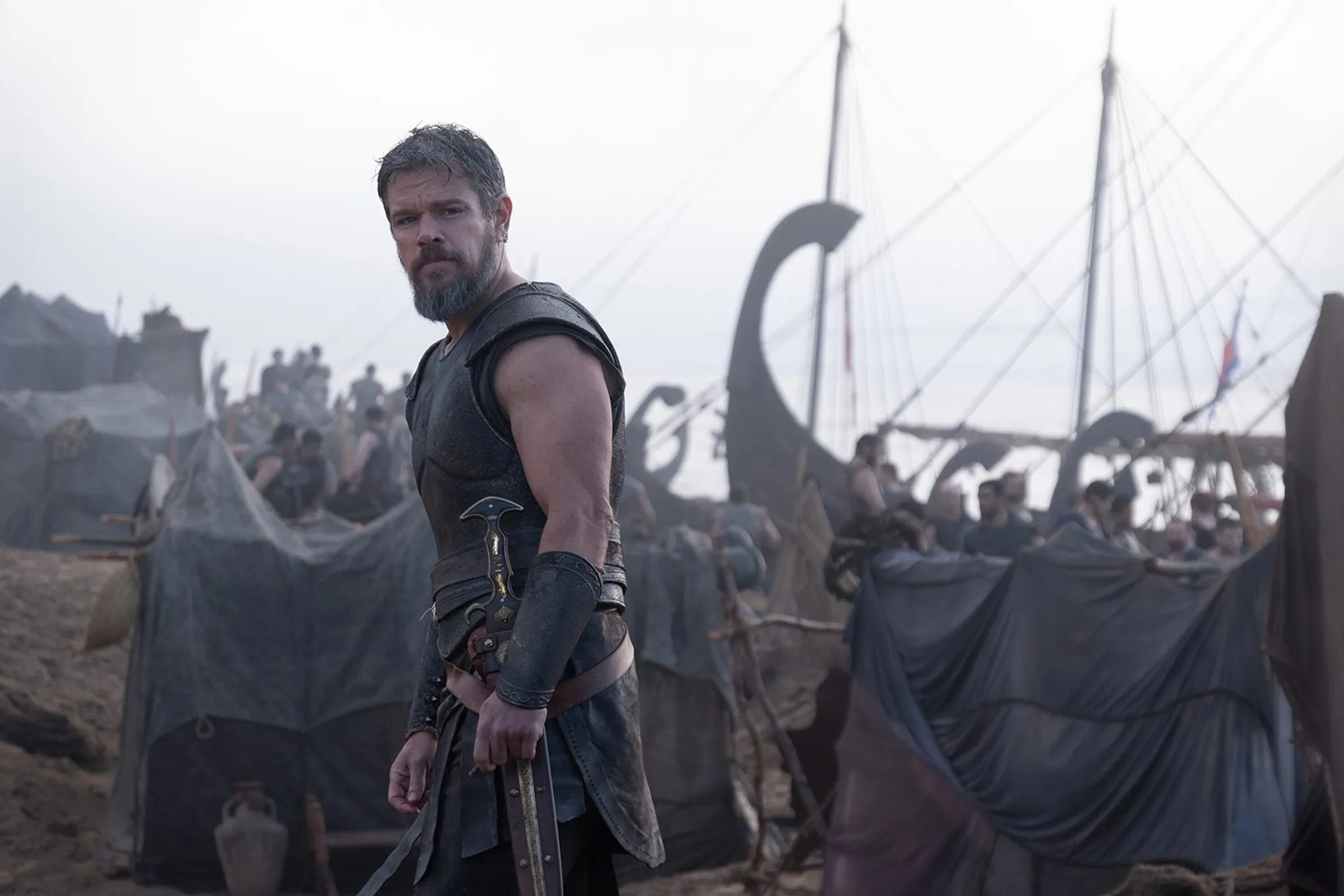
Nolan’s Odyssey and the Search for Wisdom
Nolan’s 'Odyssey' will be a tremendous success, but it is also a work of decadence.
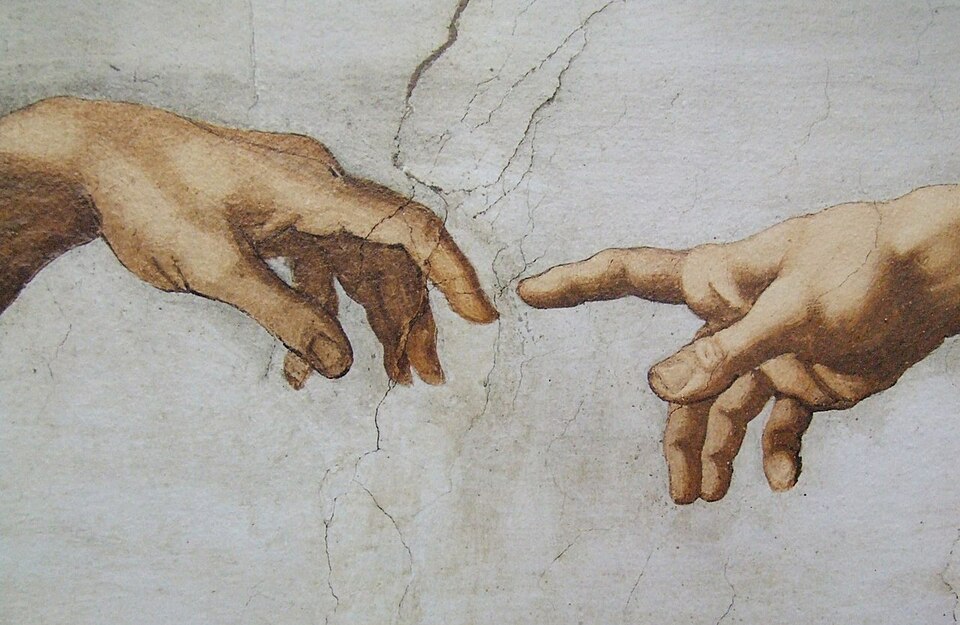
Made in the Image of Nothing
We need a sequel to Carl R. Trueman's 'The Desecration of Man: How the Rejection of God Degrades Our Humanity.'
Spielberg’s Empty Hope
'Disclosure Day' should have been called 'Hope and Change,' or rather 'Change and Hope.'
.jpeg)



Get the Civitas Outlook daily digest, plus new research and events.
Get the Civitas Outlook daily digest, plus new research and events.