
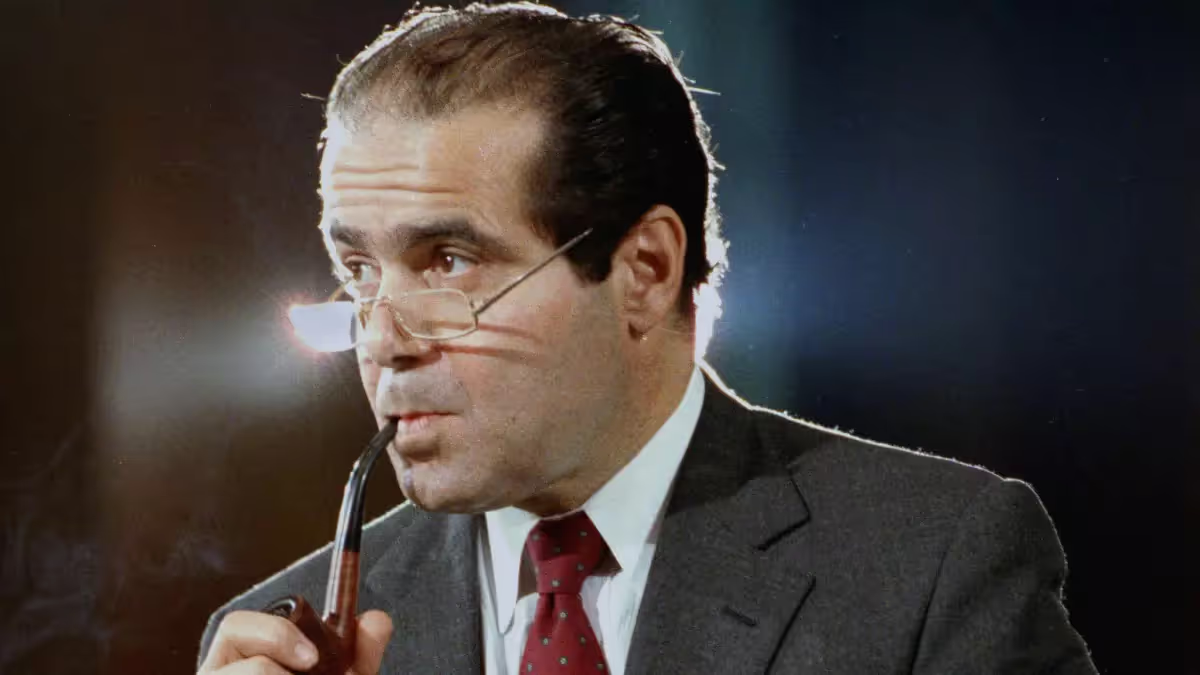
Judge Scalia, A Decade On
Scalia’s crowning achievement — Morrison’s theory of a unitary executive — also included why the President was an “executive.”
Justice Antonin Scalia passed away 10 years ago. At an American Enterprise Institute conference on the occasion, I joined John Sauer, the current Solicitor General, and Steven Engel, the assistant attorney general for the Justice Department’s office of legal counsel (Scalia’s job during the Ford administration) in the first Trump term, to provide observations on Justice Scalia’s effect on political and legal thought about the separation of powers.
Justice Scalia placed the separation of powers and the Constitution’s structural elements, higher in importance than above its more well-known provisions protecting individual rights. As Judge Daniel Bress, a former Scalia clerk who is now a Ninth Circuit judge, observed as moderator of the AEI panel, Justice Scalia liked to read beautiful individual rights protections, and then inform the listeners that they came from the constitution and then inform listeners that they came from the Constitution of the Soviet Union. At his confirmation hearings, then-Judge Scalia underscored the point that government structure made the Constitution’s individual rights provisions possible. The Constitution’s success was due to “the structure of government that the original Constitution established,” including “the checks and balances” among the three branches.
Were it not for Scalia’s unique contribution to the Court’s approach to the separation of powers, the Roberts Court’s coming decisions this summer that may strike down virtually all independent agencies would not have been possible. It is difficult to appreciate how the advance of the idea of a unitary executive shows how the pure force of ideas can move the Supreme Court. Almost immediately upon taking office, Scalia was confronted by one of the greatest perversions in U.S. government: the independent counsel. Passed in the wake of Watergate, the Ethics in Government Act created a special prosecutor, appointed by the federal appeals court in Washington, D.C., upon the Attorney General's application, who would investigate allegations of crime by high-ranking cabinet officers or those close to the President of the United States. This prosecutor enjoyed virtually unlimited resources and could not be removed from office except “for cause” – essentially, the prosecutor could operate free from anyone’s control unless he or she committed a crime or some abuse of power.
The independent counsel violated core principles of the executive power. First, it transferred the power to execute the laws, which is vested in the President under Article II of the Constitution, beyond the control of the Chief Executive. Second, it placed that power of prosecution in the hands of a special counsel who, while formally located within the Justice Department, was not responsible to anyone because of his protection from removal. Nevertheless, the Supreme Court upheld this bastardized version of a federal prosecutor in Morrison v. Olson (1987). Writing for the majority, Chief Justice Rehnquist granted that “[t]here is no dispute that the functions performed by the independent counsel are ‘executive’” in nature, but he disagreed that the Act “unduly trammels on executive authority.” Although “it is undeniable that the Act reduces the amount of control that the Attorney General and, through him, the President can exercise over the investigation and prosecution of a certain class of alleged criminal activity,” the Chief Justice denied that it interfered “impermissibly with his constitutional obligation to ensure the faithful execution of the laws” or that it disrupted “the proper balance between the coordinate branches by preventing the Executive Branch from accomplishing its constitutionally assigned functions.”
In a lonely dissent, written in just his first year on the High Court, Justice Scalia laid the foundations for the return of the unitary executive to American constitutional law. He rejected the idea that the special counsel’s fate should turn on whether it violated the Court’s sense of the proper balance between the need for presidential control of prosecution versus the need for independence to investigate high-ranking officers or even the President. Instead, Scalia wrote, the only criterion for judgment should be “the text of the Constitution and the division of power that it established.” He observed that Article II of the Constitution declared that “the executive Power shall be vested in the President of the United States.” In his most famous line from the dissent, Scalia exclaimed: “[T]his does not mean some of the executive power, but all of the executive power.” He further explained that “governmental investigation and prosecution of crimes is a quintessentially executive function,” and “the statute before us deprives the President of exclusive control over that quintessentially executive activity.”
Rehnquist responded to Scalia’s concern with a balancing test. He conceded that the statute reduced the President’s control but insisted that he preserved “sufficient control” to “perform his constitutionally assigned duties” and that it did not “interfere impermissibly with his constitutional obligation to ensure the faithful execution of the laws.” Scalia was not impressed. “It is not for us to determine, and we have never presumed to determine, how much of the purely executive powers of government must be within the full control of the President. The Constitution prescribes that they all are.” By importing this balancing test, Scalia concluded, the Court had substituted “what might be called the unfettered wisdom of a majority of this Court, revealed to an obedient people on a case-by-case basis” for the constitutional text. Scalia’s disregard for such judicial discretion was manifest. “This is not only not the government of laws that the Constitution established, it is not a government of laws at all.”
Scalia would later say publicly that he considered Morrison his greatest opinion. It certainly was in terms of effect. Although a sole dissent, it sparked an enormous scholarly debate that has brought to light much new historical evidence on the original understanding of presidential power and the Framers’ thinking about the separation of powers. Even more importantly, Scalia’s dissent formed the intellectual basis for a counter-revolution against the excesses of the Watergate reforms. Scalia’s logic has served as the basis for the Supreme Court’s decisions over the last 25 years that have rejected new congressional efforts to protect agency officials from removal.
In Free Enterprise Fund v. Public Company Accounting Oversight Bd. (2010), the Court struck down removal protections for a federal accounting board because it was responsible to the Securities and Exchange Commission, whose members the President could not remove except for cause. In that case, the Court observed: “as a general matter,” the Constitution gives the President “the authority to remove those who assist him in carrying out his duties.” The Court further declared: “Without such power, the President could not be held fully accountable for discharging his own responsibilities; the buck would stop somewhere else.”
In Seila Law v. CFPB (2020), the Court struck down the removal protections for the head of the Consumer Financial Protection Bureau, which enforces federal consumer protection laws. It followed Scalia’s view that the President must have the ability to remove those who enforce federal law, because those officials serve as assistants to the President in performing that constitutional duty. “In our constitutional system, the executive power belongs to the President, and that power generally includes the ability to supervise and remove the agents who wield executive power in his stead,” Chief Justice Roberts wrote for the majority. “While we have previously upheld limits on the President’s removal authority in certain contexts, we decline to do so when it comes to principal officers who, acting alone, wield significant executive power.”
Under this logic, the Supreme Court will likely reverse Humphrey’s Executor, the 1935 case which upheld the limits on removing independent commission members, this year. The entire administrative state, except perhaps for the Federal Reserve, will become subject to the direct control of the President. Restoring constitutional control over the purported fourth branch of government will begin, all thanks to a Justice who passed away 10 years ago.
Even as Scalia’s most important opinion approaches its ultimate victory, an important question remains unanswered. The removal power is an important element of presidential power because the ability to fire resistant executive branch officers is the only formal means for a President to force agencies to follow his orders. But removal is just process: it does not explain the scope of the President’s substantive powers. Did Justice Scalia believe that Article II’s vesting of “the executive power” in the President included more than merely serving as the head of HR for the federal government? Does it, for example, extend to the power to use armed force against national threats and to advance U.S. foreign policy, as I have argued elsewhere? Does Article II grant the President the sole constitutional authority to establish foreign policy and conduct diplomacy on behalf of the nation (a question on which the constitutional text is silent)? Does Article II recognize a power on the part of the President to defend the federal government, its personnel, and its facilities?
I expect that Scalia would say yes. His famous argument in Morrison that Article II vests all of the executive power in the President mirrors that of Alexander Hamilton as “Pacificus” in defense of President Washington’s right to issue the proclamation of neutrality in the French revolutionary wars. Hamilton argued that the President’s authority to set the foreign policy of the United States derived from Article II, Section 2’s grant of the executive power. The Constitution already made the President Commander-in-Chief, maker of treaties with the advice and consent of the Senate, receiver of ambassadors, and the executor of the laws. But “it would not consist with rules of sound construction to consider this enumeration of particular authorities as derogating from the more comprehensive grant contained in the general clause.” Article II’s enumeration of powers “ought . .. to be considered as intended . . . to specify and regulate the principal articles implied in the definition of Executive Power; leaving the rest to flow from the general grant of that power . . . .” For Hamilton, the Senate’s role in making treaties was only a narrow exception from the general grant of executive power to the President and “ought to be construed strictly.” When the Constitution sought to transfer traditionally executive powers away from the President, it did so specifically, as with the power to declare war.
“The general doctrine then of our constitution is, that the Executive Power of the Nation is vested in the President,” Hamilton concluded, “subject only to the exceptions and qualifications which are expressed in that instrument.” As conducting foreign policy was an executive power under the British constitution and, in the opinion of the great political theorists of the day, Hamilton concluded, it must fall within Article II’s grant of power to the President.
This is exactly the logic offered by Scalia in his Morrison dissent on behalf of the President’s sole authority over the removal of executive officers. By making it his central thesis against the special counsel law, Scalia adopted an approach to executive power that goes well beyond the removal debate. The story of the Presidency has not truly been one solely of whether the president is really the chief of the executive branch. The central element of the Presidency has been the expansion of its executive, not its managerial powers. The Framers created the Presidency so that a branch of the government would always be “in being,” as John Locke described the executive, and could exercise power in times of crisis and emergency. Our greatest presidents did not succeed because they carefully husbanded the removal power, but because they responded to great challenges using every tool at their disposal, including their substantive powers as Chief Executive and Commander-in-Chief. Authority through the removal and command of subordinates, no doubt, was an element of executive power, but it was secondary to the more important issue — the scope of the president’s constitutional authorities. It was Hamilton’s Pacificus thesis that not only supported Washington’s declaration of neutrality, but also Jackson’s fight against nullification and Lincoln’s conquest of secession. Scalia’s crowning achievement — Morrison’s theory of a unitary executive — could not have been limited to why the President was “unitary”; by necessity, it also included why the President was an “executive.”
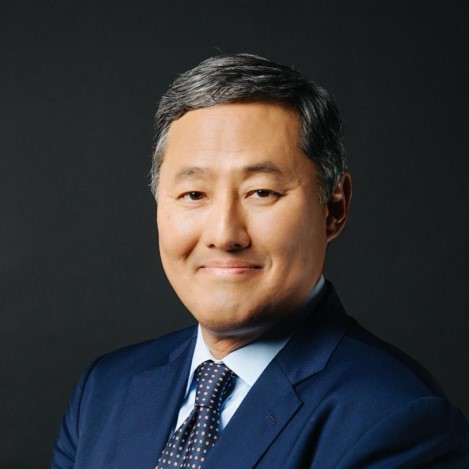
John Yoo is a senior research fellow at the Civitas Institute and a distinguished visiting professor at the School of Civic Leadership at the University of Texas at Austin.

The Uses and Abuses of the Pardon Power
The recent flood of pardon controversies shows no signs of abating.
.jpeg)
The Fall of Fauci
The greater the scope of authority granted to a single individual, by circumstance or deliberate action, the more important scrutiny and accountability become.


.png)


Get the Civitas Outlook daily digest, plus new research and events.
Get the Civitas Outlook daily digest, plus new research and events.