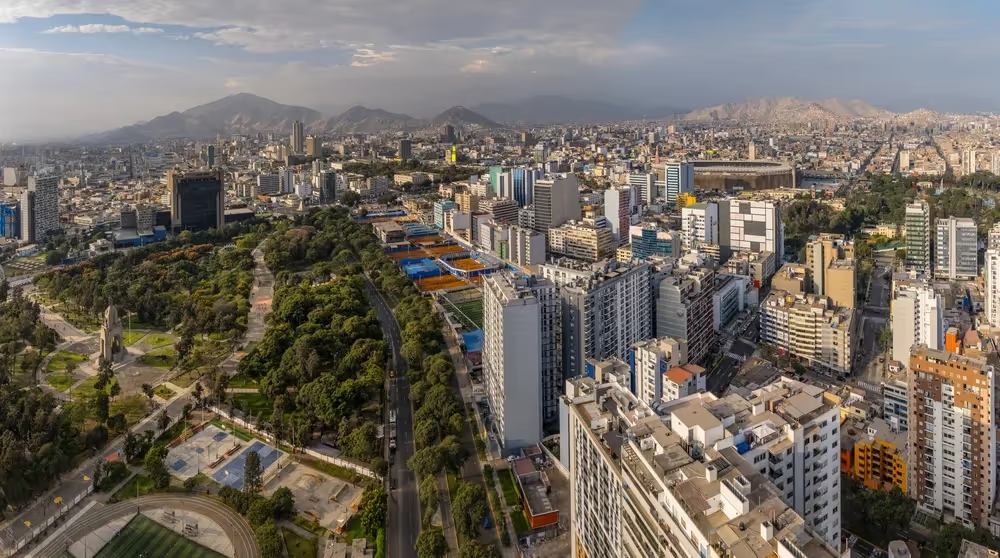
Peru: Between Chinese and American Influence

Peru should continue to import and export goods with China, but it should also be cautious about granting China access to essential facilities and control over strategic infrastructure. In doing so, Peru should be backed by the U.S.
The U.S. government recently announced that it will designate Peru as a non-NATO military partner. This is mostly good news for Peru, but it also invites reflection on why it was chosen and how to navigate the competing influence of China.
Beyond having relevant infrastructure in the country and serving as its most important commercial partner, Peru was recently designated by China as a regional hub through the construction of the Chancay port. Peru is a natural choice, given its strategic position in the Pacific, the absence of institutional resistance, and China's control over infrastructure and key commodities, including minerals and agricultural products. In 2023, the U.S. expressed concern about the growing Chinese presence in Peru, but it is now taking action.
Peru’s foreign policy is characterized by pragmatism and neutrality. In some instances, Peru has chosen sides, such as against the UK in the Falklands War (Argentina) or with the Allies in the Second World War. In this case, would it be advantageous for Peru to remain neutral, align with China, or align with the U.S.?
First, we will consider a potential military alliance with the U.S. As a reference, we can look at the relationship between Colombia and the U.S. The U.S. has helped Colombia for over 50 years to fight drug trafficking and terrorism. This help has translated into around USD 12–15 billion in aid from 1990 to 2025 (compared with USD 4–6 billion for Peru in the same period). The main goal of the alliance was to fight drug trafficking and terrorism.
It is safe to say that this first goal was not achieved. Colombia not only continues to be the largest producer of cocaine in the world, but it also made a “peace” agreement with the terrorist group known as the FARC. Over the years, Colombia has had some of the most high-profile “narcos” in the world (along with Mexico). Moreover, it now has a former member of the communist guerrilla movement as president.
But this is not the whole story. As reported by Ambassador Myles R. R. Frechette in a 2007 report (“Colombia and the United States — The Partnership: But What Is the Endgame?”), the U.S. (and Colombia) failed to define the endgame, but they accomplished some important things. The Colombian military's capabilities and professionalization increased, and the country became a viable democracy after being considered a failed state.
So, what went wrong? According to Frechette, the emphasis should be on strengthening institutions and the rule of law, not on militarily fighting narco-terrorists. This is consistent with the teachings of criminal-organization expert Edgardo Buscaglia, who coined the concept of the “Paradox of Expected Punishment,” according to which a criminal organization grows stronger through persecution, in the same way that an established corporation gains a competitive advantage — or even a legal monopoly — through regulation. As persecution grows stronger, criminal organizations gain a competitive advantage because they have more resources and skills than their competitors to withstand state violence.
It is therefore not surprising that Colombia has had some of the most high-profile drug lords in the world, such as Pablo Escobar and members of the Medellín Cartel. According to Buscaglia, rather than focusing on persecution, states should strengthen institutions and reduce money flows by seizing assets and preventing money laundering.
How does this translate to Peru? Peru is on the verge of becoming a narco-state. According to the Democracy Index (2024), it is a “hybrid regime” with one of the lowest scores in the region, alongside Venezuela. A group related to narco-terrorists led by Pedro Castillo won the 2021 election, and most institutions in Peru are infiltrated by narco-terrorists, along with businesses that serve as vehicles for money laundering. In addition, the Castro-Chavista (Bolivarian) movement has had significant influence in the 2011 and 2021 presidential elections. A high-ranking Cuban spy was present in Peru for years (“Gallo” Zamora), which is particularly disturbing considering that the president of the party that won the elections was “educated” in Cuba for eleven years (Vladimir(!!) Cerrón).
According to some analysts, such as Pablo Secada, the CIA had already aided Peru in removing Castillo. One of the leading figures related to him (former congressman Guillermo Bermejo) was recently convicted of terrorism. However, many narco-terrorists remain infiltrated in the government and civil society. Most efforts in Peru should be focused on gaining control over narco-terrorism and Castro-Chavista influence. Beyond resources, Peru should demand a strategy that goes beyond military persecution and includes a clear endgame, rather than a continuous war that leads nowhere, as in Colombia or Afghanistan.
On the other side, there is China. China already controls trade channels, minerals, and electricity distribution and exerts influence over some media outlets, academics, and politicians in Peru. China also heavily preys on Peru’s rich seas. How China can influence politics in a country or use civilian facilities for military purposes is well documented (see, for example, Anne-Marie Brady's Magic Weapons).
Unlike the U.S., which represents democracy and free markets (albeit imperfectly), China is not a positive influence on Peru. It represents autocracy and a mimicry of free markets, without the values that underpin a free society, such as respect for individual dignity and property rights. Peru should be far more demanding and cautious in its relationship with China. Of course, Peru should continue to import and export goods with China, but it should also be cautious about granting China access to essential facilities and control over strategic infrastructure. In doing so, Peru should be backed by the strength of the U.S.
Oscar Sumar is deputy vice-chancellor for academic affairs, Universidad Científica del Sur, Perú, and a fellow of the Public Law and Policy program at Berkeley Law. He is also a founding director of BeLatin.

.webp)
Can Britain’s Next Prime Minister Escape the Net Zero Trap?
Britain has burned through five Prime Ministers and is paying some of the highest electricity prices in the world.
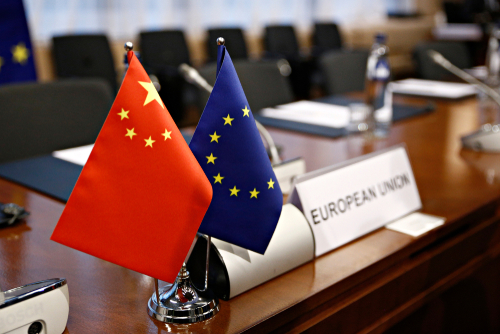
The Scanner at the Gate: Europe’s China Policy Litmus Test
China’s industrial policy is entering Europe through public procurement—and reshaping sensitive markets from within.

To Family Engineers of All Parties: A Call to Reject State-Sponsored Culture
During the 80 years following WWII, family engineers have repeatedly pulled levers in failed attempts to produce their preferred outcomes.
.jpg)



Civitas Outlook

Get the Civitas Outlook daily digest, plus new research and events.
Civitas Outlook
Get the Civitas Outlook daily digest, plus new research and events.