Becoming All-American

Oscar nominated film Blue Moon does not reduce art to ideology.
Most of the year’s Oscar movies are fairly typical of the new trend to reduce art to ideology, some more concerned with race (Sinners, a mediocre picture that now holds the record for most nominations in Oscar history), some more with feminism (Hamnet, perhaps even Bugonia), and some combining the two (One Battle After Another). But an older kind of Oscar picture somehow snuck in: Blue Moon, starring Ethan Hawke as Lorenz Hart, one half of the incredibly famous and successful Broadway duo Rodgers & Hart.
Hawke delivers a rare performance that justifies his Oscar nomination, his fifth overall and the first for an actor in a leading role. He has no chance of winning, but it’s a marker of his achievement. This is Hawke’s fourth nomination for a collaboration with director Richard Linklater, two of which have been for screenwriting.
Linklater has a fondness for this genre, the nostalgic look at old artists in rebellion. In 2008, he directed Me and Orson Welles, based on the novel by Robert Kaplow, who also wrote Blue Moon, for which, like Hawke, he received an Oscar nomination. Blue Moon has generally received good reviews but not much attention since its premiere at the Berlin Film Festival, where Andrew Scott won the acting award for playing Richard Rodgers and the movie was nominated for the Golden Bear. Linklater himself has received less applause, perhaps because it’s such a theatrical production that the credit naturally goes to the actor and his writer. But Linklater has not given up on making charming portraits of directors. He also made a Jean-Luc Godard biopic the same year, Nouvelle Vague, about the making of one of the major films of the post-war era, Breathless (1960).
Blue Moon takes place on the evening of March 31, 1943, the opening night of Oklahoma!, a remarkably successful musical that ran for 2,212 performances. It was followed by the 1955 movie adaptation, which also received four Oscar nominations and won two. A new America is dawning! Indeed, you can call Oklahoma! the overture to America’s great romance with the Western, which dominated TV for the first couple of decades of the post-war era and, above all, gave us dozens of great John Ford, Anthony Mann, Howard Hawks, Sam Peckinpah, or Bud Boetticher movies, to say nothing of all the later revisionist Westerns that gave us stars like Clint Eastwood.
But this is also the end of another era, the era of elegant Broadway musicals, and the beginning of the end of the era of the great crooners, too. Lorenz Hart is emphatically a man of this older world, along with Cole Porter — men who wrote sophisticated love songs, usually sad and witty, not infrequently risqué, at any rate, for adults rather than teenagers. Hart gave us amazing songs like My Funny Valentine and The Lady Is A Tramp, Where Or When, and I Wish I Were In Love Again. All four are from the Rodgers & Hart hit of 1937, Babes in Arms.
Oklahoma! was the first musical Rodgers wrote with his new collaborator, Oscar Hammerstein II, and it marked the end of his collaboration with Hart, who died that year after completing six songs for the revival of one of their old shows, A Connecticut Yankee. Hart was as cynical as Hammerstein was sentimental, and although both brought out the best in Rodgers, it’s the latter collaboration that still charms America — think of The Sound of Music. I dislike it intensely myself, which is perhaps why I prefer Hart’s lyrics.
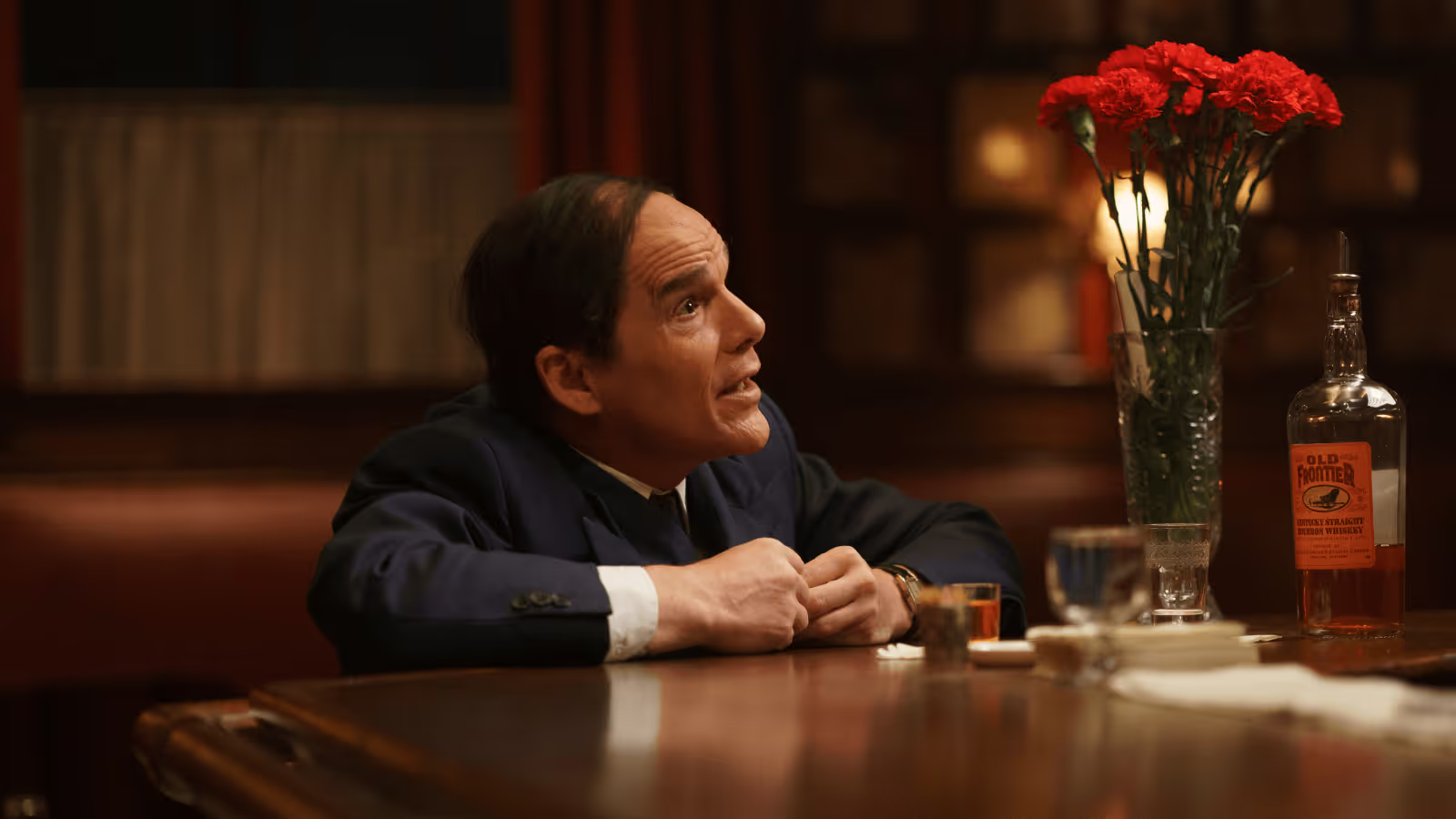
Blue Moon dramatizes this conflict between two parts of the American heart, as well as Hart’s imminent death, and pays a kind of homage to the artist by revealing him in all his complexity, from his self-admiration to his troubled life, from his jealousy of Hammerstein to his self-respect as an artist. While the cream of New York is at the theater enjoying the much-talked-about new show, Hart, who dismisses it as cornpone, holds court at the bar of the then-famous restaurant Sardi’s, waiting for something to happen. Since everyone is at the theater, he’s telling it to the bartender (Bobby Cannavale), who tries to defend Hart from his weaknesses — a drunkard — while defending himself from the logorrhea, gamely fencing at the witty remarks and shrugging off the long words.
Hart prided himself on a clever, poetic honesty about the human heart and about love in America, and on being American, continually seeking to bring poetic or musical language closer to the prose of ordinary American life, so to speak. At his best, he was the lyric poet of the great democracy. Hawke, who nails the physical aspect — Hart was quite short, a mere five feet tall — never quite gets to what was great about him, unfortunately. He starts out imitating John Malkovich before settling into a bravura performance as a wit defeated by the world’s indifference, desperate to fall in love, unable to keep himself alive. There’s charm in the performance, but also arrogance — Hawke is not half the artist Hart was. Worse, the tendency to reduce people to psychological problems mars some of the displays of art.
To compensate for these weaknesses, the witticisms are accompanied by Rodgers’ songs performed on the bar piano by a veteran on leave (Jonah Lees) — one final, fictitious collaboration between the two artists. Hart knows he's washed up, so he’s trying to romance a college student — a young woman of the new, empowered, Progressive era (Margaret Qualley, one of the upcoming stars) — trading one beauty for another. He blames America for everything that’s made it impossible for him to remain the toast of the town, from a bellicose prosecution of the then-ongoing war to the sentimentality it occasions. But it’s America he loves in Rodgers, whose genius for melody and harmony he prizes, as well as in this young woman, who suggests the promise of the future — lovers of the future might find themselves in his lyrics.
Hart is, in a word, not a wartime artist, because his patriotism, as I suggested, is in his art — showing his fellow Americans how much fun and insight there already are in their speech and typical dramas. But his caustic wit has concealed from him the difficult demands of being a musical educator of a nation of people who prize their independence as much as he himself does. In his constant effort to elevate by beautifying, by showing marvelous possibilities, whether comic or tragic, he neglects the other function of beautification, justice, which brings America together. He’s only aware of this incompleteness in a painful way — he feels rejected.
Hart suffers from the typical liberal lack of self-awareness, a certain embarrassment about being American, and a desire to be more sophisticated, apart, the better to be atop. Dishonesty is not the worst quality in an artist — tone-deafness is. But he shares, on the other hand, in the great insecurity that is the correlative of freedom. If he offers such beauty, why can't he be reassured in any way that there’s a future in it? Nothing is more obvious than that you’re no better than your last work, that hits aren’t guaranteed, and that, on the one hand, it’s a tough business making beautiful things, and on the other, death is inevitable. Whether anything survives our inevitable failures, whether he measures up as a poet — that’s ultimately what’s making Hart unhappy. He’s unsure whether he raised American popular music to the level of art or instead sank.
Hart is more interesting than Blue Moon shows us, but this is the most compelling portrait of him we have on film. The drama of his self-examination and self-laceration is tempered by comedy and ridicule, by a reconciliation with his younger, more gifted friend Rodgers, and by an admission of failure — he ultimately takes himself down a peg. Amid the beautiful music and wonderful acting, we raise questions about art and its place in America, and we come to see how endangered the position of artists is in a commercial society. The best scenes in Blue Moon reject any self-pity about this situation and justify the bravura performance.
As for the title, Blue Moon, it comes from Rodgers & Hart’s most successful song, which sold about a million copies after its 1935 appearance. It’s the kind of sentimental love song that Hart disliked; it’s also rare because it wasn’t written for one of their Broadway shows but as a standalone pop song. America fell in love with it, musicians and audiences alike. It’s an introduction to the drama: Hart found it very hard to reconcile himself to that success — to how all-American he himself was. It’s also the movie’s wittiest suggestion, that success could come unbidden, that one could be loved without feeling one deserves it, and that rare talent could by chance coincide with popularity.
Titus Techera is the Executive Director of the American Cinema Foundation and a culture critic for think tanks including Liberty Fund and the Acton Institute. He teaches in the Manhattan Institute Logos Fellowship and is a Visiting Fellow at the Mattias Corvinus Collegium in Budapest.

Nolan’s Odyssey and the Search for Wisdom
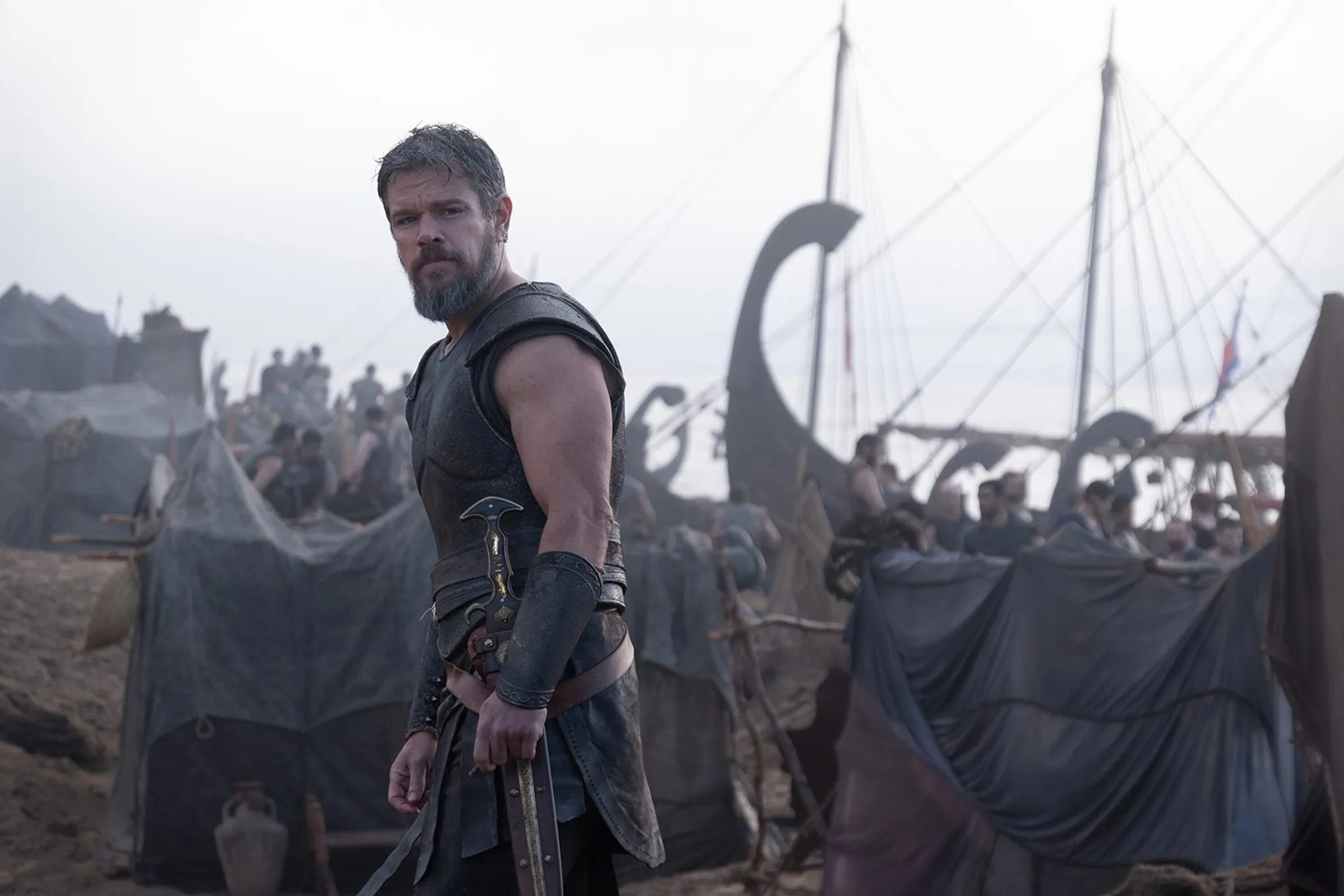
Nolan’s 'Odyssey' will be a tremendous success, but it is also a work of decadence.
Made in the Image of Nothing
We need a sequel to Carl R. Trueman's 'The Desecration of Man: How the Rejection of God Degrades Our Humanity.'
Spielberg’s Empty Hope
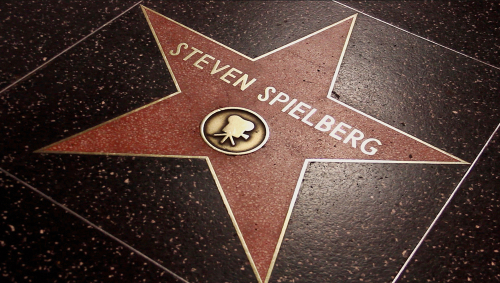
'Disclosure Day' should have been called 'Hope and Change,' or rather 'Change and Hope.'
.jpeg)



Get the Civitas Outlook daily digest, plus new research and events.
Get the Civitas Outlook daily digest, plus new research and events.