When Duvall Played Stalin

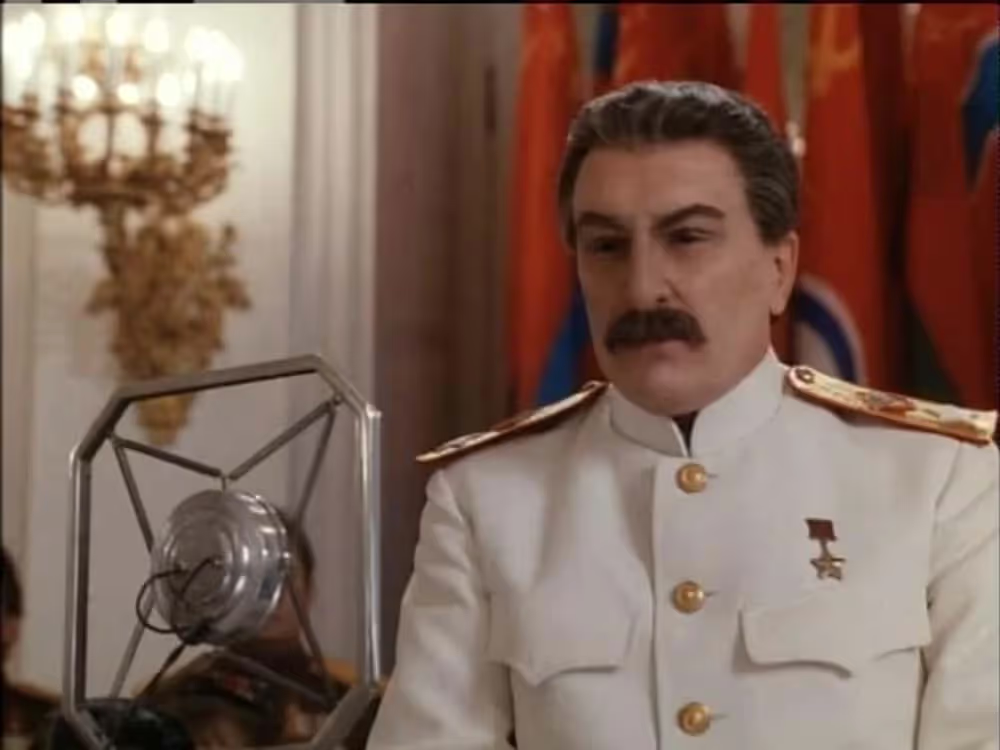
Robert Duvall's portrayal of Josef Stalin in the HBO movie Stalin (1992) is a unique portrayal of Communist tyranny.
Robert Duvall died this week at the age of 95. He was one of the eminent character actors who helped make Hollywood productions, whether auteur or blockbuster, dignified and humane by his interest in character, especially in manliness and sometimes in faith. Duvall also acted in a number of historical dramas, bringing to life important political figures, beginning with playing Eisenhower in the television miniseries Ike: The War Years (1979), a much-neglected form of public service.
Perhaps his best work in this genre, and certainly the most important, is the HBO movie Stalin (1992), a unique portrayal of Communist tyranny. And one with epic ambitions, telling the Soviet story from the October Revolution to Stalin’s death in 1953, over three hours. One reason this was ever made is that producer Mark Carliner was a Princeton graduate who majored in Russian history. Moreover, the film's pathos is partly due to director Ivan Passer, a Czech artist and Milos Forman’s co-writer. The two defected together after the Soviet invasion of Czechoslovakia, which restored Communist tyranny after the Prague Spring in 1968.
Stalin was a major success, winning three Golden Globes out of four nominations and four Emmys out of ten nominations, a fitting reward for its large budget for a TV movie ($10 million) and remarkable Anglo-European cast: Duvall plays Stalin, Julia Ormond his wife Nadezhda Alliluyeva, Joan Plowright and Frank Finlay her parents. Vladimir Lenin is played by Max Schell, Leon Trotsky by Daniel Massey, and Bukharin by Jeroen Krabbé.
Moreover, Stalin, filmed in Budapest and Moscow, features incredibly convincing sets, beautifully shot by the great Vilmos Zsigmond, himself a victim of Communism. Born in Hungary in 1930, he taught himself photography (banned by Communists from art school because his family was deemed bourgeois) and eventually filmed, with fellow photographer László Kovacs, the Hungarian Revolution of 1956, put down in blood by the Soviets. They then fled to Austria and eventually America, where they sold their footage to CBS for a Cronkite-narrated documentary and moved on to successful careers in Hollywood.
More surprisingly still, the production got access to the Kremlin (first to do so), in the waning days of the USSR, just before its Christmas Day dissolution, and Stalin was screened in Russia to an elite audience, on Yeltsin’s orders (who, of course, skipped it himself), before it even screened in America. The date chosen was the 75th anniversary of the October Revolution! It got rave reviews from Khrushchev’s daughter, Rada Adzhubei. It goes without saying that all of this is now unimaginable from every point of view.
Stalin is, typical for us, a “human interest story,” but it has the atypical virtue of taking a true story seriously, that is, paying attention to the activity of witnessing and remembering. The fictional narration is attributed to Stalin’s daughter Svetlana, who is such a fit narrator because she defected to the US in 1967 and became an American citizen. She focuses the bulk of her narration on her mother, Nadezhda Alliluyeva (whose name translates as Hope Hallelujah). Stalin was a friend of her family; she became a lovestruck girl looking up to a revolutionary hero. They married when she was 18, and she committed suicide in 1932, at the age of 31.
The opening sequence, including the titles, is in the style of Soviet propaganda films by major artists like Eisenstein, recalling Battleship Potemkin (1925), Strike (1925), and October (1927). The culmination is Lenin’s arrival in Moscow. That points to the overwhelming problem we face with Communism: the myth of the revolution, the strongest moral claim of Marxism — heroism, sacrifice, victory — as the great French political thinker Raymond Aron put it in The Opium of the Intellectuals (1955). Stalin attempts to deal with it by showing not only the family cruelty of the Communists, but their savagery to each other, and hence the inner contradiction in the theory of party rule or Lenin’s “vanguard of the revolution.”
By identifying Stalin’s success with his eagerness to murder his fellow revolutionaries, partly calculated, partly mad, largely to do with fear, suspicion, Stalin reveals that communism’s strength comes from tyranny. People admire it primarily because it was so powerful for so long in the Soviet Union. That was only possible because of Stalin. It has nothing to do with either the principles of fraternity and equality or its dedication to scientific transformation of the economy, society, family, etc. The movie emphasizes that part of Stalin’s success follows from his identity with German tyrant Adolf Hitler; the failure of the other leaders, starting with Lenin, stems from their unwillingness to tyrannize their closest collaborators, which leads them to delegate tyranny to Stalin. As choice reveals character, Stalin emphasizes first Lenin’s choice of Stalin over Trotsky. After Lenin’s death, other Old Bolsheviks in the Politburo made the same choice, especially Zinoviev and Kamenev. The movie also emphasizes Stalin’s own choice of Beria, the brutal chief of the secret police, the NKVD, who executed Stalin’s purges. All except the latter end up purged, along with Bukharin, who led the Comintern, was part of the Politburo, and edited Pravda, the major Soviet newspaper.
Duvall’s task, in conveying all this, is much more difficult than that of the plot, which, after all, relies primarily on our awareness of Russian history. We have comparatively little awareness of Stalin himself, partly because we are too squeamish to look a tyrant in the face. Moreover, Duvall plays under a stiff mask, which is problematic from a cinematic standpoint. But its dramatic effect is strikingly effective. First, because it insists, as all masks do, on our distance from the actor; second, because it insists on Stalin’s own duplicitous, treacherous nature; it emphasizes inhumanity — not only a certain unpredictability, but the madness, or sickness of soul typical of tyranny. His inability to judge events and characters adequately is shown in his facial expressions and in other bodily gestures. In emphasizing Stalin’s physical inadequacies, Duvall suggests that it is the one thing he couldn’t entirely control; the movie introduces this theme by having statist authorities reject him for military service during the Great War for being physically unfit.
The major limitation of this approach to acting and storytelling is that the great success of tyranny is either downplayed or left unexplained. Stalin was not merely a demagogue, ideologue, and technological murderer. He was remarkably cunning, aware of all the defects of the revolution and its Machiavellian remedies. This is obvious to the apolitical types among us, not in his rule, but in his infamously cruel humor (which makes the recent satire Death of Stalin seem pathetic, shy, sophomoric by comparison). Stalin wisely sets aside all this to educate the audience about the basic moral issues involved in Soviet history.
Stalin, therefore, focuses on telling the story of the revolution, which began in the idealism of propaganda but ended in horror. Stalin slowly destroys every claim to idealism or partisan loyalty, purging everyone who threatens his ascent as well as everyone who can remember a time before he was supreme ruler; the price he pays, beside the loss of his family, is a descent into madness, fear, seclusion, a hell of his own making, since he cannot trust anyone and the more he tries to assume control, the more he feels he must murder. A kind of divine punishment for tyranny — a part of providence, if you will — suggesting its inevitable downfall after losing the Cold War.
Duvall’s characterization suggests three sources for Stalin’s character. First, the harshness of Russian life for the poor majority, which makes for toughness, but also ruthless banditry. Stalin is proud of his youthful terrorism — going by Koba, the avenger protagonist of Georgian Alexander Kazbegi’s 1882 novel The Patricide. That Romantic, brutal story is both enacted and revealed as a mask for tyranny in Stalin’s own life, by his savagery toward his family. The very suffering of the poor encourages tyrants to realize they could get away with pretty much anything. Without Orthodoxy and imperial authority, nihilism threatens.
Second — and this is where private life reveals its importance, with all its events, from marriage parties to palace intrigues — everything decent, like patriotism and custom, is perverted to make the tyrant feel loved, approved of, and a protector of the community. Stalin can flatter himself that he is the real Russian, being neither immiserated nor alienated by intellectualism. The ceremony of worship he organizes for the dead Lenin, who becomes a kind of secular saint, fits the same usurpation of custom.
Third, what is dishonestly called “dictatorship.” The war, the regime change, the rise of revolutionary politics, the collapse of institutions and habits, and the fear caused by poverty, hunger, and desperation encourage lawlessness and violence, and put factional unity above any imaginable consent of the community to government. Not legitimacy, but only violence can then correspond to the shocking changes underway and give at least the illusion of decisive action. This is a source of character, in the sense that it proves the already-established character finally fits the times and leads to power.
Stalin, of course, is a very difficult subject for us to deal with; mostly, we avoid it. Almost all our educational resources have failed us. Except, perhaps, the humanities — there are still attempts to restore moral and political seriousness. British Novelist Martin Amis attempted to lead his audience to face the tyrant in his 2002 essay, Koba the Dread: Laughter and the Twenty Million. American Historian Sean McMeekin did, too, in his trilogy The Russian Revolution: A New History (2017), Stalin's War: A New History of World War II (2021), and To Overthrow the World: The Rise and Fall and Rise of Communism (2024). Duvall did it in Stalin, and, given the emotional power of cinema, its prevalence in our culture, we owe him a debt of gratitude. It’s strange to compliment an actor for impersonating a tyrant, but it is a moral act and an act of courage at that. It’s worth remembering, indeed, with gratitude.
Titus Techera is the Executive Director of the American Cinema Foundation and a culture critic for think tanks including Liberty Fund and the Acton Institute. He teaches in the Manhattan Institute Logos Fellowship and is a Visiting Fellow at the Mattias Corvinus Collegium in Budapest.

.jpg)
Elite Women and Title IX Transformation: A Cautionary Tale
All we can do is pay homage to each progressive Sisyphus who valiantly pushes her rock up the hill, only to have it roll back down for another inspiring but ultimately tragic story.
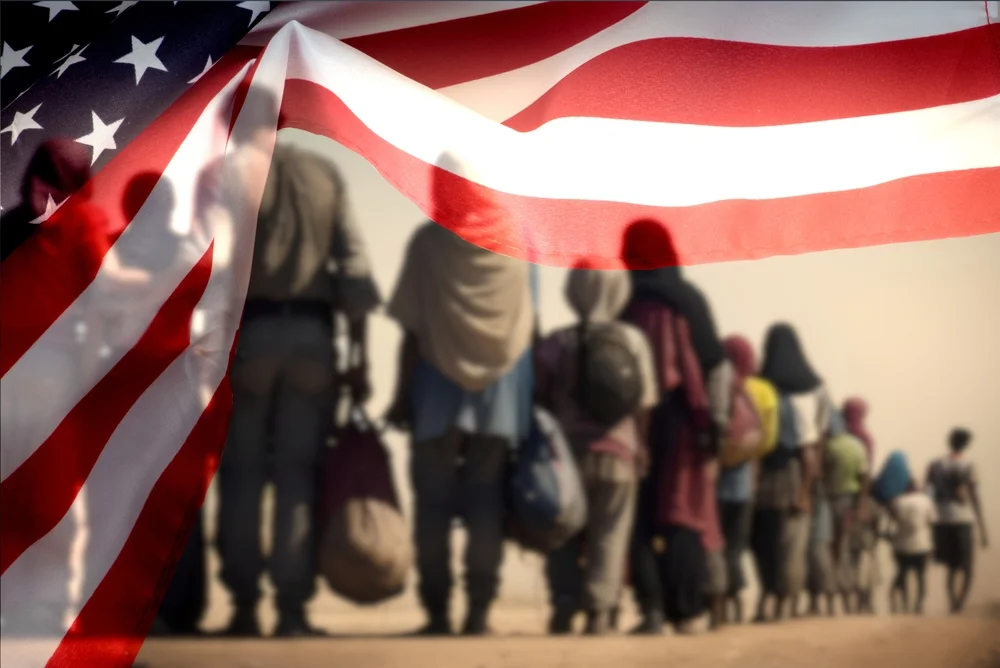
Immigration Indoctrination: Story Time For the Fourth of July
Liberal information asymmetries are difficult to break.
Introducing 'The Civitas Collection 250'
We hope that you, the reader, will deepen your understanding of the Declaration and develop greater devotion to this remarkable country we have been called to uphold and cherish.



.jpg)
Get the Civitas Outlook daily digest, plus new research and events.
Get the Civitas Outlook daily digest, plus new research and events.