.webp)
On the Liberating and Living Truths of the Declaration of Independence
Clarence Thomas has done more to repudiate D.E.I. and restore America’s founding principles than any other American in the 21st century.
Not so long ago, it was unclear whether American elites would celebrate the Declaration of Independence’s 250th anniversary. The New York Times proclaimed 1619—not 1776—as our true origin year, and slavery and oppression—not equality and liberty—our founding principles. During the “Great Awokening” that followed, universities and corporate America embraced D.E.I. and attempted to refashion American life. Donald Trump’s 2024 election was, in large part, a rejection of D.E.I.-America.
But what should we celebrate when we celebrate the Declaration of Independence’s 250th anniversary? Supreme Court Justice Clarence Thomas answered those questions at the University of Texas at Austin in what will likely be the most important speech of America’s semiquincentennial celebration, articulating America’s founding ideals.
The Principles of the Declaration
“The Declaration made clear,” Thomas said, “that the purpose of government is to protect our God-given inalienable rights, rights that all individuals equally possess.” Our equality lies in our dignity as children of God, who endowed us with capacities for self-government. Because we are all created equal, legitimate government is instituted through consent. But the consent of the governed is only a necessary condition for legitimate government. A good government is dedicated to protecting its citizens’ God-given natural rights.
Thomas reminds us that the Declaration is a charter of liberation, including for black Americans. Perhaps academic wokism’s most insidious element is the dogmatic teaching that all writing reflects its author’s race and class. The 1619 Project reads the Declaration as a “white man’s” document and reads black Americans out. Thomas, rightfully, reads black Americans back into the Declaration, recalling his own Southern upbringing:
“…it was universally believed among those blacks with whom I lived and who had very little or no formal education, that “in God’s eyes and under our Constitution we are equal. … At home, at school, and at Church, we were taught that we are inherently equal; that equality came from God; and that it could not be diminished by man.”
Thomas reminds us that the Declaration “provided the moral principles by which Frederick Douglass, Abraham Lincoln, and Martin Luther King, Jr. could criticize the institutions of slavery and segregation.” Along with the Gospels, the “Declaration is, in fact, … one the greatest antislavery documents in the history of Western Civilization.”
Living the Declaration
Reclaiming America’s founding principles for all Americans would have made Thomas’s speech apt for our current historical moment. But he sought to do more. Echoing Lincoln, Thomas instructs us that the Declaration articulates not just a set of principles, but “a way of life.” It was not enough for the signers to articulate philosophical truths; they pledged their lives, fortunes, and their sacred honor.
It is not ingratitude to recognize that those pledges were not enough. The Founding Fathers’ noble efforts failed to secure the rights of all. We must constantly fight for the Declaration’s principles. “Think of the frontiersmen who settled the west,” Thomas implores us.
“Think of the families who built little towns on the prairies. … Think of the soldiers on the battlefields of the Civil War, who sang together “as he died to make men holy, let us die to make men free.” … Think of the passengers of Flight 93 that crashed in Shanksville, Pennsylvania on 9/11 or the young men and women whom we send into harm’s way, even as we sit here today.”
By invoking the work of heroes and everyday citizens, Thomas reminds us that understanding, appreciating, and articulating the Declaration’s principles is insufficient.
“When Americans look to Washington and wonder why it so often disappoints, it is not because there are too few people who know what is right. … It is instead because there are too few people who are willing to do what it takes to do the right thing…. … Until we find a devotion that matches the courage of those who made this country possible, I doubt any amount of study or development of insights about our Constitution will make much of a difference.”
Thomas warns that “as we meet today, it is unclear whether those [founding] principles will endure.” Whether they endure depends on us and whether we can find “the same level of courage that the signers of the Declaration had, so that we can do for our future what they did for theirs.”
Thomas concluded his speech with a message for us all:
“These are the choices that will confront you, and you must decide whether to respond with timidity or with courage, as the signers of the Declaration did. It will, of course, not be easy. … But, if you stand, you will find that courage, like cowardice, can be habit forming – a part of your life and who you are. And, I may dare say, it is liberating.”
Clarence Thomas has done more to repudiate D.E.I. and restore America’s founding principles than any other American in the 21st century. His life, understanding, and personal courage are a testament to the Declaration’s true meaning. His Texas speech explains not only why we should celebrate the Declaration but also how we must live if we are to preserve America and her principles of freedom for the next 250 years.
Vincent Phillip Muñoz is a non-resident senior fellow at the Civitas Institute and Tocqueville Professor of Professor of Political Science at the University of Notre Dame.
Symposium on Associate Justice Clarence Thomas’s Remarks on the Declaration of Independence
.webp)
Reclaiming Our American Inheritance
Thomas’s message is the same insight Abraham Lincoln invoked against Chief Justice Taney’s sophistry in the Dred Scott decision.

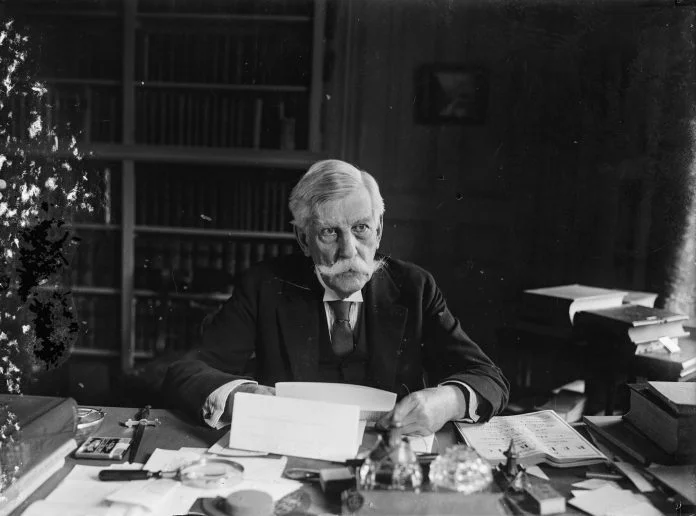
Three Generations of Living Constitutionalists Is Enough
Justice Thomas radiates a fundamental sense of decency, humility, and respect for the dignity of every human being—he lives the virtues of which he speaks.

.webp)
The Declaration’s Truths Heal a Multitude of Errors
Attacks on the Declaration from both the left and the right deny the universal character of its self-evident truths and their foundation in natural law.

.jpg)


Get the Civitas Outlook daily digest, plus new research and events.
Get the Civitas Outlook daily digest, plus new research and events.