A Warning to Quorum Breakers

If quorum breakers make legislation impossible, the Court has preserved room for itself to “throw them out.”
The Texas Supreme Court just issued an understated warning to anyone in the Texas Legislature who may consider breaking quorum. If absence goes on long enough, there may be serious consequences—including removal from office.
Last summer, a group of Texas House of Representatives members left the State to prevent the enactment of new redistricting laws. After Governor Greg Abbott exercised his constitutional authority to call a special session, dozens of Democratic members of the House fled Texas. There are 150 representatives, and under the Texas Constitution, “[t]wo-thirds of each House shall constitute a quorum to do business.” By fleeing the State, these legislators believed they could prevent the House from acting. As one candidly stated, “[w]e don’t have the numbers to beat this effort to rig [sic] the ‘26 midterms in favor of five extra Republicans in the U.S. Congress because we are the minority party in Texas. But we do have the numbers to stop business on the floor of the House.” As the Governor’s brief explains (quoting public news reports), “Former U.S. Rep. Beto O’Rourke’s political action committee, Powered by People, fronted the initial costs for lodging and transportation,” potentially in violation of state law. (Notably, parallel litigation about that issue remains ongoing.)
The Texas Constitution, however, does more than just establish a quorum requirement—it also empowers “a smaller number” of legislators to “compel the attendance of absent members, in such manner and under such penalties as each House may provide.” The House thus ordered the absent Representatives to return and issued arrest warrants if they refused, and the Governor decisively “ordered the Texas Department of Public Safety to locate, arrest, and return to the House chamber any member who has abandoned their duty to Texans.” Yet the Representatives sought sanctuary beyond State lines. As Representative James Talarico (now running for the U.S. Senate as a Democrat) announced, “Greg Abbott and Ken Paxton will try to arrest us. So we’re traveling to Illinois for safe harbor.”
Both the Governor and Attorney General Ken Paxton (now running for the U.S. Senate as a Republican) petitioned the Texas Supreme Court for writs of quo warranto on the theory that the absent Representatives abandoned their offices, and thus no longer serve in the legislature. While that litigation was pending, the Governor called a second special session, and the Representatives ultimately relented. The Legislature thereafter enacted the new redistricting law.
Earlier this month, the Texas Supreme Court issued a decision about those petitions. Writing for the Court, Chief Justice Jimmy Blacklock concluded that because “[t]he House’s temporary inability to function having been speedily resolved by the political mechanisms envisioned by our Constitution, we decline to exercise discretionary jurisdiction over the petitions for writ of quo warranto.”
At this point, you may be asking yourself: What in the world is a writ of quo warranto? Most people have little reason to speak Latin, and certainly not law Latin. And even lawyers who regularly drop phrases like “ab initio,” “actus reus,” and “amicus curiae” can be excused for ignorance about the writ of quo warranto, which does not come up often in practice. But it is an important tool with a long history.
In essence, a petition for a writ of quo warranto (meaning, “by what warrant?”) challenges the authority of someone to exercise a claimed delegated power and empowers a court to declare that the power has not been delegated or the recipient has so misused or abandoned it that the delegation is forfeited. Under Texas law, “[a]n action in the nature of quo warranto is available if ... a person usurps, intrudes into, or unlawfully holds or executes a franchise or an office.” The Texas Constitution, moreover, empowers the Legislature to “confer original jurisdiction on the Supreme Court to issue writs of quo warranto and mandamus in such cases as may be specified, except as against the Governor of the State,” which authority the Legislature has exercised:
The supreme court or a justice of the supreme court may issue ... all writs of quo warranto … agreeable to the principles of law regulating those writs, against … any officer of state government except the governor, the court of criminal appeals, or a judge of the court of criminal appeals.
Historically, a common use of the writ was to contest whether the conditions on a franchise or corporate charter were satisfied. As the Texas Supreme Court explained last year in a scholarly opinion by Justice Evan Young about the Attorney General’s broad authority to invoke the writ, the writ emerged as early as the thirteenth century, “when King Edward I ascended the throne” and proceeded to inquire whether various alleged barons were properly exercising authority. The writ lived on, and “the Court of King’s Bench under Charles II issued a writ of quo warranto against the Massachusetts Bay Colony, thus revoking its charter in 1683 amid a period of friction with the crown.” The writ, moreover, was also a feature of early United States law. As recounted by no less than Justice Joseph Story, corporations “created by the legislature may lose [their] franchises by a misuser or a nonuser of them; and they may be resumed by the government under a judicial judgment upon a quo warranto to ascertain and enforce the forfeiture.” Indeed, he explained that “[t]his is the common law of the land, and is a tacit condition annexed to the creation of every such corporation.”
There is no question that Texas law empowers the Texas Supreme Court to issue writs of quo warranto, but does the writ extend to quorum breakers? As the State explained in its brief (to be clear, written entirely after my tenure as Solicitor General), there is authority dating back centuries that “he who either neglects or refuses to answer the end for which his office was ordained should give way to others who are both able and willing to take care of it.” And an early treatise on public officers declared that “[a]n office may also become vacant by its abandonment by the officer. Such an abandonment may be evidenced by a variety of acts and events,” including “by refusing or neglecting to qualify; by refusing or neglecting to perform the duties; by removing from the district; by engaging in rebellion; by death.”
In response to the Governor’s and Attorney’s petitions, the Representatives protested that the permissibility of quorum breaking is a “political question,” and that if the House is dissatisfied, it “has its own procedure for expulsion.” They also argued, among other points, that they are protected by legislative immunity because “quorum-breaking for policy reasons” is a “legislative function.”
The Court did not resolve the hard questions. Instead, Chief Justice Blacklock reasoned that the Texas Constitution “entrust[s] the power to compel legislative attendance not to the judicial branch but to the present members of each House,” and—noting the Representatives returned in the face of political pressure—invoked the principle “that it is not [the judiciary’s] role to resolve disputes between the other two branches that those branches can resolve for themselves.” He also observed that the Legislature has “broad coercive authority to compel attendance” and that arrest warrants and denials of pay “barely scratch[] the surface” of what the Legislature can do “to compel attendance ‘in such manner and under such penalties as each House may provide.’” Given that backdrop, the Court declined to exercise its discretionary authority to grant a writ.
From this, some may infer that the Texas Supreme Court will do nothing next time quorum breakers flee the State. Indeed, press reports highlight crowing from Texas Democrats, who say “the Republican-controlled Supreme Court” does not allow “remov[ing] elected Democrats from office” for quorum breaking.
Not so fast. The Court’s opinion includes this key passage (with my emphasis added):
Whatever wrong may have been committed by the absent House members, the Texas Constitution’s internal political remedies, none of which involve the judicial branch, were sufficient to the task of restoring the House’s ability to do business. Should those remedies unexpectedly prove inadequate in a future case, we might have occasion to consider whether any judicial remedy could ever be available in circumstances such as these.
Concurring, Justice James Sullivan was sharper: “Were it to happen yet again, I believe the next set of quorum-breakers had better be ready to pay us a visit. Our original jurisdiction to issue writs of quo warranto will empower us to inquire whether they’ve abandoned their legislative offices and, if we so find, to throw them out.”
Although the Court chose to keep its cards close to the vest, its refusal to block the use of writs of quo warranto against quorum breakers (as the Representatives urged) should send a chill down the spine of anyone tempted to do so, especially if they flee to jurisdictions that refuse to return them. It certainly should set off alarms for their lawyers. After all, the Court’s decision to leave the law ambiguous matters; without legal certainty, quorum breakers risk their legislative careers. It would thus have been very helpful for the Representatives, going forward, if the Court had rejected the quo warranto theory. Because legal uncertainty has consequences for rational decision-making, the Court’s (almost certainly) deliberate failure to provide it is a statement. Of course, there is also uncertainty for those who would seek a writ of quo warranto: there is no guarantee they will get one. But the costs of the uncertainty are asymmetric; seeking judicial relief is not expensive, especially now, because the arguments in favor of a writ of quo warranto are already written. By contrast, the risks of quorum breakers, even discounted by the possibility that the Court would ultimately reject the theory, are extraordinary. Quorum breakers, thus, would benefit disproportionately from legal certainty. Because they do not have it, they must proceed carefully.
Going forward, the Legislature—relying on what the Court now describes as a “broad coercive authority to compel attendance”—will presumably begin exploring new tools to punish such behavior, including massive fines and staff termination. But if quorum breakers make legislation impossible, the Court has preserved room for itself to—in Justice Sullivan’s phrase—“throw them out.” We still do not know whether that would happen (again, the Court did not answer the question), but if it did, no one can say there was no warning.
Aaron L. Nielson is a senior fellow at the Civitas Institute and holds the Charles I. Francis Professorship in Law at the University of Texas at Austin School of Law.

.jpg)
The Declaration Symposium
Civitas Symposium featuring Gregory Collins, Aaron Nielson, Joseph Postell, and John Yoo
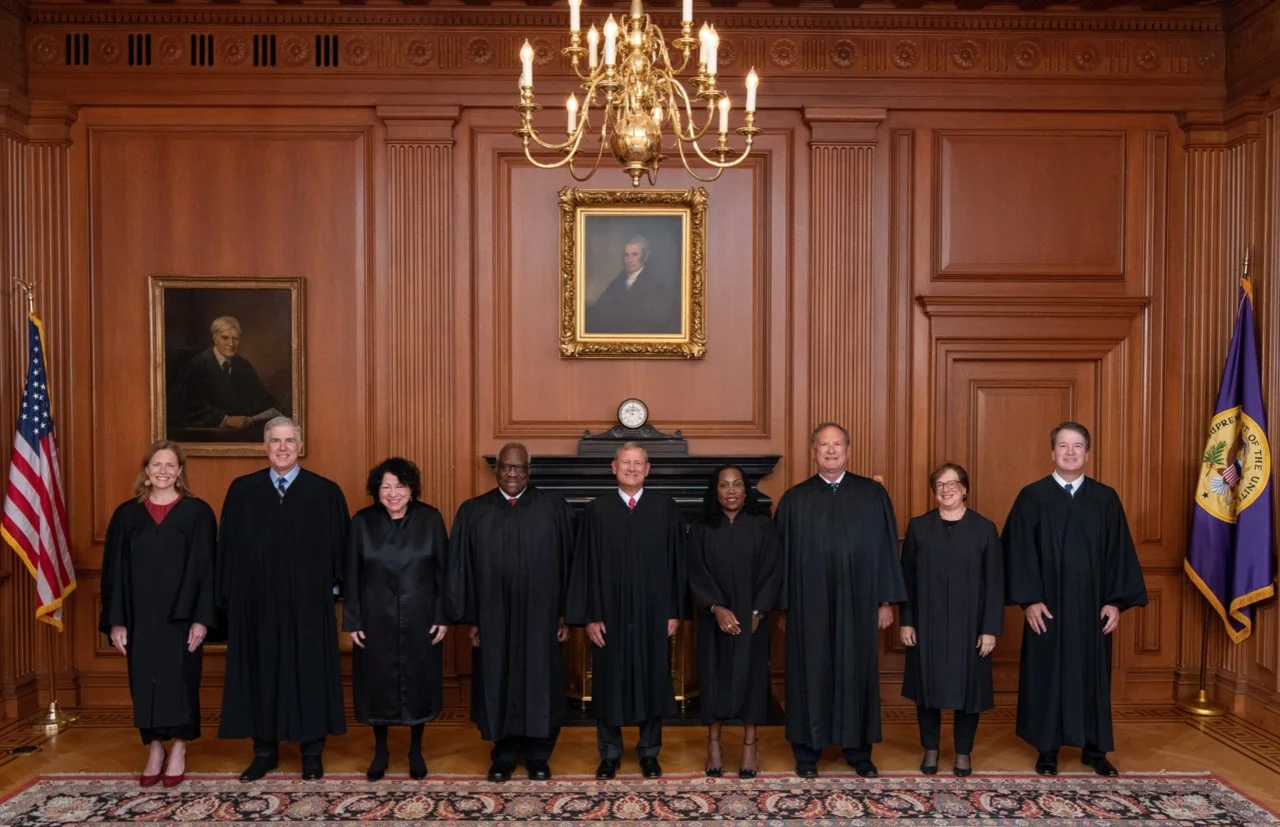
The Birthright Citizenship Decision Will Not End the Birthright Citizenship Debate
It is unlikely that Trump v. Barbara ended the debate over birthright citizenship. It may have truly started it.
The Declaration and Tradition
As we approach America’s 250th anniversary, we should reflect upon and appreciate the Declaration’s opening paragraphs—but we should not forget to remember the rest of the document or the context in which it was created.

.JPG)
.avif)



Get the Civitas Outlook daily digest, plus new research and events.
Get the Civitas Outlook daily digest, plus new research and events.