
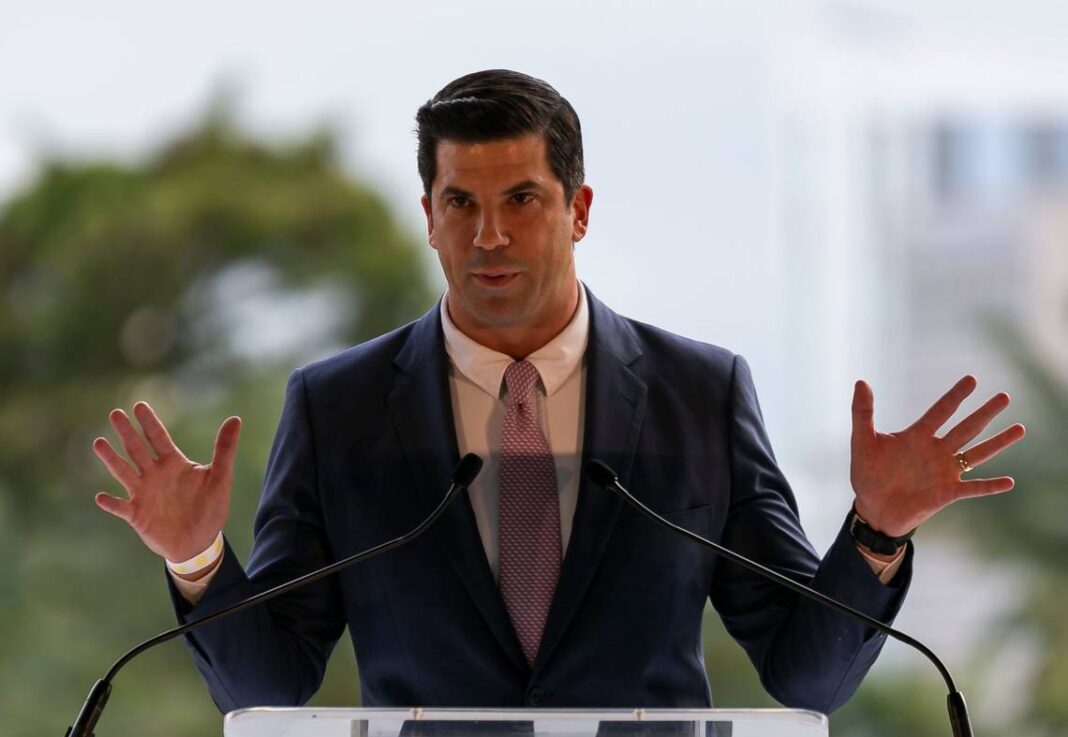
Fighting Anti-Semitism from the Bench
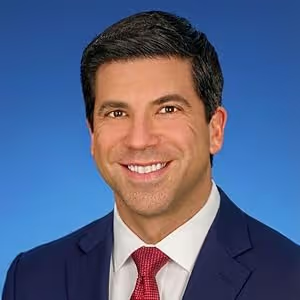
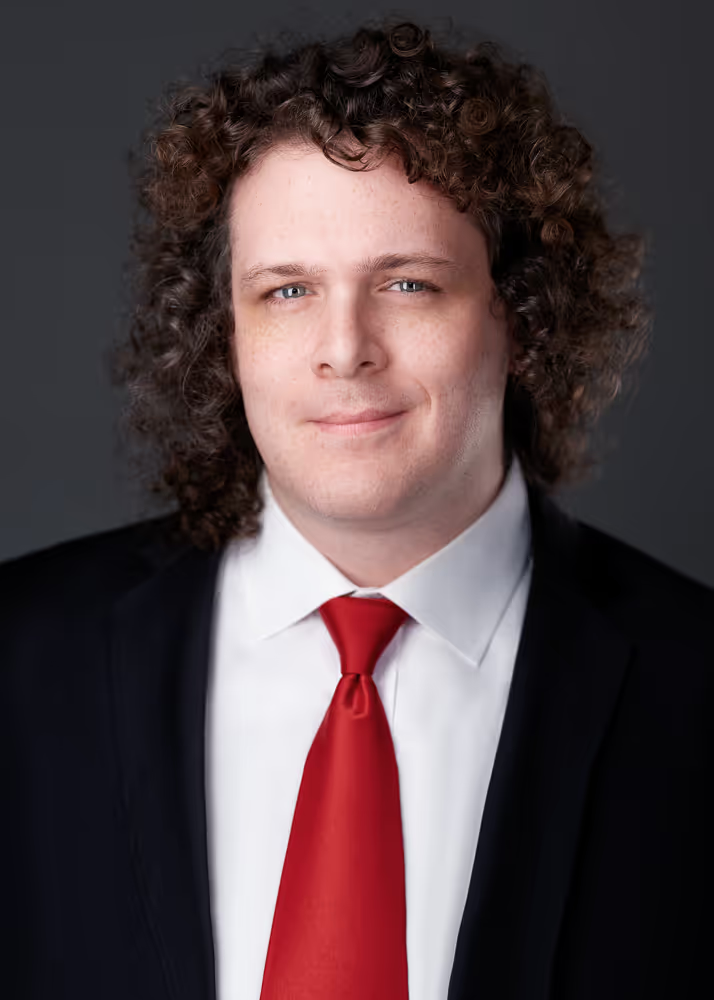
Josh Blackman interviews Judge Roy K. Altman.
Josh Blackman: Judge Altman, thank you so much for answering some questions. Let’s start with your background. Your Jewish heritage stretches back to Eastern Europe. Your grandfather was exiled to Siberia, miraculously survived, and escaped to Venezuela. Your father moved from Venezuela to join the Israeli Air Force, where he met your mother. She had been born in Mexico, after her family fled from Poland before the Holocaust. Your parents moved to Caracas, Venezuela, where you were born. As a young child, your family moved to Florida, where you became an American citizen. You excelled in school and attended Columbia University. There, you started as a quarterback and as a pitcher for the football and baseball teams. You then attended Yale Law School. After graduating, you served as a federal prosecutor and in private practice. You became a federal judge at the age of 36. That’s a lot! One of the most insidious aspects of antisemitism is that people grossly assume all Jewish people are alike and that they are all privileged white oppressors. Can you speak to how your heritage and personal experiences refute that libel?
Roy Altman: All you have to do is visit Israel, and you’ll see that what you would call European or Ashkenazi Jews are actually only a tiny fraction of the population of Jews in Israel, and a tinier fraction still of the population of Israelis as a whole. About twenty-five percent of Israelis are Ashkenazi, which means they have grandparents or great-grandparents from Europe. The vast majority of Jews are of Sephardic descent from North Africa or of Mizrahi descent from Syria, Lebanon, Iraq, Iran, and other places in the Middle East, or from Africa itself, from Ethiopia. Few people understand that there are hundreds of thousands of Ethiopian Jews living in Israel, fighting in the IDF. There are black people really fighting and dying in this war, but they are only on one side of the struggle, and that’s the Jewish side. Israel has done something almost every Western country in the world has failed to do. Israel has fully integrated the various races and extremely vibrant and diverse populations from all over the world. They have entered and become full-fledged Israeli citizens at every rung of Israeli society, from the highest levels of university administration to hospitals, law firms, the judiciary, and, of course, the governing authorities in the Knesset.
JB: In 2019, President Trump appointed you to the bench at the young age of 36. Why did you want to become a judge so early in your legal career? Seven years later, what has been the biggest surprise about joining the bench?
RA: I was nominated when I was 34 by the president, and people said, “Oh, you’re crazy; you’ve got your whole life ahead of you to make money for your family.” We don’t come from a wealthy family, so that was important. But to me, really, it was a no-brainer. When I was a little boy, we came from Venezuela with nothing, and we knew no one. And my parents always taught us that in this country, if we worked hard and treated people with respect, we could be or do anything, because it was a country based on law.
In the summers we would go to Israel, and in the winters we would travel all around the American South to Civil War battlefields. We’ve been to all the battlefields you know of, and hundreds of others that people mostly don’t know exist. We visited the grounds of the Battle of Chattanooga in 1863, a very important battle in the Civil War. There was a moment when the Union army was ordered not to take the hill at Missionary Ridge. Arthur MacArthur was one of those soldiers at the bottom of the hill. He would become the father of Douglas MacArthur, the famous general from World War Two and in Korea. Arthur MacArthur had lied about his age to get into the army because he was so patriotic. He said he was 18 when he wasn’t. The standard bearer, who carried the flag into battle, was shot. MacArthur couldn’t bear the thought of having the American flag touch the ground, so he picked up the flag and charged up the hill. The rest of the Union army was like, well, I guess the orders have changed, and followed up after him.
This story shows how one man can change the world. The Confederates fled, Missionary Ridge was won, and the Battle of Chattanooga was won. This single act precipitated the end of the war. There’s a plaque on top of the Ridge honoring Arthur MacArthur, who became the youngest American ever to win the Medal of Honor after his heroics on that day.
I was standing at Missionary Ridge with my father, and we looked out over the battlefield, and you know, I grew up in three places: Caracas, Israel, and Miami—not a lot of snow—and it started to snow. It was the first time I had seen snow, and I said to my dad, “Oh, it’s so fun here, Papi, this is so beautiful.” He got very stern and said, “You think this is fun? You think we bring you to all these places in Georgia and Mississippi and all these southern towns because it’s fun? We want you to understand the character of the country we brought you to. We brought you to this place where 650,000 people gave their lives so that a part of the country could be free. That’s the level of devotion and dedication that a free and fair democracy will always require.” And so, when I was nominated to be a federal judge, and people said, “You’re too young, make some money, wait till later,” it was a no-brainer. Serving my country and my community that had welcomed us with open arms when I was just a boy, in this really amazing way, has been the great blessing and privilege of my life.
JB: I want to congratulate you on the publication of your new book, Israel on Trial: Examining the History, Evidence, and Law. Very few federal judges find the time to write books, and most that do focus on arcane legal topics. But you devoted your time and energies to perform an important public service. This book is a must-read for anyone who wishes to understand the conflict in the Middle East and how it relates to the oldest hatred, anti-semitism. Perhaps most importantly, you wrote this book from the perspective of a lawyer. You provide clear evidence that meets the burden of proof to persuade a reasonable fact finder. What motivated you to write this book? And why did you use a courtroom framing for it?
RA: I wrote the book not as a judge, but as an American who loves this country. I honestly believe that the country is built on our ability to tell truth from fiction. Alexis de Tocqueville came in the 1830s, and he looked around. He said it’s not just that they have these institutions; it’s that they’ve built a virtuous populace. By being virtuous, they can be free. The essence of being virtuous and free was this ability to make the right choices. The government wasn’t going to tell us which choices to make, but it trusted us to make choices that were beneficial to the whole. We had all kinds of training grounds for practicing how to be a good, free, and virtuous people. One of those, of course, was the jury system.
People say to me all the time, “Oh, juries don’t know what they’re talking about; they don’t know antitrust law; they don’t know patent law. How are they going to make these important decisions for our society?” First, I think they’re wrong. I think juries get it right much more often than you would think. Second, that also misses part of the point of why the jury system is important. The jury system isn’t just an algorithm for getting to what is “the right answer.” The jury system was a real-life practice ground, a training ground for us to become a free people. It taught us how to make important and momentous decisions for ourselves in some of the most important cases and disputes in our society.
What happened after October 7 in our sacred institutions, at our universities, in our Western media outlets, in our international NGOs and nonprofits, is that we completely forgot the ways that we had learned to tell truth from fiction. We had begun to buy lies that were being pushed on us by our geostrategic adversaries, not just Hamas, obviously, but the Muslim Brotherhood through Al Jazeera, the Chinese Communist Party through TikTok, and other channels.
I took it upon myself to travel around the country to figure out how this is happening to us. In the course of those travels, I had thousands of conversations, many of them with people who see the world, frankly, differently than I do, but I came to recognize that their entire debate about Israel, and really the entire debate about America and its relationship with Israel, was driven by six main claims that people believe about the Jewish state. I have two pieces of good news: one, they’re all false, and two, they’re all, at their core, legal claims.
There are legal questions: Is Israel violating the laws of war and laws against genocide? Is Israel discriminating against its Arab citizens, as a form of apartheid? Is Israel taking land that doesn’t belong to it? Is there an occupation, or settler colonialism? These are all just legal questions. And the good news is, we have the language, we have the tools, the methodology to answer those questions not with vitriol and diatribe and polemics, but with reason and logic and common sense, just like our forebears did.
And so I thought, why not just apply the same legal methodology that judges, lawyers, and juries apply every single day in courtrooms and law offices across this country? It’s a time-tested methodology that’s been around for hundreds of years. It’s a methodology we know we can trust, because we use it where truth telling matters the most: in our courtrooms, in the most momentous disputes in our civil society, and where someone’s life is at stake. I apply this methodology to each of these six claims about Israel, and see what happens. That’s why the book is called Israel on Trial. We put Israel on trial. We apply the relevant methodology, and we issue a verdict one way or the other.
JB: We will talk about October 7 in a minute, but let’s go back to October 6, 2023. Most Americans, if they thought about antisemitism at all, presumed this bigotry only existed on the fringes of the far left and the far right. Perhaps people were generally aware of the conflict in Israel, but didn’t think it affected American politics, and certainly had no impact on American Jews. We often talk about a September 10 mindset, to reflect the complacency before 9/11. Can you discuss the October 6 mindset?
RA: There’s a personal story from my life that I think encapsulates the way that the fringe has moved into the mainstream and the Overton window has really shifted. In 2010, when I was in Israel visiting family, there was a spate of shark attacks in the Red Sea, which borders Egypt and Israel. Most of the attacks happened to people on the Egyptian side of the border. The Governor of South Sinai blamed the Jews for the shark attacks, and said that the Mossad, the Israeli intelligence service, was training sharks to like only Arab flesh. My father and I were in a taxi when we heard this on the radio, and we just laughed with the cab driver. It was so crazy, right? But now, what was it on May 11 of this year, just one month ago, Nicholas Kristoff, a Pulitzer Prize-winning journalist for the New York Times, the supposed paper of record in the United States, published an “opinion piece” in which he cited anonymous sources for the proposition that the Israeli intelligence services and prison services are training dogs to like raping Arab prisoners. Okay, this is an example in microcosm of what’s happened in our discourse: claims that just fifteen years ago were seen as completely outlandish, fringe, and existed only in the wildest blood libels and imaginings of the Arab Street are now front-page headlines in the New York Times. That’s how we’ve come here, and it’s where we are.
JB: Let’s jump ahead to the evening of Friday, October 6 into the morning of Saturday, October 7. It was the holiday of Simchat Torah, a joyous day where Jewish people celebrate the completion of reading the Bible by singing and dancing. Hamas chose this day to attack for strategic reasons as guards were lowered and people were scattered. Can you describe the shock to the Israeli people of what happened that tragic day?
RA: Let me say three things. The first is the extent of the violence. Twelve-hundred people were butchered, beheaded, mutilated, burned alive in their homes, in their children’s nursery rooms, together with their babies, in their bomb shelters, clutching their family members at their dance parties for peace. Dozens of women and girls were raped, violently gang raped. Their vaginas were cut open with knives and other sharp objects. The medical examiner’s reports are on the internet for everyone to see. Their breasts were sliced off and used for a hacky sack kind of game, juggling and playing, before they were shot and beheaded. Now we know from an international report that came out on May 12 of this year that, really, for the first time since Rwanda, we have documented proof of the systemic use of the crime of kinocide, where men are forced at gunpoint and knife point to have sexual relations with female members of their own families. That was widely pressed by Hamas and other Palestinian groups against the Jewish population of southern Israel.
One was the violence; two was the lack of strategic depth in the country. Some suggest that a proper analogy is if Tijuana had invaded San Diego and taken all these people hostage. What would happen if a terrorist group in charge of Tijuana crossed the border into San Diego and killed 40,000 people in their homes, in their bedrooms, in their bathrooms, in their kitchen tables, and then raped thousands of women and boys, and then took thousands of them hostage and held them in holes for hundreds of days without food or medicine or sunlight, and then posted grotesque videos of them, forty, fifty, sixty, pounds lighter than they were on the day they were stolen from their homes, for all Americans to see? What would America do in that context?
We know that America would not allow one single block of that city, Tijuana, to remain standing until every last hostage was returned and every last terrorist was killed. We know that, but even that is not a proper analogy, because of the second reason that I’m describing, which is that Israel’s not America. Israel has the population of San Diego County and is about the geographic size of the state of New Jersey. It lacks any strategic depth. If this terrorist attack occurred in San Diego, of course, it would be horrible. It would all be all over the news, but no one in Chicago or New York or Cleveland or Miami would have to fear that the entire country was about to be enveloped by a terrorist onslaught, that the political experiment would be destroyed and ended, and that all of its people might be enslaved, murdered, or raped, right? But that’s because we have strategic depth in America. We’re all thousands of miles away from that border.
But in Israel, everyone is only one or two hours away from the attacks of Hamas on October 7. In fact, all of the major population centers are just an hour and a half drive from the attacks in Gaza. Because the population is so small and the land is so teeny tiny, everyone in Israel knew someone who was killed, or knew someone who knew someone who was taken hostage, or knew of someone in their community who was raped. It’s not the same, and it’s much more personal and shocking than it would be anywhere else in the world, including and especially a country as large and populous as our own.
The third thing, of course, is the wound of the hostage taking. The families who were separated, the 24 infants and toddlers who were held in holes by real-life monsters for hundreds of days, the women and girls who were constantly raped and sexually abused in captivity, the people who didn’t have food to eat, even while their captors had plenty of food. Even while Hamas and its ideological cousins around the world were propagating the myth that Gazans were starving, they always had plenty of food. We now know that from our released hostages, but the hostages never did. When Israel signed a deal with Hamas that they would provide extra food and medicine, so long as medicine was provided to the hostages, we know the hostages never received that medicine.
The shock, the cataclysm on Israelis wasn’t just the lack of geostrategic depth, wasn’t just the personal connection with every person, wasn’t just the permanent festering wound of the hostage taking, wasn’t even the degree of the violence on October 7 itself; it was this last thing. The entire purpose of the creation of the Jewish state of Israel was so Jews would never have to live as they did in H.N. Bialik’s famous poem from 1903, “The City of Slaughter.” During the pogrom of Kishinev, Jewish men would cower behind the wine barrels while Jewish women and girls were being violently raped. The idea that Jews were being butchered, raped, and stolen from their homes on Jewish soil in the Jewish state of Israel was so anathema to everything the state has ever stood for that in itself was shocking.
JB: Now let’s turn to the reaction to October 7 in the United States. The reaction can almost be split in half. On one side, Jewish people and their friends watched with horror at the greatest massacre of Jews since the Holocaust. On the other side, people celebrated the burning, rape, and murder of Zionist “oppressors” and “colonizers.” Can you discuss this stunning dichotomy? What set the groundwork for this fork in public opinion?
RA: That’s very simple. This has very little to do with Jews. I mean, it has to do with Jews. Their Jew hatred is the oldest hatred. We know it. We know that it persists through the generations. I’m not trying to minimize the degree of anti-Semitism that exists in our society, and has always existed. At its core it is an anti-Americanism, a belief, a defeatist belief that America is evil, that America at its core is bad, that America is weak and weakening by the day and dying, that it should retreat from the world, that it doesn’t have a place in the world, that its values and its military arms and its diplomacy aren’t strong enough or worthy enough to be displayed and to be propagated all over the world.
That’s a belief we never had in America. It’s a belief that’s again antithetical to everything America stands for, and unfortunately, it is the belief that our geostrategic enemies, including, for example, the Soviet Union and the Chinese Communist Party and the Muslim Brotherhood, have propagated in our intellectual circles, in our elite institutions, our media outlets, and, of course, our universities, and more recently, in our high schools, to undermine the fabric of our civil society itself. Most people believe one of the wonderful things of going to a pro-Israel rally, as Douglas Murray likes to say, is that you see two things: lots of Israeli flags and lots of American flags. And one of the disturbing things about going to a pro-Palestinian rally is that you see lots of Palestinian flags, and if you see an American flag, it’s only because it’s being trampled on, burned, or spit on.
Okay, that, in a nutshell, is the entire game. On one side, you have a country and a people who love America, desperately. That’s why they all wear Nike. It’s why they love basketball. It’s why they vote with us over 93% of the time, more than any other country in the world at the United Nations. It’s why after 9/11, when I was in Israel, every home, every business, every government building had black drapes over the windows and black flags at half-mast to evince their mourning, their solidarity with our suffering. And on the other hand, you have a society that despises America. On 9/11, the Palestinians, we saw thousands of them dancing in the streets, handing out sweets all over the Arab street, joyfully celebrating the massacre of almost 3000 Americans.
Again, that in a nutshell tells you all you need to know about where we are. People who love America love Israel. People who hate America understand how deeply entwined and important Israel is to the American project, how much it was built in our image, and how important it is to separate and untether Israel, our most important geostrategic ally, from America, if the enemies of America are to win in the geostrategic conflict that’s coming.
JB: There is a common argument: the protestors are not anti-Semitic, they are anti-Zionist. How would you explain the distinction between these concepts?
RA: There is no distinction. In the 1800s, there was Jew hatred that was all over Europe. It was very prevalent, and it was uncomfortable for much of the ruling class. They said, "The Jews are bad but we don't want violence in our society. We've moved past that, we’re much more sophisticated than that.”
Wilhelm Carl came up with the idea of giving Jew hatred a different name, so that it would seem more anodyne, less violent, and less hateful than it was. He came up with this idea of anti-Semitism. It was more sophisticated, it was intellectually based, and it wasn’t inappropriate, because it wasn’t Jew hatred. Anti-semitism wasn’t violence based on race; it was based on intellectual and philosophical disputes about a people and the people’s role in the broader society.
Well, we’re just doing the same thing over again now. Anti-Semitism over time became untenable because the Holocaust showed that, as anodyne as you wanted to make it, and as intellectual as you wanted to make antisemitism seem, ultimately antisemitism was just a word that came to represent the Jew hatred that had always existed and percolated in society. The Holocaust brought to the fore just how violent that Jew hatred, whether it’s called antisemitism or something else, can really be.
Now we’ve come up with a new word. We’re not really talking about Jew hatred; we’re not really talking about antisemitism. Let’s give it a new intellectual name, anti-Zionism. It’s just hatred of Zionists, not Jews. In fifty years, once it becomes clear that anti-Zionism, like anti-Semitism, led to the rape and murder of hundreds or thousands or millions of Jews, then we’re going to come up with a different word, right? Because we’re going to say, okay, yeah, we realize anti-Zionism also brought the violence of Jew hatred to the fore; let’s call it something else, maybe we’ll call it anti-Abrahamism, or whatever, but again, it’s just the same thing. You’re putting lipstick on a pig. You’re calling it a word that’s new, that to your mind is an anodyne word, an innocuous word to label something that we all know is an ancient hatred.
The fact of the matter is that over fifty percent of the world’s Jews live in Israel, and about ninety percent of the world’s Jews view Zionism and the existence of the state of Israel as an integral part of their Jewish identity. So, as a practical matter, the two things are co-extensive. The Jews who are not Zionists, who are anti-Zionist, are a tiny fraction of the population, even though they have an outsized voice in our academic institutions. As a practical matter, to hate Zionists is to hate Jews. As a matter of law, we don’t allow you to say in a jury selection process, “I’m going to exclude all the people with dreadlocks and who like a certain kind of music.” We’re not going to allow you to do that, because we know that’s a proxy for black people, and we’re not going to allow you to exclude black people on the ground that you used a different proxy, a different word.
Well, here we’re doing the same thing; we’re saying we’re going to exclude from our civic organizations, from our literary clubs, we’re going to block from our campus protests, our rallies, and our classrooms people who are ninety percent of whom we know are Jewish. That doesn’t work. It doesn’t work with black people, it doesn’t work with any other group of people, and it cannot work with Jewish people.
JB: Virtually all federal judges stay in their lanes. They spend their time exercising the judicial power. Some judges engage in law-related activities, such as Inns of Court, Bar Associations, or the Federalist Society. Very few judges write books. Even fewer write on non-legal topics. You chose a different path after October 7. Why did you decide to become an international leader to fight antisemitism? Did you worry that this work might cause ethical conflicts for your position as a federal judge?
RA: No, because I've sought advice along the way from other judges and from ethical officers. I have read the rules very closely, and the rules are quite clear. I’m not allowed to engage in any kind of politics, and I don't. I never say whether I like this particular politician or that particular politician. I never advocate for a particular bill in government or against a particular bill in government. I don’t fundraise for this or that organization. I don’t do any of that stuff, so I steer very clear of the ethical guidelines.
I’m not totally sure that my book is all that different than the kinds of writing other judges do. For example, we have judges who have written books about the civil rights movement and the history of the civil rights movement in America. Justice Gorsuch wrote a book about the founding generation in America. Justice Sotomayor wrote a book about the importance of diversity in America. Amul Thapar wrote a great biography about Justice Thomas. Justice Breyer wrote a book about the administrative state. It’s not so uncommon for judges to write books, especially if they’re about legal or historical matters, even if those books are about topics that later become political when politicians use them in elections.
For example, when Justice Scalia writes about his judicial philosophy, which hasn’t come out one way or another, on, for example, Chevron deference, or abortion, or gay marriage. Obviously, those are deeply political topics, but that doesn’t mean it was inappropriate for Justice Scalia to talk about them through a legal lens.
I’ve taken a legal lens to a historical topic and used the evidence-based standard that we, as lawyers and judges, use in this country. The book has nothing to do with politics or individual political figures. President Trump is never mentioned in my book, and Prime Minister Benjamin Netanyahu is not mentioned in my book. It has everything to do with the law, the history, the facts, and the application of the law to both.
I think the book is quite in line with what the ethical guidelines allow. Actually, in some ways, the book is less controversial than when judges write books about legal issues that could come before them. I’m not writing about legal questions that have much of a danger of coming before me. That is another guideline. Nobody’s going to come to my court to decide whether there was genocide in Gaza? Nobody’s going to come to me and ask, was it apartheid in Judea and Samaria? Nobody’s going to come to me and ask, was it occupation after 2005 in Gaza? Those aren’t the kinds of legal cases that I hear, so in some ways it’s actually far clearer that I’m not straying close to the ethical guidelines.
JB: Let’s finish on a note of optimism. What is your hope for the future? For the people of Israel? For Jews in America? For the relationship between Jews and people of other faiths?
RA: I’m very optimistic about both America and Israel. I’ll start with America. America is the greatest force for good the world has ever known. We’re getting wealthier every year, vis-a-vis every other country in the world. A new study showed that the Chinese economy shrinks every year, vis-a-vis the economy of the United States. So too with the European Union. I think England has less economic output every year than our poorest state, Mississippi.
When it comes to Israel and the Jewish people, I’ve been there so many times since October 7. I’ve never been prouder of a people who were so resilient, so strong in the face of overwhelming obstacles, surrounded by fire with intercontinental ballistic missiles, literally fire raining from outer space, biblical stuff, defending themselves, defending their families with honor, with love, with hope for the future, and really creating the circumstances for a Middle East that will be more prosperous and flourishing for Jew and Arab alike.
Look at what happened in the Gulf Arab states. Before the war, Israel secretly removed many of their Iron Dome batteries and shipped them off to the United Arab Emirates, maybe even to Bahrain and Kuwait. Israel endangered the lives of Israeli civilians while protecting the lives of their Muslim Arab neighbors. The UAE is on the record saying that the batteries may have saved the lives of hundreds or thousands of Arabs, and that the UAE will never forget Israel’s assistance and sacrifice.
That is huge. The UAE is one of the wealthiest countries in the world, and we could begin to see a situation where the Gulf Arab states, seeing the unrest and turmoil in the Strait of Hormuz, stop pumping their oil and natural gas east through Hormuz and instead start piping it northwest through the ports of Ashdod and Haifa, making Israel an economic and strategic partner in the Middle East’s most important natural resource.
Indian President Modi flew thousands of miles when everyone knew the war was about to start to teeny-tiny Israel to sign dozens of treaties on AI, machine learning, quantum computing, and cybersecurity. He was building Israel up as the corridor through which India hopes to sell its wares and products, the most populous country in the world.
And then there’s Lebanon and Syria. The notion that Lebanon and Syria would be negotiating not just security agreements, but potentially peace agreements, for the first time in Israel’s history with its Jewish neighbor was inconceivable just one or two years ago. Yet that’s exactly what’s happening. Israeli and Lebanese ministers gathered in Washington to negotiate a permanent end to their hostilities. This rapprochement may allow Lebanon, for the first time in over forty years, to take back its country from the Iranian transgressors that have held the country and its people hostage for so long.
So I'm optimistic about the future of America and optimistic about the future of Israel.
JB: Judge Altman, thank you so much for your time today.
RA: Thank you for doing this, Josh.
Josh Blackman holds the Centennial Chair of Constitutional Law at the South Texas College of Law Houston, is a contributing editor to Civitas Outlook, and is an adjunct fellow at the Manhattan Institute.
Roy K. Altman is a United States District Judge for the Southern District of Florida.

Fighting Anti-Semitism from the Bench
Judge Roy Altman wrote "Israel on Trial" not as a judge, but as an American who loves this country.
Justice Gorsuch’s Warning
'Slaughter' may have rid us of the headless fourth branch of government, but it might end up leaving us with an all-powerful presidency.
The Common Law and Citizenship in the Constitution: A Response to Linda Denno
The fatal flaw in Professor Denno’s argument is that she would elevate political philosophy above the original understanding of the constitutional text.



Get the Civitas Outlook daily digest, plus new research and events.
Get the Civitas Outlook daily digest, plus new research and events.