Is America Good Enough for Wendell Berry?

Marce Catlett: The Force of a Story challenges the dreams postliberals and other ideologues hold for the present moment.
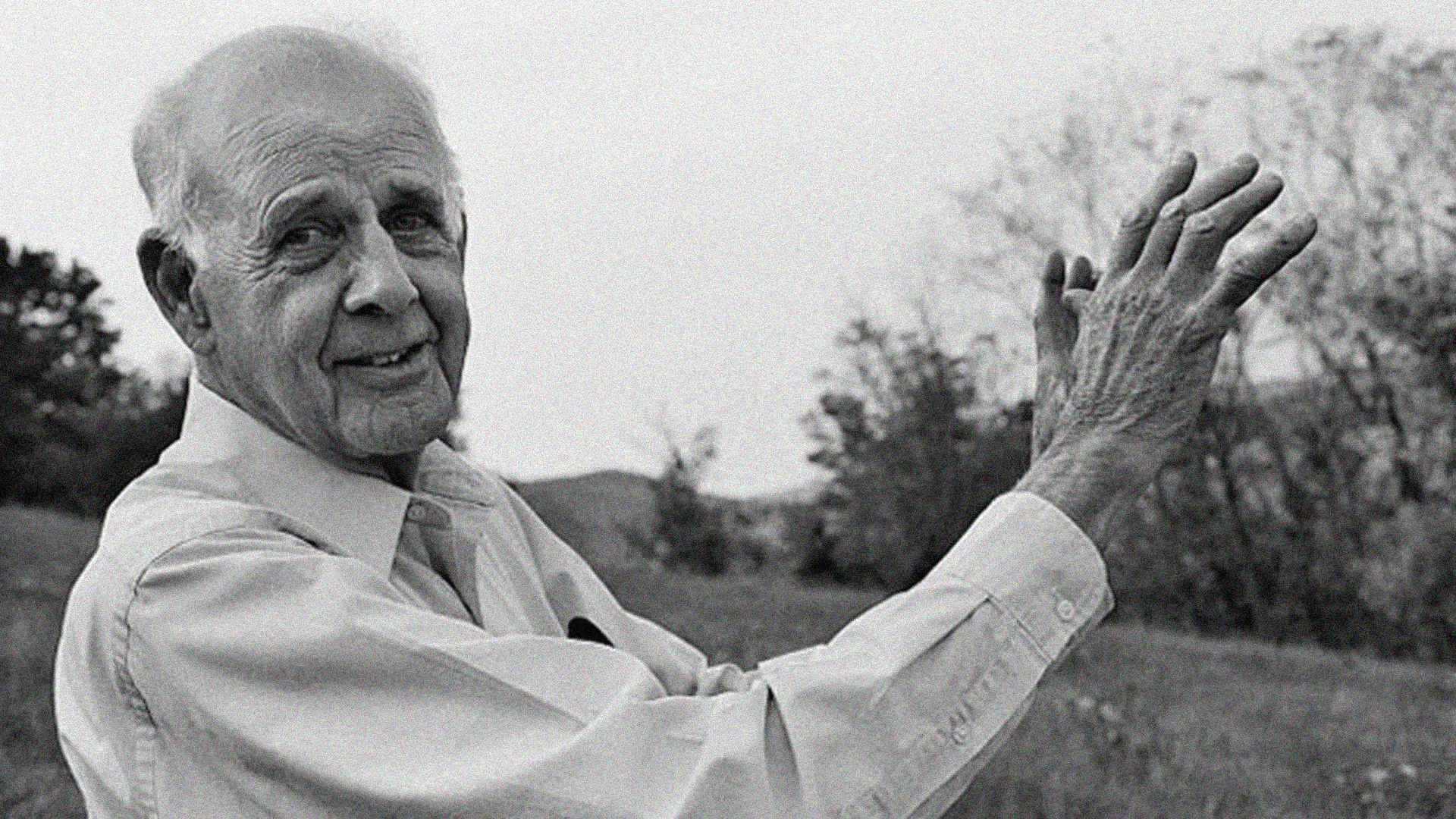
Wendell Berry is unquestionably America’s foremost agrarian visionary. His fiction is largely set in a semi-fictional town called Port William, whose “membership” Berry has traced through several generations across dozens of stories. These tales evoke the nobility, beauty, and hardships of farming life. The most recent volume, Marce Catlett: The Force of a Story, leads readers into life in Port William through Andy Catlett’s recollections. Andy, who serves as a stand-in for Berry himself, tells us of his grandfather Marce and the failure to secure a decent price for his tobacco in a pivotal year, then shows us how this story’s eponymous “force” influences his family’s life.
The novel itself presents a simple tale and invests it with drama and weight: Journeying from Port William to nearby Louisville in the early morning, Marce Catlett and his friend Jim Stedman pass the early-rising workers in the city. Marce saw them as “passively poor,” going about their business with “a dulled acceptance.” By contrast, Marce and his fellow tobacco growers (“capably poor and self-sustaining”) were beset by the monopoly of the American Tobacco Company, whose buyer purchased each man’s crop for “a few pennies a pound.” Marce and the others had brought a year’s work to the auction, and little or nothing came of it:
As he saw readily enough, the crop would barely pay its way to the market and the commission on its sale. Its purchase, properly named, was theft. He had been robbed of his crop and his work in perfect disregard of broad daylight and of his own presence and eyesight, and he felt the insult.
Marce returned home, committed to carrying on the family farming tradition. Berry presents this tale as perhaps the central source of motivation for two generations of Catletts.
The novel emphasizes that stories belong to people and shape them for good or ill. Berry holds that a story passed down through a family line has a kind of gravitational pull on those who take it to heart. Andy’s father, Wheeler, was shaped by Marce’s tale:
Because of the story, there were some kinds of a man that Wheeler could not be, a certain kind that he had to become, and certain things he had to do…. the story lives on in its suffering and sorrow, and as a fragment of the history of humankind’s unwillingness to pay farmers for their work or the land for its yield. For those who still remember it, it bears with it still a particular love, and it lives in their hearts and thoughts as a motive to correct a profound and worsening national flaw.
Wheeler, in turn, helps establish a tobacco growers’ cooperative program, and in Berry’s telling, this program serves as a lifeline that maintains Port William’s ability to make a living growing tobacco, with other forms of subsistence farming serving as a kind of insurance policy against the vagaries of the weather and the world. After a brief stint in Washington, Wheeler moves back home and serves as a member for the rest of his days.
The novel’s narrator, Andy Catlett, feels initially drawn away from Port William. He becomes an agricultural journalist and is repelled by what he sees at the heart of industrial farming. This did not last very long, however: “his wife, whose own calling was homeward, saw before he did that he had misplaced himself. He belonged, she told him, at home. If he was a writer, then he ought to go and live in the only subject of his own that he would ever have.” Andy spent his life writing and farming while taking his place as part of the membership, “at home with their neighbors in their neighborhood.”
Marce Catlett is not a conventional novella, however: Like most stories with a philosophical point rooted in the characters’ souls, the book does not give the reader dramatic changes or exciting action. Berry invites his readers into the tale and the worldview it proposes. Leading his readers into the experience of loving and losing a way of life displays Berry’s striking gifts as a stylist. It’s a melancholy story centered on this great loss, not just of a crop but the pattern that had grown up around it:
When you have a crop, and a culture, that gives employment at home to whole families, that puts the children to work with their parents, that helps you to raise your children, and you lose it all at once and have nothing to replace it, then what?
We might all learn something from a sympathetic engagement with that kind of pain, and were that the end of Marce, Berry might well be applauded for having depicted the end of an era with sympathy and grace.
But it is not the end: about two-thirds of the way through the book, Berry suddenly shifts tone and genre. Andy’s family story is taken over by an extended essay on the community and political economy dedicated to traditional tobacco farming, and on what its demise has meant for the families that followed this way of life.
As such, Marce Catlett is essentially two different works: a pastoral novel appended by a biting piece of social commentary. In his acknowledgments, Berry reveals that Marce Catlett is a lightly fictionalized account of events that are quite real to his family’s own story, and perhaps this explains the odd fusion. Berry is essentially a character in the piece, and as such, he cannot help but share the painful lessons he learned.
The book’s forays into political and economic pathology leave much to be desired, even as the mixture of narrative and didactic prose hits a clear danger that Americans all too often refuse to confront. Berry continues a tradition of writing, inaugurated by Tocqueville, of holding up a mirror to the ways Americans’ restless pursuit of liberty and prosperity tends to undermine our ability to form communities that sustain those great goods, and perhaps even make them worth having in the first place.
Berry articulates this in a few different ways. He’s acutely aware of the typical American middle-class tendency to relentlessly follow opportunity. Discounting the value of staying in one place, we move for better jobs. We prepare our children for top universities anywhere, in the belief that their individual careers and successes will inevitably (and perhaps should) trump family ties. Berry observes: “The story of a family at home is like a puzzle put together. Put together, the separate parts cohere in a kind of sense, not otherwise to be made: the story of the family at one for a time with the story of its place.”
Berry does not call Port William a membership for nothing, as it involves a risk and commitment to interweaving our lives with others. And he is right to worry that we have lost something in valuing these ties too lightly. If his point was simply that Americans ought to love their families, places, and communities more, a story might be enough. But instead, he levies a starker critique of our society:
In stable and lasting communities, people become neighbors to one another because they need one another. The American story so far—which has been so far the Catletts’ story, which they have both suffered and resisted—has been the fairly continuous overpowering of the instinctive desire for settling and homemaking by the forces of unsettling: the westward movement, land greed, money hunger, false economy. The industrial replacement of neighborhood by competition and technology moves everything worthy of love out of reach.
What makes Marce Catlett so frustrating, despite the beauty of its prose, however, is Berry’s certainty that the industrial world was fundamentally a mistake. Andy Catlett’s “mind would become increasingly troubled as the machine-civilization subdued the land and the people to a rule entirely alien to both.” In Louisville, Marce Catlett “felt he could see” the passivity of the city dwellers. By these lights, the self-sufficient farmer is the freest man in the world because “they had from their land and their heritage the means to feed themselves.” The market exiled men “from their homelands, their histories and memories, their self-subsistent local economies, thus becoming more ignorant and dependent than people have ever been before.” Yet remember: this is a story about the power of stories, and his tale is burdened by a radicalism that rejects nearly all that we take for granted today.
Marce Catlett extols the virtues of a world the author never quite inhabited, and Berry casts doubt on seemingly everything about this changing world of technology and innovation. For severing our tie to natural rhythms, electricity powered by fossil fuels and other forces appears to have done more harm than good: “That tie to daylight, freely given, a gift as old as creation, was replaced by bondage, purchased by money, to fuels extracted from the darkness under the earth.”. Rapid transit, too, “the strangeness of effortless movement” required a horrible violence to the earth, “subduing its ancient contours to levels and slants and bends required by the machines that ever after would hurry regardlessly across it.”
Our commercial and, more recently, energy-intensive culture is not just a mistake for Berry; it acts as something like the Fall in his thinking. Near the end of the book, he writes:
And yet this world, in which time and change are the way of life, has suffered and so far survived five centuries of global conquest and plunder. Greed has passed to and fro over the whole earth, reducing life to matter and matter to price. Though time and change bring sorrow, they belong to the seasons, to fecundity and health, but greed is a mortal disease.
Reflections like these owe more to a yearning for aspects of a lost golden age than to a simple hope that restless Americans might work to renew their fragile bonds. In this picture, it is competition, innovation, and industry that have ruined the human heart and set America on a path to self-destruction. The narrator really laments the entirety of American life with its commerce, movement, and liberty, but neglects to consider that Americans also pursue divinity and the needs of the soul with great energy, sometimes in nearly inexplicable ways. In this, he reflects in an almost hectoring tone the critique of America made by the postliberals who view America as an ill-founded country, deeply flawed because of its liberal origins that emphasize markets, property rights, and individual liberty, but similarly to Berry’s narrator, neglect to note the tremendous virtue, religion, and sources of renewal and stability in American life.
Andy Catlett ultimately believes that only great forgiveness can protect humanity from self-destruction. He suggests that instead of grand programs, all we have left is the work directly in front of us, like Marce Catlett returned to at the end of his story. Genuine traditions and stories can and should connect their inheritors and prevent them from recklessly chasing the future simply because it’s the next thing. This may be the book’s strongest wisdom, as it challenges the dreams postliberals and other ideologues hold for the present moment.
Brian A. Smith is Senior Program Officer at Liberty Fund and a Contributing Editor at Law & Liberty. He is the author of Walker Percy and the Politics of the Wayfarer (Lexington Books, 2017). Before joining Liberty Fund, he taught politics and great books at Montclair State University from 2009–18. He tweets at @briansmith1980.


Spielberg’s Empty Hope
'Disclosure Day' should have been called 'Hope and Change,' or rather 'Change and Hope.'
.jpeg)
Deliberative Republicanism and the Triumph of the American Founding
Instead of rejecting the moral urgency of the postliberal right and left, it is fitting and proper that we redirect it through the right kind of education—both formal and informal—that can inspire affection for our Constitution.
Can Civic Friendship Save America?
Start with “civic assimilation” on the way to a more peaceful Union.




Civitas Outlook


Get the Civitas Outlook daily digest, plus new research and events.
Civitas Outlook
Get the Civitas Outlook daily digest, plus new research and events.