Originalism and the 'Barbara' Dissenters

Call the Barbara dissenters wrong on the merits. But don’t call them unoriginalist.
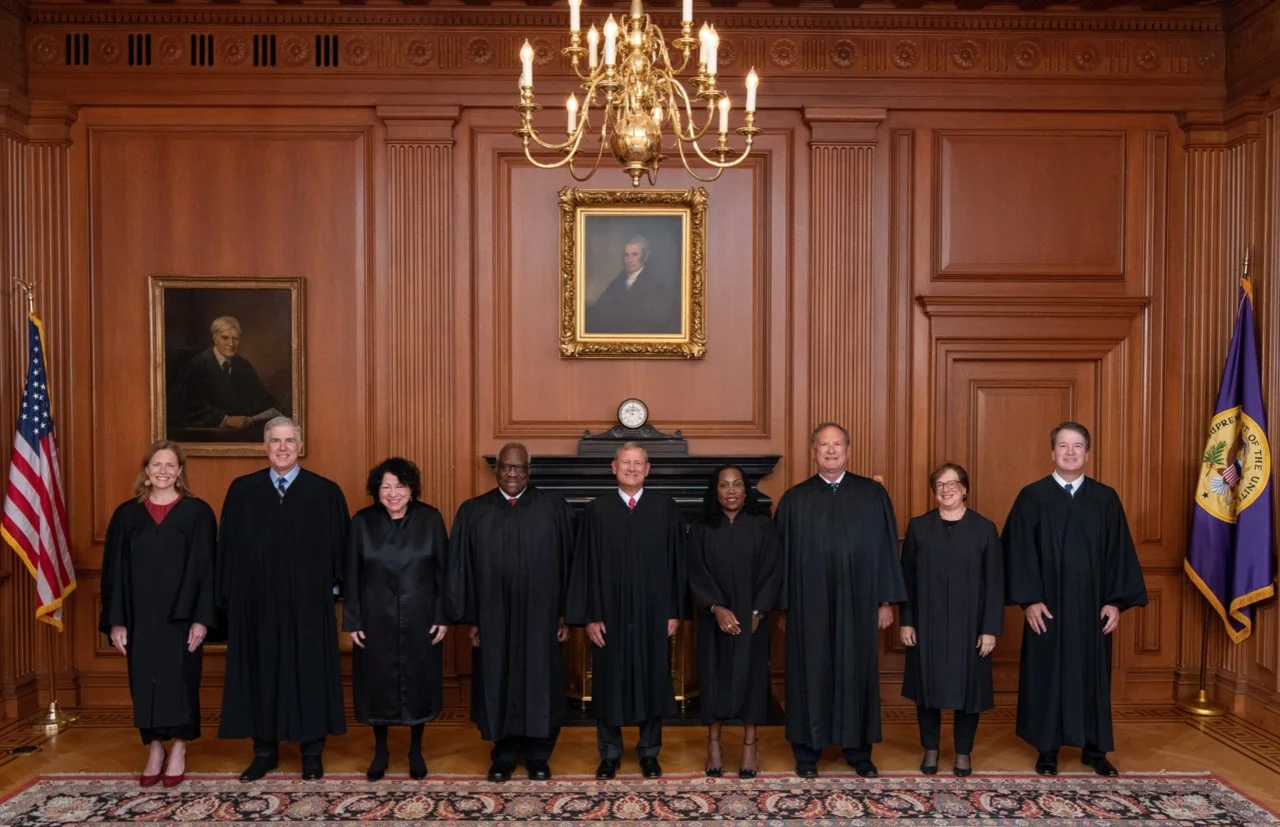
The Supreme Court’s Trump v. Barbara decision held that “children born in the United States to parents unlawfully or temporarily present are ‘subject to the jurisdiction’ of the United States and are citizens at birth under the Fourteenth Amendment’s Citizenship Clause.” Though Justice Kavanaugh concurred in the Court’s judgment, he and three other Justices—Justices Thomas, Alito, and Gorsuch—disagreed with the majority’s reading of the Fourteenth Amendment.
This essay is not about whether the Court got the case right or wrong. Instead, it addresses a recent methodological criticism of the Barbara dissents—most notably Justice Kavanaugh’s dissent in part. Everyone agrees that at the time of the Fourteenth Amendment’s ratification, there were certain exceptions to the general rule that those born in the United States were citizens. (For instance, though born on American soil, the children of ambassadors, of “enemies within and during a hostile occupation of part of our territory,” and “of members of the Indian tribes” were not considered citizens by birth.) But the dissenters didn’t view those exceptions as a closed set. Instead, they derived a legal rule from the constitutional language (“subject to the jurisdiction”), and applied that rule to a different class of people (those unlawfully or temporarily present). Was that tack—figuring out the legal rule the text created and applying it to new circumstances—an unoriginalist one?
Some have said so. One well-known legal podcast called Justice Kavanaugh “a living constitutionalist,” arguing that the Justice was “inviting himself to make open-ended judicial exceptions to the Constitution based on policy considerations.” Another prominent podcast quipped that Justice Thomas’s dissent exemplified the “de-emphasis of text in the originalist project.” One commentator argued that “Kavanaugh’s conclusion doesn’t just defy the text of the Constitution itself; it also defies [Justice] Scalia’s principle that constitutional meaning is fixed.” Justice Kavanaugh’s opinion, he continued, suggests that originalists think that “living constitutionalism is good now, so long as it aligns with the Republican Party’s shifting values.” Another commentator has argued that the dissenters—and Justice Kavanaugh in particular—were not engaging in run-of-the-mill originalism. Rather, they were employing a form of originalism that might make them appear to be “Living Common Goodist[s].”
I disagree. The Barbara dissenters broke no new methodological ground. First, they recognized that the constitutional text was fixed. So, their analysis was consistent with the “fixation thesis,” a foundational principle—embraced by both public-meaning and original-law originalists alike—that “[t]he meaning of the constitutional text is fixed when each provision is framed and ratified.” Second, they appreciated that, though the fixed text could not change, the legal rule the fixed text created can—and must—apply to circumstances and facts unforeseen at the time of ratification. This is standard-fare originalism.
Though not by name, the dissenters invoked originalism’s “sense-reference distinction.” In an important 2006 Article, Professor Christopher Green argued that constitutional interpreters need to distinguish between the “meaning historically expressed by constitutional language” (its sense) and “the objects in the world to which the term refers” (its reference). Simply put, “the sense of a constitutional expression is fixed at the time of the framing, but the reference is not, because it depends on the facts about the world, which can change.” After all, “no reasonable theorist will contend … that everything about the Constitution—everything relevant for constitutional law—is fixed at the time of the framing.”
Consider an easy example. As Professor Lawrence Solum explains: “The sense of the word ‘arms’ in the Second Amendment could be something like ‘weapons that can be carried.’ Assuming that this interpretation is correct, the reference of that word in 1791 when the amendment was adopted was each and every weapon that could be carried—a giant mountain of muskets, flintlock pistols, knives, and swords.” What’s fixed is the sense—the meaning of the word “arms.” What’s not fixed is “the reference (the collection of muskets, flintlock pistols, knives, and swords that happened to exist at the time the Second Amendment was framed and ratified).”
The sense-reference distinction is fundamental to understanding originalism and constitutional interpretation writ large. The fixed words in the Constitution mean something. But sometimes that fixed meaning instructs us to take stock of modern facts about the world. Justice Kavanaugh made this very point in his dissent: “The ‘meaning of rules is constant. Only their application to new situations presents a novelty.’” Or, as Justice Gorsuch recently put it in another case decided this term: “As with other laws, the terms found in the Fourth Amendment carry their original public meaning and can bear more applications than its drafters might have expected or intended.”
One could think of some of the Constitution’s language as creating equations, and to get answers, we have to plug in variables about the world today. Some examples in the Constitution are easy to spot. The Necessary and Proper Clause, for example, has been described by Professor Caleb Nelson as a “formula.” It “incorporate[s] current conditions as relevant variables.” We do not dishonor the framers by plugging in modern social facts into this constitutional formula. That formula is fixed—for example, it can never mean “necessary and improper.” But the outputs we get—what’s necessary and proper at any given moment—might change depending on real things in our world today.
This is true of the language in Barbara, too. All the Justices in Barbara agreed that, at the time of the Fourteenth Amendment, there were established exceptions to the general rule that those born on the territory were citizens. But as Judge Steven Menashi noted in an essay published before Barbara was decided: “[T]he Citizenship Clause does not reference these [exceptions]. The exclusion results from the application of a broader principle.” Put another way, as Justice Alito noted: “If the Citizenship Clause set out specifically named exceptions to the general rule of citizenship by birth, [the Court’s] job would be easy; we would follow those exceptions. But the Citizenship Clause is framed differently. It sets out a general rule: Citizenship is not conferred upon a person born in the United States unless that person is also ‘subject to the jurisdiction’ of the United States. By its terms, that rule applies across the board.” Justice Kavanaugh hummed a similar tune. He noted that the “four exceptions [were not a] permanently frozen or closed set as of the Fourteenth Amendment’s ratification in 1868,” and he, instead, attempted to divine an “apparent principle unifying the four disparate exceptions.”
What Judge Menashi and Justices Alito and Kavanaugh are saying is simple: The Constitution fixed into place a particular legal rule: “All persons born … in the United States, and subject to the jurisdiction thereof, are citizens of the United States.” It did not list out exceptions to that rule in the text. Rather, at the time the Fourteenth Amendment was ratified, people understood that there was a class of people born on American territory who were not “subject to the jurisdiction” of the United States. So, to understand why those groups were not citizens, we need to identify the broader legal rule established by the text. We need to know the fixed meaning of the constitutional language at the time of adoption to determine why, in 1868, those particular groups were not covered by the Fourteenth Amendment. In other words, we need to know the equation created by the Fourteenth Amendment to understand the particular constitutional outputs at issue.
Let’s say, for the sake of argument, the fixed meaning of “subject to the jurisdiction thereof” was “not subject to any foreign power.” That would explain why the four excepted categories—“children of foreign sovereigns or their ministers, or born on foreign public ships, or of enemies within and during a hostile occupation of part of our territory” and “children of members of the Indian tribes”—were not covered by the legal rule the Constitution created. But if that’s the legal rule enshrined by the Constitution, it can and—if we are bound by the text today—must be applied to new facts on the ground. So, we can take a new class of people—those unlawfully present—and plug it into the constitutional equation created and fixed into place by the Fourteenth Amendment. Plugging modern facts into our fixed legal standard will yield a constitutional output. There is nothing unoriginalist about that. To paraphrase Justice Alito, “when a [text contains] a generally worded rule, we apply it in all circumstances that fall within the rule, not just those that were on the minds of the legislators at the time of adoption.” Doing so honors the legal rules put in place at the time of the Constitution’s ratification.
In fact, doing otherwise—viewing the “exceptions” to birthright citizenship as a closed set—would itself be unoriginalist. As Justice Barrett noted at oral argument, “the language [of the Fourteenth Amendment] doesn’t say it’s closed.” It would be atextual to say that the four historical exceptions were somehow written with an invisible—but permanent—marker into the Constitution. They were not. Instead, the Constitution codified a fixed legal rule, one that—like many of the Constitution’s provisions—is sensitive to modern facts on the ground. We honor the original Constitution by giving legal effect to “a Constitution whose permanent and fixed meaning would be ‘calculated for all circumstances.’” Doing so does not “read new meanings into the Constitution.” It gives effect to its legal content.
I recognize that the Barbara dissenters may not have defended their methodological approach on exactly these terms. But when one steps back and assesses their approach, it’s clear that it was, at its core, originalist. In 1868, when the text was fixed, certain groups were known to fall outside the Fourteenth Amendment. The Justices identified the relevant constitutional outputs of that period. But why exactly were those groups not born “subject to the jurisdiction” of the United States? Well, answering that question required knowing the constitutional equation created by the Fourteenth Amendment—the legal rule it etched in stone. And once that rule was derived, the Justices could plug modern facts into it. That sort of exercise is the bread-and-butter of originalism. Indeed, it respects the legal rule created by the Constitution and gives it legal effect. Call the Barbara dissenters wrong on the merits. But don’t call them unoriginalist.
Elias Neibart graduated magna cum laude from Harvard Law School in 2025. At Harvard, he served as an Executive Editor of the Harvard Law Review.

Originalism and the 'Barbara' Dissenters
When one steps back and assesses the methodological approach of 'Barbara' dissenters, it’s clear that it was, at its core, originalist.
.jpg)
The Declaration Symposium
Civitas Symposium featuring Gregory Collins, Aaron Nielson, Joseph Postell, and John Yoo
The Birthright Citizenship Decision Will Not End the Birthright Citizenship Debate
It is unlikely that Trump v. Barbara ended the debate over birthright citizenship. It may have truly started it.




.png)
Get the Civitas Outlook daily digest, plus new research and events.
Get the Civitas Outlook daily digest, plus new research and events.