

The Civitas Outlook Energy Symposium

What will be America’s energy needs in this century?
Energy policy in America has become, over the past few decades, one of the most fraught debates in American politics. The progressives immersed the issue in a soup of universalist sentiment that equated fossil fuel use with war on the planet and our childrens’ futures. We needed to “decarbonize” the economy and rebuild it with “clean energy.” Policies to that effect have been implemented in America by Democratic presidential administrations and were a part of an overall approach to governing that stretched from the Department of the Treasury to the Department of Energy, with a stop at the Securities and Exchange Commission. This Whole of Government Approach is intended to curtail and end the fossil fuel industry. But will the American people endure the high prices and sacrifices these policies require to achieve some purportedly pollution-free economy, thwarting the perils of climate change?
Conservatives have focused on practical aspects of energy policy: prices, supply and demand, diversifying and broadening America’s energy base, production efficiency, and economic growth. It could point to tremendous success in fracking technology and to America’s growing capacity for cleaner energy production, even though the country still requires more energy. Along the way, America has become both more productive and more energy-independent.
The new variable is AI, and its inescapable need for vast new sums of energy. How will America meet this challenge, central not only to economic vitality but also national security? How will America meet its energy needs? To answer these questions and more, Civitas Outlook has assembled four thinkers with diverse perspectives on how America’s energy policy should proceed, given our strengths and challenges.
Russ Greene
From Energy Repression to Energy Dominance
Steven F. Hayward
America’s Energy Revolution Continues
Mark Mills
Oil Remains the Epicenter of Commerce, Geopolitics, and Energy
Michael Toth

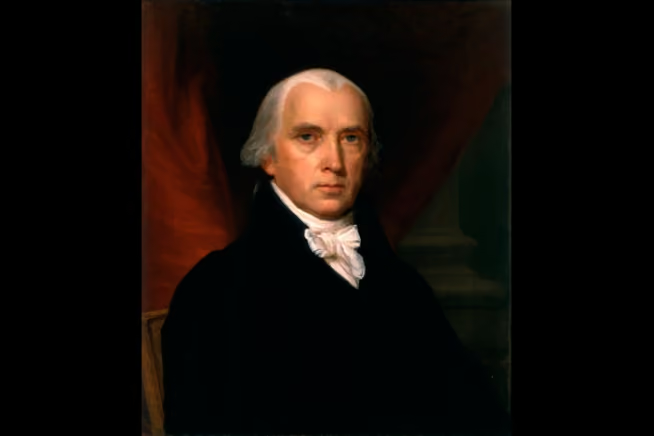
From Milton Friedman to Alexander Hamilton: Why J.D. Vance’s Economic Vision Needs James Madison
Loftily stated goals do not remove the risks of concentrated benefits, dispersed costs, and political capture.

On Debt: Two Honest Measures, Two Different Questions
A response to Thomas Savidge's '“Full Faith and Credit” Means a Claim on America.'

Adam Smith, Economist of the American Revolution
Clear-eyed economic thinking remains one of humanity’s most powerful instruments for understanding our problems and advancing our possibilities for improvement.





Get the Civitas Outlook daily digest, plus new research and events.
Get the Civitas Outlook daily digest, plus new research and events.