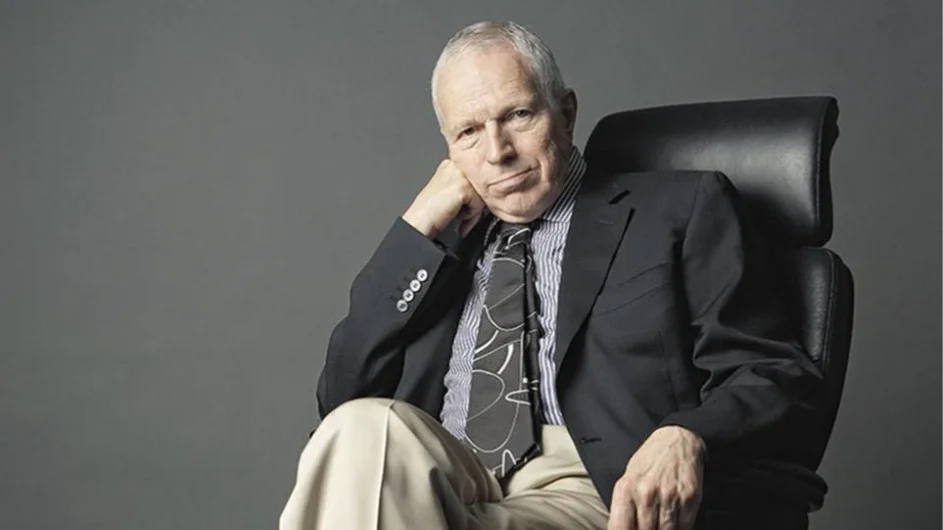
Edmund Phelps: Economist of Values

Phelps’s greatest legacy is his claim that if you want to understand economic growth and decline, you must examine which set of values is dominant in a given society.
One of the most significant global economic developments in recent decades has been the United States becoming a significantly richer country than the European Union. The average American is now considerably wealthier than the average European.
That trend looks likely to continue, and the implications go far beyond economics. It will affect issues ranging from the NATO alliance’s sustainability to the degree of attention US policymakers give to Europe compared, for example, to the far more economically dynamic Asia-Pacific region.
Given the stakes, it is not surprising that the factors driving this shift have attracted the attention of economists. One of the first to do so was the 2006 Nobel prize winner Edmund S. Phelps, who died on May 15 this year at the age of ninety-two.
As a younger man, Phelps explored topics ranging from the economic effects of population growth to the role played by capital accumulation in driving economic development. In publications like his bestselling 2013 book Mass Flourishing: How Grassroots Innovation Created Jobs, Challenge, and Change, however, Phelps devoted many pages to explicating why innovation and dynamism had been declining in both Europe and America for some time.
That decline, he showed, had been slower in America and longer in Europe. This was one reason the United States was outpacing Europe. The fact, however, that dynamism was nonetheless also declining in the US economy meant, Phelps saw, that America was susceptible to the same problems which are increasingly turning many European nations into bit-players in the global economy.
But at the core of Phelps’s argument is a claim that I consider his greatest legacy: that if you want to understand economic growth and decline, it is not enough to look at incentive structures or even institutions. We also need to examine which set of values is dominant in a given society.
Cultural Economics
This is just one of Phelps’s many insights into the relationship between culture and economics, which I have continually returned to in my own work on this topic. Other twentieth-century economists, such as Douglass C. North, had previously drawn attention to the salience of values in economic life. Part of Phelps’s achievement was to deepen our understanding of how a society’s dominant cultural attitudes help explain the forms that economic activity assumes in different settings.
There is no shortage of commentators who have identified the significance of factors like weaker capital markets and the fondness for regulation among European politicians and bureaucrats in understanding why entrepreneurship is comparatively weaker throughout the old continent than in America.
For Phelps, however, this explanation was insufficient. Modern European countries certainly had their problems, but, as Phelps observed in a 2006 paper, they were hardly “a bunch of banana republics.” It wasn’t even evident, he pointed out, that most European states were especially behind the United States in areas such as property rights and the rule of law, which are indispensable for long-term economic growth.
These reflections eventually turned Phelps toward the study of how culture shaped the workings of the same economic institutions in different nations. It mattered, he argued, that markets in America operated in a culture that was “fertile in coming up with innovative ideas with prospects of profitability; shrewd and adept in selecting among these ideas for development; finally, prepared and venturesome in evaluating and trying the new products and methods that are brought out.”
The contrast with most European economies was stark. Markets were certainly widespread in these countries, but they existed within an economic culture that placed a high value on protecting existing businesses, professions, and organized labor from the effects of innovation, discovery, and competition. This, in turn, Phelps contended, owed something to the fact that security and stability—not liberty and creativity—were the values accorded priority in European economic life.
Not content with hypothesizing, Phelps carefully examined data on the attitudes of Americans and Europeans towards change, new ideas, competition, and the freedom to make choices. With only a few exceptions, Phelps found that Americans generally held more positive views of these factors than Europeans did.
Such attitudinal differences, Phelps showed, were bound to have an impact. Indeed, if a particular constellation of values remained in place for a long time, Phelps suggested that certain patterns of economic behavior would harden. “It may be,” argued Phelps, “that the French, having long since despaired of having more freedom and more initiative, have learned not to care much about those values. Similarly, it may be that Americans, having assimilated large doses of freedom and initiative for generations, take initiative and freedom for granted.”
Dynamism versus Corporatism
Phelps, however, wasn’t satisfied with using this framework to explain why the US economy was doing comparatively better than those of Europe. He also deployed it to advance a broader theory about the role of values in either bolstering the types of institutions that promote growth or plunge entire societies into economic obsolescence.
Central to Phelps’s thesis was the idea that although science is important for economic development, its role in economic life is overrated. He noted that there were relatively few scientific breakthroughs in nineteenth-century America compared to Europe. Yet America caught up to and eventually surpassed Britain as the world’s economic superpower by the 1890s.
According to Phelps, an overlooked cause of this and other instances of economic growth was the desire of “ordinary people” to “meet consumer wants and needs and, importantly, the desire to make a profit in doing so.” Even the great inventors whose ideas helped spur the Industrial Revolution were driven, Phelps demonstrated, by “perceptions of business needs or an inspired sense of what businesses and consumers would like to have.”
This phenomenon, however, went together with something else: the extent to which what Phelps called “modern values” prevailed in the economy. Though the prospect of profit was crucial, Phelps contended that an economy predominantly shaped by “individualism,” “vitality,” and “self-expression” was far more likely to be creative, productive, and highly competitive.
At the same time, Phelps grasped that dynamic economies run into something entirely human: our yearning for security and stability. In some cases, that has contributed to the emergence of socialist and social-democratic movements. But the real long-term rival to the market economy, stated Phelps, were corporatist values and institutions.
Corporatism, Phelps underscored, involved replacing the bottom-up character of markets with a form of managed capitalism. Its animating values centered on the imperative of providing as much economic security and stability as the state could achieve by coordinating the economy, without lurching into outright socialism. The result was a proliferation of privileges acquired through proximity to political power. As Phelps wrote in Mass Flourishing:
Government grants of unlimited scope may be made to regions and cities, even if their latent function . . . is to dispense patronage in return for support, political or financial. Lobbyists are welcome to submit requests for legislation, regulations, and interpretive rulings, especially if they come with bribes. Regulations of industries are instituted, aimed at shielding companies or workforces from competition. Bans spare influential communities from new airports, landfills, and the rest. Shakedowns of companies by communities, nonprofits, or governments extract donations or other accommodations . . . The result was not necessarily an extremely large government, but it was in important ways unlimited government.
These words perfectly describe the state of most modern Western economies today, including the US economy.
Economic and Normative
Whether of the “hard” variety associated with the New Deal and many interwar authoritarian European states, or the “soft” versions that proliferated in many postwar European economies, corporatism inexorably leads to clientelism, cronyism, and, in some cases, corruption. In Mass Flourishing, Phelps didn’t hesitate to stress the extent to which late-twentieth century and early twenty-first century presidential administrations had embraced corporatist policies, as well as the long-term problems they would create for the US economy.
In analyzing past and present cases of corporatism, Phelp stressed the degree to which such policies are typically justified by appeals to the need for strong top-down political leadership capable of promoting fairness and security over the disruptive effects of markets. Certainly, corporatism reflects the machinations of special interests. Nonetheless, Phelps reminds us that corporatism is also premised on a particular understanding of certain values and that we would be unwise to discount the ways in which they legitimize economic arrangements that diminish economic growth and opportunities for human fulfillment.
Herein lies what may be Phelps’s most lasting impact on economics as a social science. Having made major contributions to technical macroeconomics, Phelps came to appreciate that questions of value commitments were not something economists should eschew in the name of being incorruptibly empirical. Instead, Phelps made them central to his inquiries into economic topics—much as Adam Smith invested what he called “the system of natural liberty” with both normative and empirical meaning. In that sense, Edmund Phelps was more rooted in an older tradition of economics, that of political economy, than perhaps even he recognized.
Samuel Gregg is the President and Friedrich Hayek Chair in Economics and Economic History at the American Institute for Economic Research.


Kevin Warsh and the Future of Fed Communication
Warsh is right that the Federal Reserve should not speak so loudly that it hears only its own echo.

“Full Faith and Credit” Means a Claim on America
The federal debt is dangerous because G.D.P. belongs to Americans, and Washington has more ways than any private borrower to reach it.

ISS and Glass Lewis Can’t Stop Texas
Texas’ policy is clear: the state wants businesses to thrive as businesses.


.avif)



Get the Civitas Outlook daily digest, plus new research and events.
Get the Civitas Outlook daily digest, plus new research and events.