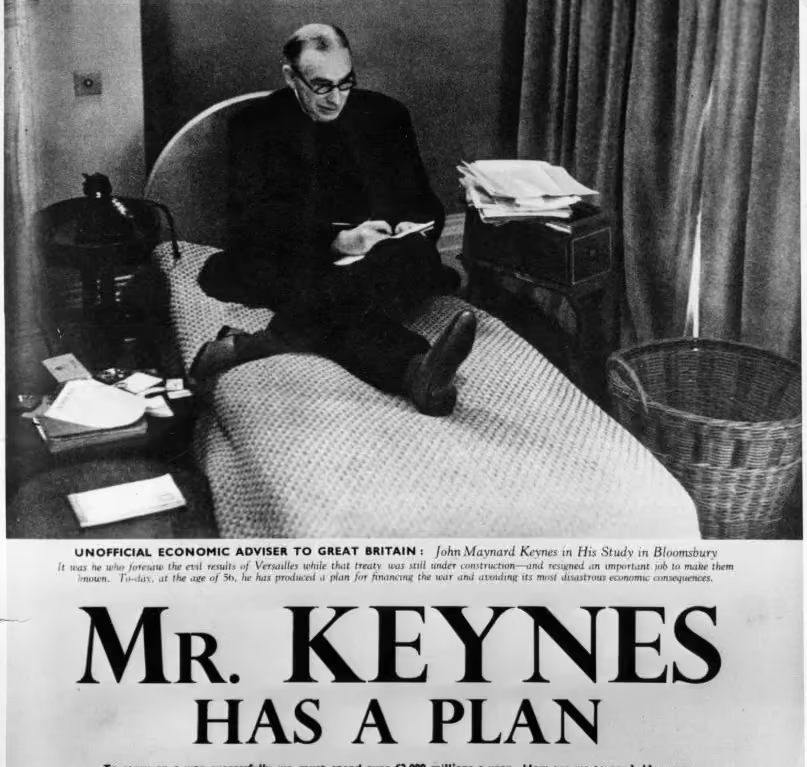
The Keynes Symposium

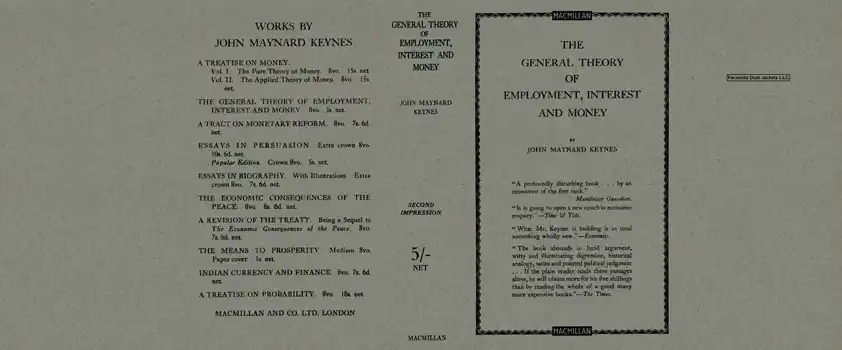
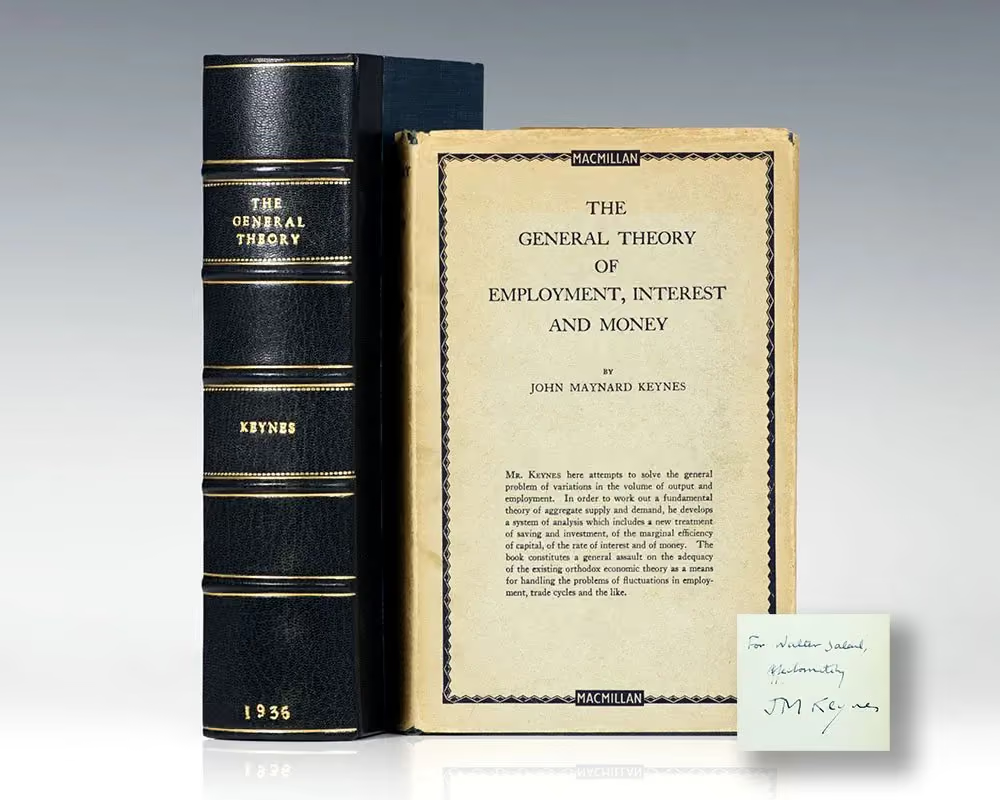
John Maynard Keynes' General Theory on Employment, Interest, and Money was published a bit over 90 years ago in February 1936. We've asked 5 contributors to assess the weight, influence, and truth of this book which has heavily shaped economic thought.
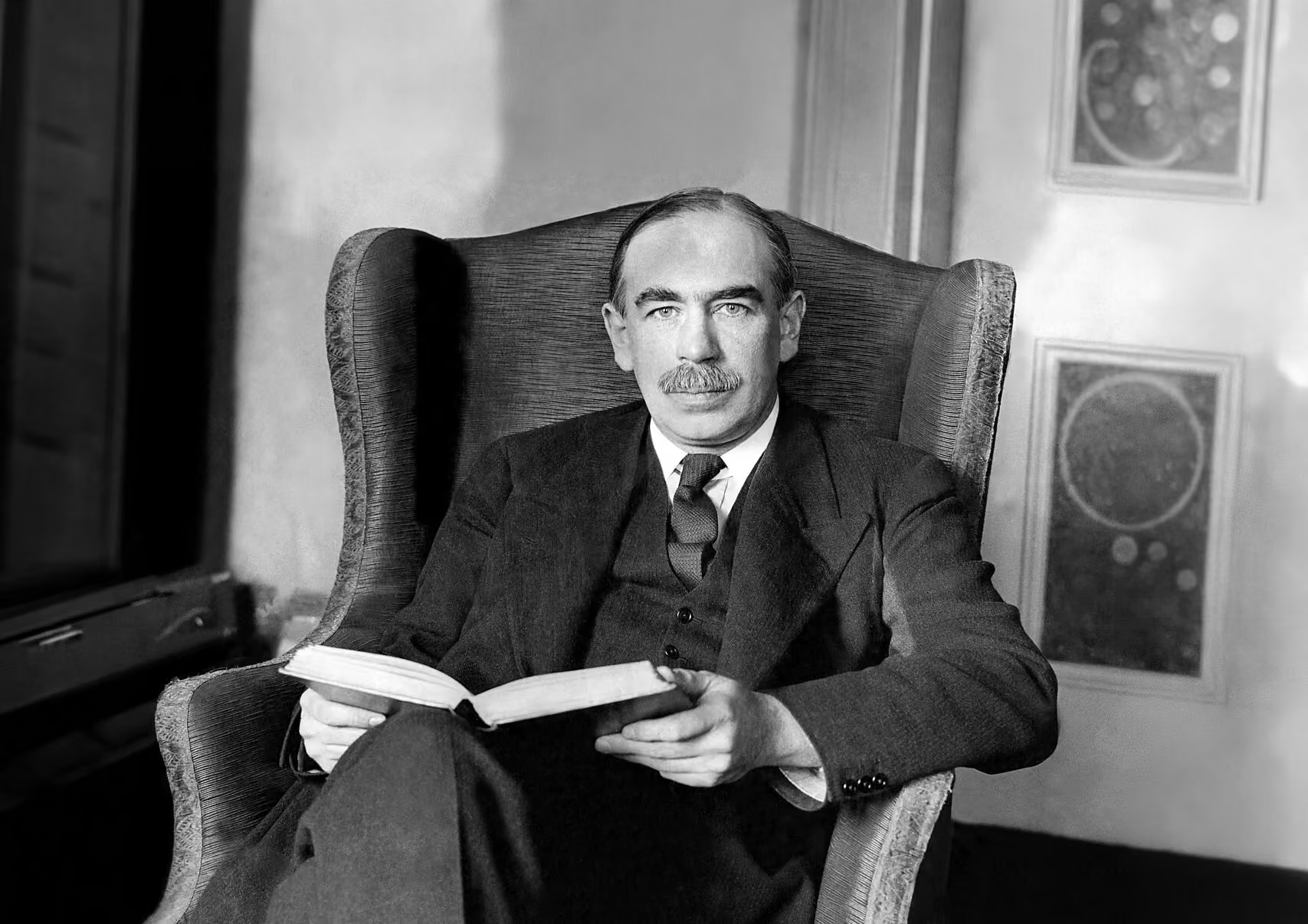
John Maynard Keynes' General Theory on Employment, Interest, and Money was published in 1936 in response to what he thought was the inability of conventional economic policies to heal unemployment in Britain, which had remained high since the end of World War I, and then the arrival of the vast economic downturn that enveloped Britain and Europe. His prescription involved vast government spending to boost aggregate demand, financed by borrowing. Such debt could be repaid by governments during conditions of general prosperity. In the meantime, government spending would boost aggregate demand through a multiplier effect, as jobs and wages recovered, a dividend would be returned to the economy.

Keynesian economics became a major subject of economic research and public policymaking in the twentieth century and continues to provide justifications for government fiscal policy today. On the ninetieth year of publication of Keynes’ General Theory, we asked five of our contributors to assess what the book has contributed to our economic learning and what we need to unlearn.

Richard Epstein, “Keynes, Coase, and Posner"

Jonathan Hartley, "What We’ve Learned About Fiscal Policy Since Keynes"

Michael Munger, “Keynes Was Not a Keynesian

Veronique de Rugy, “Still Slaves of a Defunct Economist

Leonidas Zelmonavitz, “Keynes’s General Theory as an Emergency Brief

Economic Dynamism
May 13, 2026

Keynes’s 'General Theory' as an Emergency Brief

The 'General Theory' was born from a specific historical emergency: the failure of postwar governments to deal with a depression rooted in the unimaginable destruction of wealth and the corresponding monetary disequilibrium.

Read more
Economic Dynamism
May 13, 2026

Still Slaves of a Defunct Economist

The practical men in authority are still slaves to this defunct economist. It is time to find a better one. 

Read more
Economic Dynamism
May 13, 2026

Keynes Was Not a Keynesian

The General Theory is never a model; it was a response to a particular economic crisis.

Read more
Thank you! Your submission has been received!
Oops! Something went wrong while submitting the form.

On Keynes, Coase, and Posner

Richard Epstein
Multiple Contributors
May 13, 2026

What We’ve Learned About Fiscal Policy Since Keynes

Jonathan Hartley
Multiple Contributors
May 13, 2026

Keynes’s 'General Theory' as an Emergency Brief

Leonidas Zelmanovitz
Multiple Contributors
May 13, 2026

Still Slaves of a Defunct Economist

Veronique de Rugy
Multiple Contributors
May 13, 2026

Keynes Was Not a Keynesian

Michael Munger
Multiple Contributors
May 13, 2026
No articles found for your search.
Civitas Outlook
The End of the AI Binary

Being pro-AI does not require being pro-recklessness. It means building the conditions for AI to be deployed widely and quickly while permitting core institutions to keep pace.

Civitas Outlook
The “Science Charade” After 'Chevron'

Like most complex systems, the administrative state resists easy answers.

Join the newsletter

Get the Civitas Outlook daily digest, plus new research and events.

Thank you! Your submission has been received!
Oops! Something went wrong while submitting the form.

Ideas for
Prosperity

Tomorrow’s leaders need better, bolder ideas about how to make our society freer and more prosperous. That’s why the Civitas Institute exists, plain and simple.
Discover more at Civitas