Still Slaves of a Defunct Economist
.jpg)
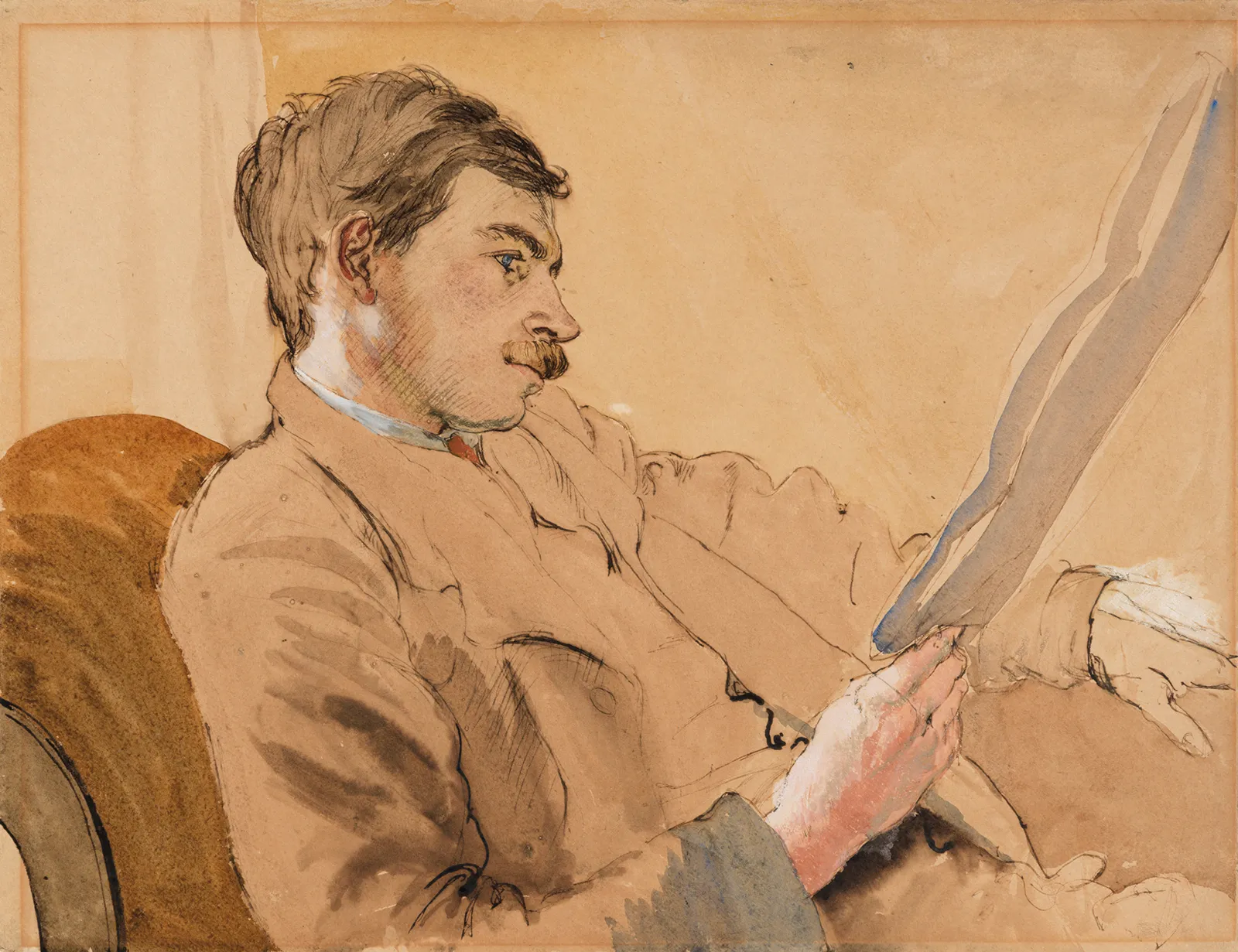
Despite his brilliance, Keynes is now a defunct economist.
“Practical men, who believe themselves to be quite exempt from any intellectual influences, are usually the slaves of some defunct economist.” So wrote John Maynard Keynes in The General Theory of Employment, Interest and Money, published in 1936. The line referred to what Keynes called the classical economists, whose ghosts still haunted Treasury corridors during the depths of the 1930s economic depression. It remains one of the most quoted sentences in the history of economic thought.
The irony, ninety years on, is complete. Keynes is now a defunct economist. Finance ministers from Washington to Tokyo, who believe they are simply responding pragmatically to events, are distilling their frenzy from his pages. The ratchet of deficit spending, the reflexive resort to stimulus, the institutional contempt for balanced budgets, all of it flows from a book, Keynes’s biographer, Zachary Carter, in a conversation with Tyler Cowen, concedes was more philosophy than economics, more political vision than analytical framework. Keynes himself, Carter argues, was “a philosopher first and an economist second,” a man whose economics “are just this dressed-up mathematical justification for philosophical views that he’s been wrestling with on a deeper level.” In other words, whose economics kept changing because he was searching for an intellectual justification for a social vision he had already committed to.
Before burying him, though, the man deserves his due. Keynes was genuinely brilliant. He was one of the great biographical writers in the English language, a formidable mathematician, and, as Cowen notes, a collector of remarkable taste who bought Cézanne and Degas at distressed prices during official trips to Paris, even as German artillery was within earshot of the city. He also identified real pathologies: nominal wage rigidities, coordination failures in severe depressions, and the possibility that monetary policy could lose traction in a liquidity trap. The Great Depression was a genuine catastrophe. These were not imaginary issues.
Ignoring that government policies were the cause of most of that prolonged pain, The General Theory was Lord Keynes’s proposed cure. His argument was sweeping and deliberately provocative: classical economics (meaning anyone who came before him), with its faith that flexible prices and wages would always return a market economy to full employment, was the special case, valid only when everything was already working. Keynes claimed to have written the theory that described how economies actually behave most of the time, including when they get stuck in lasting unemployment. Investment, he argued, is driven by volatile animal spirits rather than rational calculation. When confidence collapses, spending collapses with it, and the economy can settle into a new equilibrium, featuring mass unemployment that no market mechanisms will cure. The policy conclusion was unavoidable: the government must fill the demand gap left by private actors.
In economics, the most devastating response came not from within the mainstream, which largely capitulated, but from Vienna.
The Keynes-Hayek debate is sometimes caricatured as stimulus versus austerity, spending versus cuts. That misses the depth of the disagreement entirely. The real argument was epistemological, and about what any central authority can know, and therefore what any central authority can usefully do.
Austrian Business Cycle Theory operates through a mechanism The General Theory never seriously engaged. When central banks suppress the interest rate below the rate that equilibrates genuine saving with genuine investment (“the natural rate”), they send a false signal to entrepreneurs. Cheap credit makes long-horizon, capital-intensive projects appear profitable – although an unmanipulated interest rate would never have given that appearance. At the artificially low interest rate, resources flood into lines of production sustained only by the suppressed rate. The capital structure lengthens in ways the underlying economy cannot support. What looks like a boom is in fact a systematic misdirection of productive capacity, or malinvestment, posing as prosperity. When the distortion eventually is revealed, as it must, the recession that follows is not a failure of markets. It’s the market’s necessary liquidation of the errors caused by credit expansion. Keynes, observing the correction’s pain and mistaking it for renewed illness, prescribed more of the original poison.
The second Austrian blow is more fundamental still: the knowledge problem. No Treasury, no central bank, no council of economists can possess the local, tacit, constantly changing information that a functioning price system continuously aggregates and transmits. Keynesian fine-tuning requires an authority capable of precisely identifying deficient demand, calculating the required stimulus, targeting it at the correct sectors, and withdrawing it at the correct moment. But in the real world, no such authority exists or can exist. This is not a practical objection about competence or execution. It is a logical one about the nature of knowledge itself. Prices are not accounting entries. Emerging from actual market exchanges, they are irreplaceable carriers of information about relative scarcities, preferences, and the structure of production. Suppress or override prices, and you destroy the only coordination mechanism the economy has.
Keynes’s response to this challenge was essentially to wave it away. Uncertainty, he argued, was precisely why markets fail and why the state must guide them. But uncertainty cuts both ways. If private actors cannot reliably know the future, neither can governments. The Keynesian answer to market uncertainty is to hand discretionary power to political actors whose incentives, election cycles, concentrated constituencies, visible benefits, and invisible costs systematically bias them toward permanent budget deficits rather than the fiscal restraint the theory nominally demands.
Public choice economist James Buchanan made this point with characteristic clarity. In Democracy in Deficit, co-authored with Richard Wagner, he argued that the most important legacy of John Maynard Keynes was not a specific policy prescription but a shift in fiscal norms. Before the Keynesian revolution, there was a widely held expectation, though imperfectly observed, that governments should balance their budgets over the business cycle, running deficits only in exceptional circumstances. The old Hamiltonian norm. And Keynesian economics, properly understood, also called for deficits in recessions and offsetting restraint or surpluses in expansions. But Buchanan’s and Wagner’s insight was that democratic politics would not implement the symmetry embedded in that prescription. Deficits in downturns are politically attractive; surpluses in good times require tax increases or spending cuts on a satisfied electorate and are therefore systematically avoided. The result is a persistent deficit bias: deficits in recessions, insufficient surpluses in expansions, and a gradual accumulation of debt over time.
Buchanan and Wagner’s conclusion was institutional rather than merely descriptive. Because ordinary political incentives tend to produce this asymmetry, they argued for fiscal rules, such as a balanced-budget requirement, to better align policy with long-run sustainability. The continued growth of large, unfunded commitments in programs such as Social Security and Medicare reflects, in part, the same underlying political dynamics Buchanan and Wagner identified: not a deliberate embrace of permanent deficits as theory, but the predictable outcome of a system in which the discipline required to run surpluses is politically fragile.
The General Theory at ninety should be read the way we remember Ptolemy: as a monument to how brilliant minds construct elaborate, internally consistent systems on flawed foundations, and to how institutional incentives of governments, economists, and everyone who benefits from activist fiscal management sustain those systems long after the evidence has turned against them. Keynes asked what we should do when markets fail to clear. His Austrian and public-choice critics converged on the same answer from different directions: less than you think, through mechanisms you cannot control, at costs you have not calculated, administered by people whose incentives you have not examined.
Ninety years of evidence support the Austrian and public-choice economists. A debt of 100 percent of GDP heading toward 175 percent in 30 years is Exhibit A. The practical men in authority are still slaves to this defunct economist. It is time to find a better one.
Veronique de Rugy is the George Gibbs Chair in Political Economy and Senior Research Fellow at the Mercatus Center at George Mason University. She is also a nationally syndicated columnist and contributing editor to Civitas Outlook.

On Keynes, Coase, and Posner
The differences between Keynes, a pioneer of government spending and intervention, and Ronald Coase, a pioneer of maximizing growth by minimizing transaction costs, are as far as can be.

What We’ve Learned About Fiscal Policy Since Keynes
Modern evidence suggests that reality is more restrained than Keynes thought: people’s propensity to consume, as well as fiscal multipliers, are generally much lower than previously thought.


Keynes’s 'General Theory' as an Emergency Brief
The 'General Theory' was born from a specific historical emergency: the failure of postwar governments to deal with a depression rooted in the unimaginable destruction of wealth and the corresponding monetary disequilibrium.





.png)
Get the Civitas Outlook daily digest, plus new research and events.
Get the Civitas Outlook daily digest, plus new research and events.