
Making Congress Legislate Again
Congress needs to begin enforcing the rules we already have.
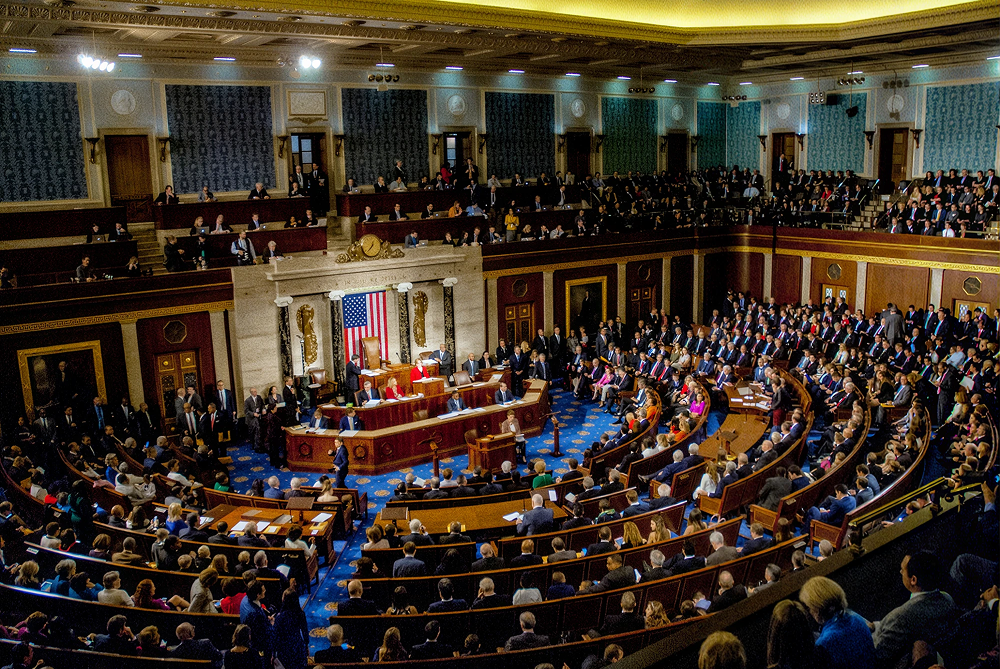
It appears that Congress has forgotten how to legislate. The number of public laws enacted in each Congress has declined steadily for decades. The 118th Congress enacted the fewest laws in decades. When Congress does pass legislation, it enacts larger, sprawling bills, larded with must-pass provisions. This is further evidence of Congress’s alleged dysfunction and the need for fundamental reform. Congress today does not look much like the ideal portrayed in “Schoolhouse Rock.”
The lack of regular, routine lawmaking means Congress does relatively little to address contemporary issues. When new issues emerge, Congress is relatively slow to consider appropriate legislation. When old issues change or evolve, Congress generally fails to revisit, revise, and update existing statutes. When courts invalidate portions of broad regulatory statutes, disrupting the legislative bargains upon which those laws were based, Congress acquiesces to the new status quo. This failure to act exacerbates the growing problem of statutory obsolescence and creates a policymaking vacuum that the executive branch is all too happy to fill.
In the twentieth century, Congress routinely revisited existing statutes to revise and update them in light of changing needs, demands, or circumstances. Most major environmental laws, for instance, were revisited on a periodic schedule. Yet Congress broke this habit, largely because members no longer wanted to compromise on controversial provisions. Consequently, most major environmental laws have not been amended or reauthorized in the twenty-first century. The Clean Water Act has not been reauthorized since 1987. The Clean Air Act has not been reauthorized since 1990. And except for things that just relate to infrastructure funding, there hasn’t been any meaningful effort to keep these statutes in tune with the times. The same is true of the nation’s primary law governing telecommunications and the internet—and it is not as if there has not been real change in that area over the past decade.
To some, this state of affairs counsels dramatic change, such as eliminating the Senate filibuster or more dramatically reordering the legislative process. Yet there may be easier ways to encourage Congress to legislate again, if only Congress can be urged to take the necessary steps. If there are votes to eliminate the filibuster, there should also be votes for less revolutionary changes that would increase incentives for Congress to engage in legislative activity more frequently.
While Congress has a reputation for not legislating, must-pass bills do pass. Congress routinely reauthorizes agricultural subsidies and the National Defense Authorization Act (NDAA) and, after much sturm und drang, also manages to enact annual appropriations. This shows that Congress remains capable of passing legislation when members feel they have to—when members are concerned that the costs of not legislating are sufficiently great. Thus, if the goal is for Congress to pass more legislation—and perhaps to revise and reauthorize legislation it has enacted in the past—the key is to get the incentives right.
Congress’s own procedural rules can make it easier or harder to enact legislation. Procedural rules can create veto gates and other hurdles to lawmaking that require assembling coalitions that, in effect, represent super majorities to get legislation done. This is why the filibuster looms large in discussions of how to make Congress legislate again. But the myopic fixation on the filibuster is misguided. Instead of lowering barriers that encourage bipartisan coalitions, it may be more fruitful to focus on procedural reforms that increase the incentive to act in the first place.
As already noted, even the contemporary Congress has shown it can act when the costs of not acting are sufficiently high. Annual appropriations eventually make their way into law every year; government shutdowns can only last so long. Congress also regularly reauthorizes the NDAA—the legislation that authorizes annual defense appropriations and sets policy for the military and national security agencies—because few members of Congress are willing to let it fail. The same is true for time-limited user-fee programs that fund essential agency functions, such as product reviews for pharmaceuticals and agricultural chemicals.
Federal Farm Bills generally require reauthorization every five years (though the deadline occasionally slips). Failure to reauthorize the Farm Bill would revert to the rules established by the first Farm Bill, the Agricultural Adjustment Act of 1938. This is a powerful poison pill that forces agricultural interests to the table to ensure regular reauthorization. The resulting compromises are not always pretty (and I am hardly one to defend contemporary agriculture policy), but it at least has the proper legislative imprimatur.
Including expiration dates or sunsets in new legislation is one way to encourage Congress to reengage with specific policy areas more frequently. Congress can still punt when an authorization expires, such as by extending deadlines piecemeal, as is sometimes done with continuing resolutions. But there is still value in forcing legislators to acknowledge their responsibility and cast their votes.
Many existing programs already contain time-limited authorizations, even if Congress has not observed them. This is the case with most major environmental statutes, which, as noted above, have not been reauthorized (let alone significantly revised) this century.
Adding sunset provisions or expiring authorizations to new laws would be a positive change, but we need not wait for it. It is also not a cure-all, as expired authorizations matter only if they are allowed to take effect. The Congressional Budget Office regularly reports which programs have expired authorizations, ostensibly to prevent appropriations for them.
As it happens, current congressional rules may already require Congress to revisit existing programs. Current House and Senate rules already prohibit appropriating funds for unauthorized or expired federal agencies and programs. Blocking such appropriations should require no more than raising a point of order. While such objections can be overruled (and congressional leadership has ways of making procedural objections difficult), raising them would be a start.
Many think the answer to Congress’s inability or unwillingness to legislate requires rewriting the rules or broader structural reforms. A better start might simply be enforcing the rules we already have.
Jonathan H. Adler is the Tazewell Taylor Professor of Law and William H. Cabell Research Professor at the William & Mary Law School.

.png)


.jpg)
.png)

.png)


Get the Civitas Outlook daily digest, plus new research and events.
Get the Civitas Outlook daily digest, plus new research and events.