

Progressivism’s Bi-Polar Disorder
Progressive reforms would likely cause greater instability in our already unstable politics.
To behold contemporary Progressive attitudes toward the Constitution is to see what could be mistaken for clinical bipolar disorder.
On the one hand, a common refrain from the left today is that President Donald Trump is an existential threat to the Constitution. Yet in the very next breath, leading Progressives will say: the Constitution stinks and should be changed wholesale.
Consider the following headlines from various Progressive authors who have appeared in the New York Times in the last few years: “The Constitution Is Broken and Should Not Be Reclaimed.” “The Constitution Is Sacred; Is It Also Dangerous?” “The First Amendment Is Out of Control.” “Elections Are Bad for Democracy.”
Everyone is frustrated with “gridlock” in Washington, but the right and left differ clearly on the Constitution’s role in our current political stalemates. Conservatives mostly have the attitude that while the Constitution may not be perfect, it is better than the government we’ve got! Or as M. Stanton Evans liked to put it, “Gridlock is the next best thing to having constitutional government.”
Aside from the periodic enthusiasm for a balanced budget amendment and term limits, conservatives generally don’t want to make significant changes to the Constitution. The left, always impatient to force “progress” at a faster pace, wants to make changes to the Constitution whenever it is seen to be in the way of their agenda. The list is often quite long. Twenty years ago, Larry Sabato, somehow considered a moderate political scientist, produced a list of 23 changes to the Constitution to make America “a fairer country.” Among them are congressional term limits, a single six-year presidential term, a four-year term for the House, limits on presidential war powers, a presidential line-item veto, fixed terms for Supreme Court justices, allowing foreign-born citizens to be eligible for the presidency (Mamdani 2028!), campaign finance restrictions (the hardiest of perennials), and universal national service.
More recently, Osita Nwanevu, author of The Right of the People: Democracy and the Case for a New American Founding, similarly embraced wholesale revision of the Constitution, and in his case the New York Times headline candidly summarized his view as follows: “Abolish the Senate; End the Electoral College; Pack the Court: Why the Left Cannot Win Without a New Constitution.”
The main object of these measures is said to be making government “more effective” or “more responsive.” Even taking these claims at face value, there is little imagination for the unintended consequences or perverse results that such wholesale changes might generate. If you think government is slow and ineffective now, that Americans are dangerously polarized, and that policy instability is a drag on the public interest, just wait till the Progressives get their way, and then demand another round of constitutional “reform” when it doesn’t work out the way they hope.
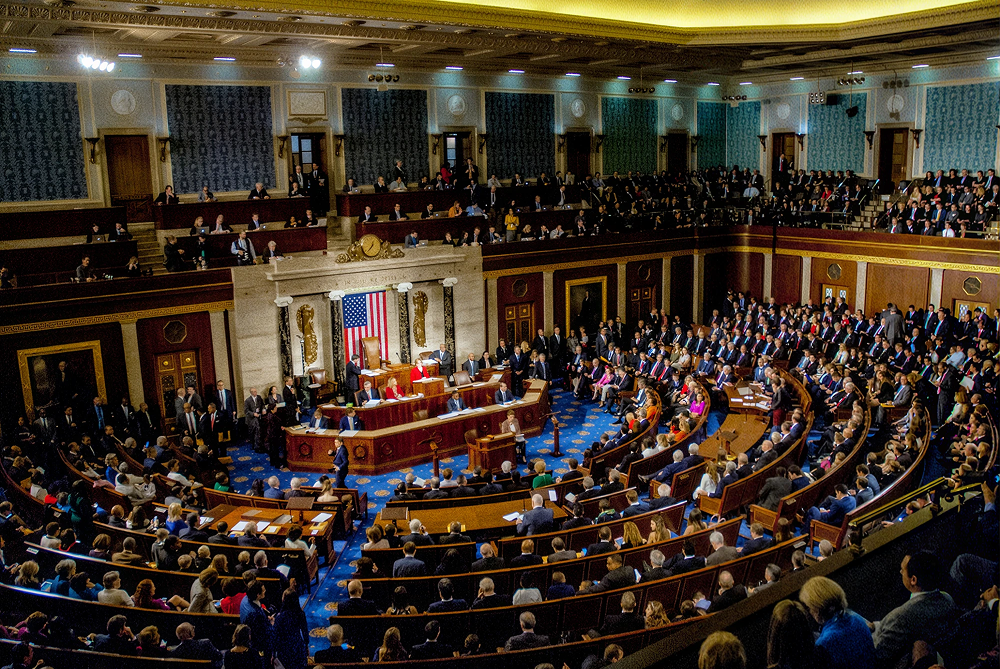
Consider some proposed changes that do not require a constitutional amendment: abolishing the Senate filibuster (which some conservatives also now favor, to be sure); packing the Supreme Court; and admitting the District of Columbia and Puerto Rico as new states. Start with the filibuster. Most Americans under the age of 50 may not know that we did reform the filibuster once, back in 1975, by lowering the number of votes for “cloture” (ending floor debate and moving directly to a vote) from 67 to 60. This was done because the 67-vote threshold was thought too hard to overcome, which it often had been.
What has been the result? Filibusters were relatively rare before 1975, but are now not only commonplace, but have transformed the Senate, as a practical matter, into a body that requires 60 votes to pass routine legislation—certainly any legislation that is the least bit controversial, as most laws today are. I doubt anyone who agitated for reducing the cloture threshold in 1975 anticipated this outcome.
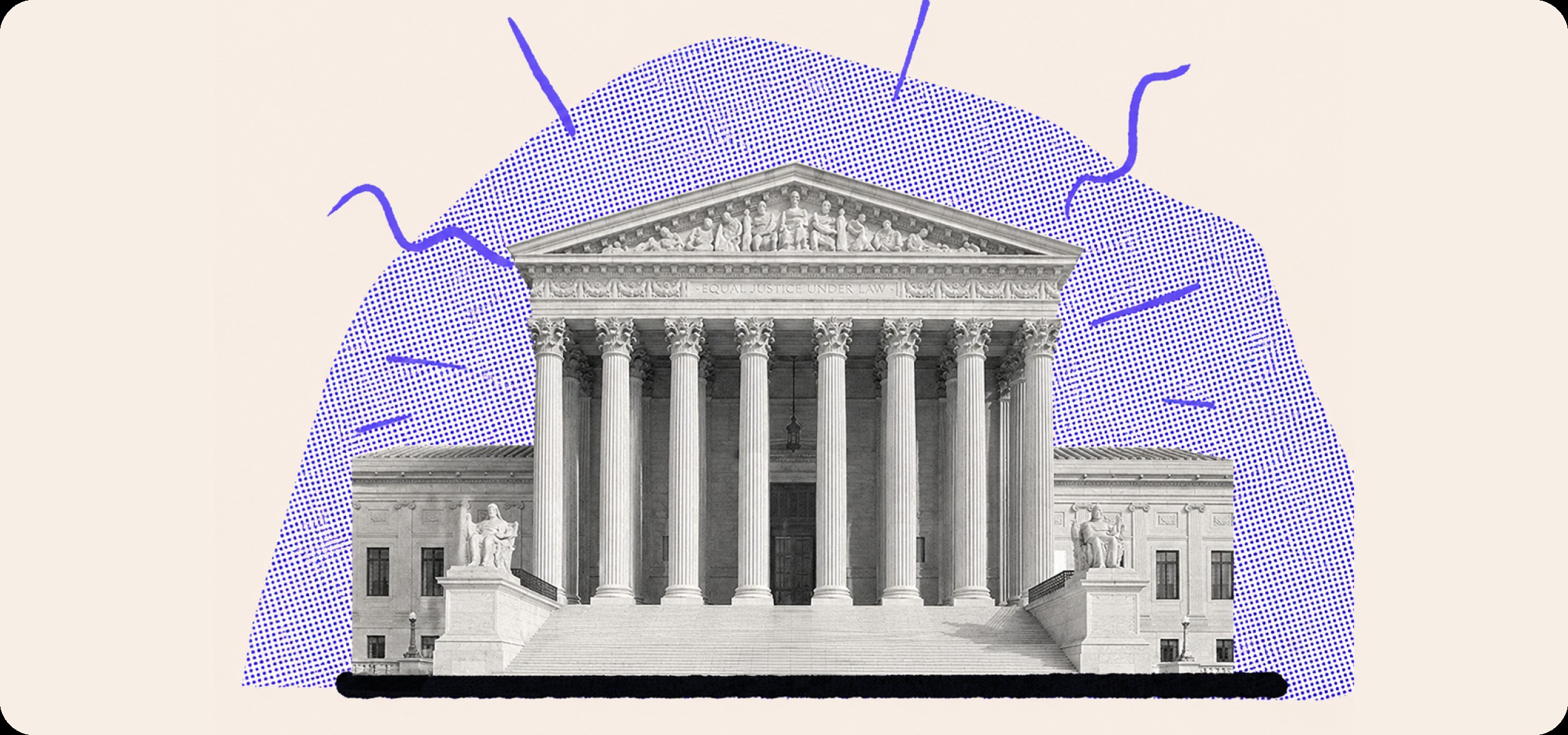
The proposal to pack the Supreme Court (also allowed under the Constitution) reveals the bad faith of the left more so than any other proposal—just like President Franklin Roosevelt’s unpopular court-packing proposal of 1937. FDR claimed we should add additional justices appointed to relieve the “heavy workload” of older Justices, when everyone over the age of six knew the real reason was FDR’s pique at having his New Deal agenda partially blocked by the Supreme Court, and while also abjuring any proposals to amend the Constitution (say, to modernize the commerce clause), which he could have easily achieved with the large Democratic majorities of the 1930s. But FDR had the last laugh anyway, as he made nine appointments to the Court by the time of his passing in 1945, moving the Court in a more liberal direction for the next two generations, during which time no one on the left entertained the need to add new Justices.
But now that the Court’s activist majority has slipped away, and the left is losing the big arguments about constitutional interpretation, the cry is that the Court is “illegitimate,” which means in plain speech that the left has lost too many recent elections. Public opinion about court-packing is as adverse as it was in 1937, in which case ramming through court-packing today would transform the Supreme Court into a purely partisan branch, which would set off a new era of tit-for-tat expansions that would eventually see a Court with something like 35 members, making it truly just a body of “politicians in robes.” And public regard for the Court, and the law, would likely plummet.
The admission of new states has sometimes been driven by partisan calculation (Nevada and West Virginia in the 1860s), but in recent times there has been a decent concern not to upset the partisan balance in national politics. Hence the admission of Alaska and Hawaii in 1959 was based on the expectation that Hawaii would be a Republican state, and Alaska a Democratic state—an expectation that did not survive the first election after statehood in 1960. Adding Puerto Rico and the District of Columbia today is a naked grab for Democratic partisan advantage, and like court-packing, will surely launch a Republican effort to create new GOP-leaning states at their next opportunity in power: East California or North New York. Will this improve the effectiveness of the national government?
These reforms would likely cause greater instability in our politics. Already there is great instability in four areas of policy directly traceable to our close partisan divide: energy policy, tax policy, and, to a lesser extent, health care policy and education policy. These four policy areas swing wildly today, depending on which party is temporarily ascendant. Let’s blow up the features that currently reflect, and protect, the undecided American mind and see how things go.
One constitutional reform idea is strangely absent from the Progressive constitutional reform agenda. Political scientists William G. Howell and Terry M. Moe, neither a fire-breathing Progressive, proposed in their 2016 book Relic a simple, direct reform: give the president the power to make a limited number of legislative proposals that Congress must vote up or down without amendments. This would enable a president to translate a popular mandate into results. Woodrow Wilson would have loved this power, and it is likely missing from today’s Progressive reform agenda because Progressives fear that President Trump could finally force a vote on the SAVE Act, immigration restrictions, DEI and gender madness, and many other policies where Progressives are badly on the wrong side of public opinion. But if we get President Alexandria Ocasio-Cortez some time in our future, watch for this proposal to suddenly rise to the top of the list.
That’s the great thing about Progressive Constitutional Bipolar Disorder (PCBD); it works for whatever short-term necessity arises. It’s the Progressive equivalent of a junkie jonesing for a fix.
Steven F. Hayward is a senior fellow at the Civitas Institute. He is also the Edward Gaylord distinguished visiting professor at Pepperdine University’s School of Public Policy.

.png)
.jpg)
.png)

.png)

Get the Civitas Outlook daily digest, plus new research and events.
Get the Civitas Outlook daily digest, plus new research and events.