
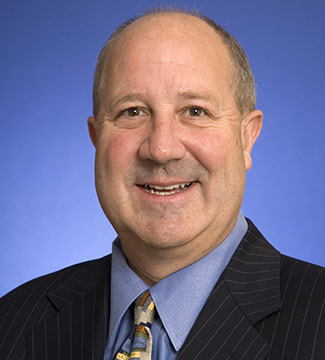

Steven Hayward
Biography
Steven F. Hayward is the Edward Gaylord distinguished visiting professor at Pepperdine University’s School of Public Policy. Previously, Hayward was a resident scholar at UC Berkeley’s Institute of Governmental Studies, and a fellow of the Law and Policy Program at Berkeley Law. From 2002 to 2012 Hayward was the F.K. Weyerhaeuser Fellow in Law and Economics at the American Enterprise Institute in Washington, DC. He is also currently a senior fellow at the Pacific Research Institute in San Francisco.
He frequently writes on a wide range of current topics, including environmentalism, law, economics, and public policy for publications including National Review, Reason, The Weekly Standard, The American Spectator, The Public Interest, the Claremont Review of Books, and the Policy Review at the Hoover Institution. His newspaper articles have appeared in the New York Times, Washington Post, The Wall Street Journal, the San Francisco Chronicle, the Chicago Tribune, and dozens of other daily newspapers. Hayward is the author of a two-volume narrative history of Ronald Reagan and his effect on American political life, The Age of Reagan: The Fall of the Old Liberal Order, 1964-1980, and The Age of Reagan: The Conservative Counter-Revolution, 1980-1989 (CrownForum books). His other books include Index of Leading Environmental Indicators; The Almanac of Environmental Trends; Mere Environmentalism: A Biblical Perspective on Humans and the Natural World, Churchill on Leadership; Greatness: Reagan, Churchill, and the Making of Extraordinary Leaders; Patriotism Is Not Enough; and M. Stanton Evans: Conservative Wit, Apostle of Freedom.
Hayward received a Ph.D. in American studies and M.A. in government from Claremont Graduate School and a B.S. in business and administrative studies from Lewis and Clark College.

.png)


Get the Civitas Outlook daily digest, plus new research and events.

America’s Energy Revolution Continues
Reagan, The Original MAGA President?
The Death Rattle of Apocalyptic Environmentalism
From Max Weber to Charlie Kirk: On Political Action in Extreme Times
Trade Protection and Tariffs from Reagan to Trump
The Tanenhaus Variations
The Nadir of the Climate Change Movement
The Future of Conservatism in America
The Art of the Political Biography
Taming the 21st Century Prince
Is Trump Completing Nixon's Aborted Second Term?
Adventures Among the Abundanauts