The Broken Windows in American Higher Education
None of the harassment, intimidation, cancellation, and violence against conservative speakers was ever acceptable, but they were accepted.
A little-known Jewish sage called Ben Azzai challenged his students in a message memorialized in the ancient ethical guide known as Pirkei Avot: “Be quick in performing a minor commandment as in the case of a major one.” Fallible human beings cannot know which obligations are small and which are large, both in God’s eyes and in the greater scheme of human events. What appears trivial may hold a community together; what seems like a minor failure may open the way to collapse. The sociologists James Q. Wilson and George Kelling gave that ancient lesson a modern expression in their famous (yet widely misunderstood) 1982 article, “Broken Windows.” They argued that small signs of disorder – graffiti, vandalism, public intoxication – signal a lack of enforcement, which in turn invites greater violations. When norms are not upheld, the boundaries of acceptable behavior blur, and soon serious crime follows.
Many commentators have noted that the assassination of Charlie Kirk is a massive escalation in our simmering culture war and another in a rapidly growing pattern of political violence. But because the escalation was so enormous, many have lost sight of the fact that his murder is also the last of a pattern of lawless attempts to prevent Kirk and similar figures from sharing their messages. In that light, it is a stark demonstration of the Broken Windows principle. Kirk, a conservative activist with a long record of appearances in contentious settings, had been targeted with hostility for years. His events drew heckling and organized attempts to shut him down. His organization regularly had its campus booths defaced, ambassadors harassed, and events canceled because the university couldn’t guarantee security. Kirk and Turning Point USA were hardly the first to suffer such mistreatment on campus. Charles Murray, Allison Stanger, David Horowitz, Ann Coulter, Bill Kristol, E.O. Wilson, and dozens of Israeli diplomats can attest to the harassment and violence that heterodox speakers endured.
None of those acts of opposition was ever acceptable, but they were accepted. Students rarely, if ever, faced expulsion or social sanction. Universities would call the violation of open-debate principles intolerable (if they addressed it at all) and then tolerate it. “Thou shalt not deface,” we all thought, was just a minor commandment. But failing to uphold standards of conduct snowballed into violence. It could have happened by any number of means: perhaps the need to “send a message” ratcheted up once vandalism failed to deter Kirk; maybe the sense that a binary between right and wrong had simply been shattered; maybe we simply failed to identify and incapacitate the individuals, groups, and ideologies that threatened to do precisely what Kirk’s murderer did on September 10.
It would be wrong on several levels to draw a clear causal line between tolerating minor rule breaking against Kirk and his organization and a lunatic taking up arms against him. And university officials are not responsible, legally or otherwise, for Kirk’s death. The guilt belongs to the killer. But it would also be willful blindness to fail to note that this was yet another attempt to shut Kirk up, and some significant portion of young people think that violence is an acceptable means to do so when more common forms of lawless disruption fail.
More broadly, the pattern that culminated in Kirk’s murder reinforces the truism that institutions shape the culture in which individuals act. A college that tolerates harassment signals to students that harassment is within the bounds of acceptable behavior. A university that treats vandalism as minor signals that property rights are not worth defending. Over time, students learn that certain rules are not enforced. That knowledge alters their expectations, but more importantly, it molds their character. It frames the moral universe they inhabit.
Here we touch on a deeper truth that Wilson and Kelling only hinted at but that institutions themselves reveal: rules, whether imposed by law or Office of Student Life, are formative. They teach us what is expected of us. A well-run institution does not simply prohibit extremes of behavior. It inculcates habits of self-control, restraint, and mutual respect. When administrators fail to enforce the rules, institutions fail in their formative role, because they fail to communicate that they think living by the rules really matters – that being the kind of person the rules expect is really any better than being the kind that flouts expectations. They do not produce responsible citizens but permissive ones who assume norms are optional.
The campaign to disrupt right-wing speakers used to be a recurring news story, but campus disruptions have largely replaced it with different flavors of trouble. Yet the shards of broken windows are also present in the cycle of demonstrations and outrage since October 7, 2023. Occupations of administrative offices, vandalism of buildings, disruptions of lectures, and harassment of faculty members – all violations of school rules at Columbia, Penn, Harvard, and dozens of other schools wracked with unrest – have been met with little more than slaps on the wrist. Student groups vow to “escalate.” They know fully well that the rules are optional. What, then, constrains them? What distinctions do they make between breaking rules against destroying others’ property and destroying others’ bodies? Hopefully, it is something more than their internal moral code, which student radicals – not all but some – admit allows violence against certain political opponents or other disfavored groups.
These campuses could have cracked down when doing so was easy. They could have enforced a zero- (or even low-) tolerance policy for those who violated school code when those people initially signaled that they did not care about norms. They could have cooperated with law enforcement so that individuals expressing violent intentions would have a harder time being able to actualize their wishes. They could have sent the message that it was truly unacceptable to behave intolerantly towards conservative speakers, or Israelis, and that anyone who did so was not ready for college – they were acting like children, incapable of receiving a higher education. They did none of these things, though it is never too late to start.
Universities are easy targets because they are ideological monocultures staffed largely by cowards, so this dynamic is especially pronounced. They are also where Kirk made his life’s work, and where he met his awful death. But our Broken Windows problem is national – civilizational, even. Culturally, we see broken windows everywhere. What norms have not been shattered? Social media, perhaps due to its very nature, has become a one-stop shop for evidence of public language coarsened in style and content. Cruelty is presented as humor, contempt as cleverness, and, ultimately, violence as spectacle. That is true in an increasingly nihilist offline popular culture, though certainly the ability to hide behind an avatar exacerbates the problem. Perhaps that is why trawling through X today feels like stepping across shattered glass.
Beyond the campus, too, institutions matter. The media, schools, religious organizations, and civic groups all shape character by the standards they uphold. Our laws, and the institutions tasked with bringing them to life, do too. They can reinforce restraint and respect, or they can – as many tragically have – indulge disorder. To say we have a national problem is not to say we have a policy problem, per se; however, embracing the criminal justice implications of the Broken Windows theory would not be a bad thing. The government is ill-equipped to play culture police, but the institutions closest to us – the ones that touch daily life – have a duty to repair the broken windows within their own walls.
Ben Azzai’s words capture the point as well as Wilson and Kelling did. It is incumbent upon all of us, in our norm-shaping capacities, to be quick in performing the minor commandment as though it were the major one. “And,” to complete his teaching, “flee from transgression.” Strengthen norms that reinforce the dignity of all people, so that everyone around us will be pushed farther from slipping into committing or rationalizing major violations. That may make us look like scolds for a time. But it is better to be a scold than an accessory to violence and social decay.
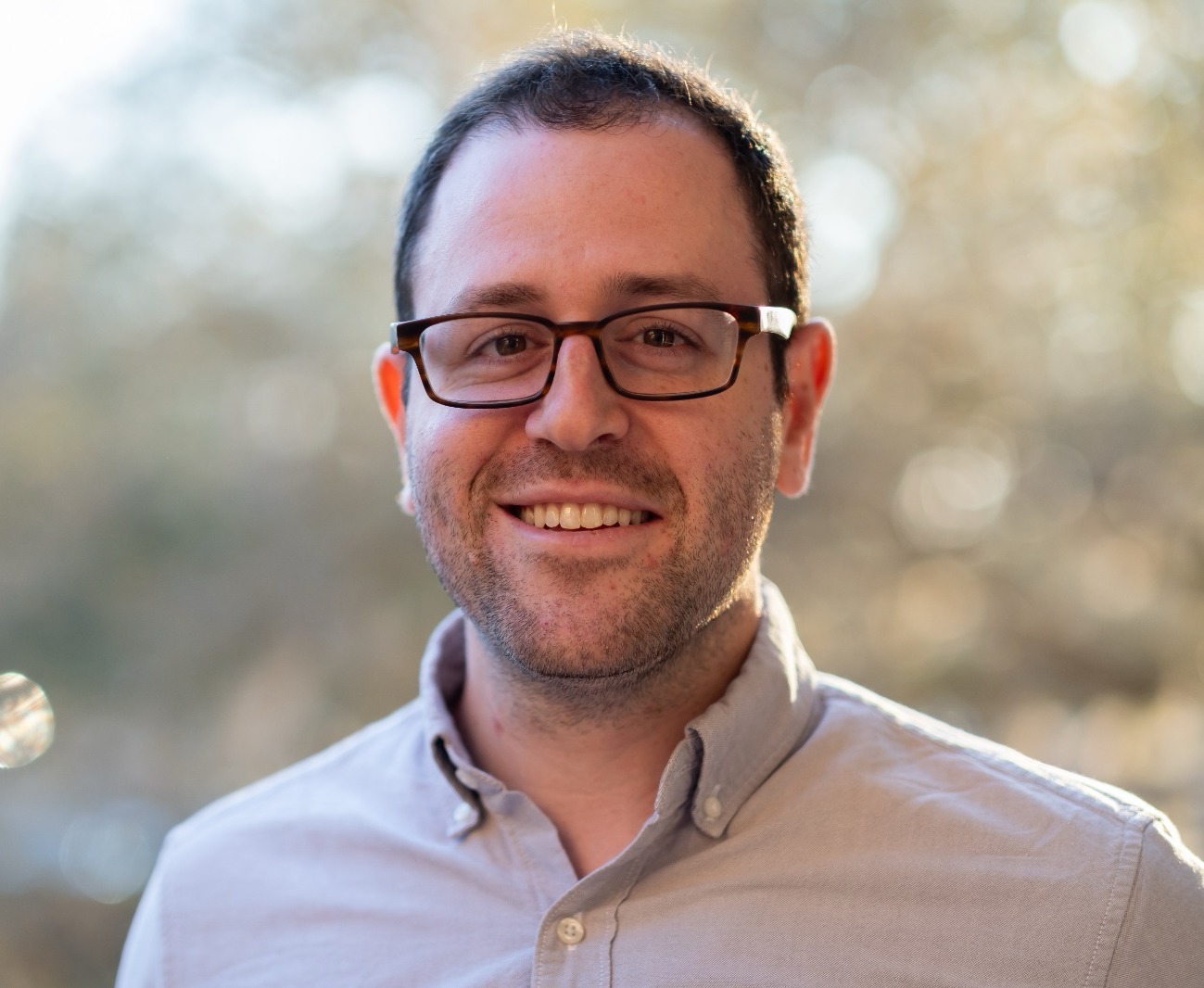
Tal Fortgang is a legal policy fellow at the Manhattan Institute.



The Geopolitics of Climate Continues
There is more riding on climate politics at this moment than is frequently acknowledged.

The War on Israel
Jew-hatred and obsessive anti-Israel sentiment are manifestations of a sickness that will kill their host civilization if it is not treated.
.webp)

.png)


Get the Civitas Outlook daily digest, plus new research and events.
Get the Civitas Outlook daily digest, plus new research and events.