Does Amtrak Really Need Airport-Level Security?: A Response to Jonathan Hartley

We ought to have a real conversation about better securing the nation’s passenger rail systems. But for that conversation to prove fruitful, it requires a more accurate understanding of the vulnerabilities.
In his recent article, “Why Amtrak Needs Airport-Level Security,” Jonathan Hartley argues that the nation’s passenger rail infrastructure is plagued by lax security, leaving it vulnerable to exploitation by bad actors. On this premise, Hartley and I largely agree. It is likely true that our passenger trains are more vulnerable to major security threats than many Americans realize. At the same time, however, Hartley’s analysis fails to grasp the true nature of the problem, and, in turn, he offers a solution bound to be as costly and burdensome as it is inadequate. Worse, he runs his assessment right off the rails by invoking would-be presidential assassin Cole Allen, whose use of Amtrak to transport himself and his lawfully possessed firearms across the country is a red herring.
On a foundational level, Hartley is prudent in raising national security concerns about the nation’s rail systems. But his understanding of the vulnerabilities (at least as described in the article) is, respectfully, incomplete, at best. For example, he emphasizes “the clear security risk” posed by “a system that allows large numbers of unscreened passengers to travel long distances,” thereby limiting his focus to Amtrak. It is unclear, though, why “long distance” passenger trains deserve special attention. Any argument for enhanced security on Amtrak applies to all other forms of mass public transit. Nothing about the nature of long-distance rail travel inherently makes it more desirable as a target for a potential terror attack than commuter or intracity metro lines. All offer the same ideal conditions for a mass casualty attack: densely crowded and easily accessible locations that require minimal security screenings for entry. Many of these systems not only share stations with Amtrak but also operate along the exact same rail lines. And, as Hartley himself implicitly concedes, terrorists historically have targeted shorter-distance commuter routes just as readily as they have trans-national or international lines.
In short, Amtrak is not uniquely vulnerable to security threats, certainly not because of how far its trains travel. Amtrak is, however, uniquely controlled by the federal government, and therefore perhaps uniquely positioned to serve as a test case for expanding federally operated TSA-style security screenings to passenger rail. To this point, Hartley seems curiously unconcerned with calculating the actual up-front costs of his proposed “preventative measures.” Federally funded airport security is not exactly cheap. If the endgame is to expand these measures to Amtrak passengers, American taxpayers deserve at least a rough estimate of what it will cost them.
And it will cost them.
Consider the price tag of merely maintaining current airport security screening levels. TSA’s annual budget is over $11 billion. It employs roughly 50,000 unarmed screening agents who handle security at 440 “federalized” airports. Airline passengers bear some of that financial burden directly through mandatory security fees tacked onto the cost of every ticket, but American taxpayers foot about two-thirds of an ever-growing bill. Expanding similar screenings to Amtrak would require TSA (or its newly created rail equivalent) to operate in an additional 500 stations, more than doubling the number of physical locations secured by federally funded employees. Granted, this would not necessarily require a doubling of TSA’s budget or personnel, as Amtrak operates only a fraction of domestic airlines' daily departures, and even its busiest stations serve far fewer passengers on average than the largest hub airports.
Assume for the sake of argument that we could expand TSA-style screenings to Amtrak for the comparatively low annual cost of $2 billion. That is a real cost that must be borne, either directly by passengers or by the taxpaying public. Both options are wildly unappealing.
Imposing the full cost on passengers would devastate ridership. Spreading $2 billion across 34 million annual riders equals nearly $60 in additional security fees per ticket, essentially doubling the cost of economy fares on Amtrak’s most profitable routes (the Northeast regional lines) while eviscerating much of the benefit of choosing trains over planes for these shorter trips. This would also likely cause a death spiral, as decreases in ridership create diminishing returns, with fewer riders shouldering a constant burden. Passing the cost on to taxpayers, meanwhile, is a surefire way to undermine the long-term future of a railway that, as it is, routinely finds itself in the political crosshairs for operating at a half-billion-dollar annual loss.
Hartley nonetheless claims that any costs could be “justified by the reduction in long term risk.” He points to the post-9/11 revolution in aviation security as evidence for the benefits to be reaped from risk-reduction. Unfortunately, this overestimates the potential upside of screening expansion almost as much as it underestimates the costs.
First, it begs the question of whether federally operated security screenings have, in fact, proved effective at preventing terrorist or other mass casualty attacks on American airplanes or airports. There are (to put it mildly) few good reasons to believe that post-9/11 airport screenings amount to anything more than a multi-billion-dollar misadventure in security theater. In the quarter-century since Congress created TSA, its security checkpoints and screening measures have not definitively thwarted a single terrorist attack. Tempting though it may be to believe this is true only because the screenings preemptively deter efforts to bring weapons aboard planes, the premise trips over an inconvenient reality—terrorists have not, in fact, stopped trying to target planes because of airport security. Most plots are thwarted before any attempt to evade screening, a testament to the incredible post-9/11 strides in counterterrorism surveillance. But on two very high-profile occasions, only the quick intervention of alert passengers and flight attendants prevented in-flight tragedies after security screenings failed to detect live bombs.
Additionally, robust internal security perimeters have not prevented terrorists and bad actors from targeting the unsecured areas of airports at alarming rates. The 2017 mass shooting in the terminal of Fort Lauderdale International Airport is the first incident to come to mind, but it is far from the first or only similar instance. Also worth considering are the hundreds of thousands of miles of completely unsecured railway track across the nation, which provide would-be terrorists with considerably more alternative measures for attacks on passenger trains once they leave the station than on airplanes once they take off.
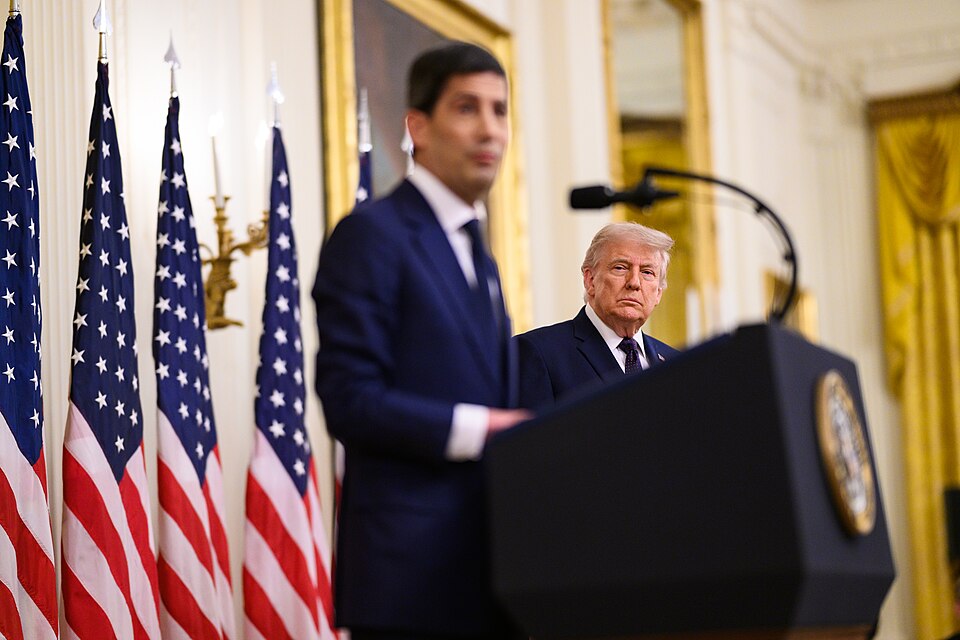
Hartley’s most significant miss, however, is his attempt to tie railway security back to the recent assassination attempt on President Trump. He laments that would-be assassin Cole Allen “was able to move weapons across the country using Amtrak,” which he characterizes as “a reflection of a much broader systemic security gap.” In reality, Allen’s use of the rail service to transport himself and his lawfully possessed firearms to Washington, D.C., is of little relevance to the conversation.
Importantly, there is nothing inherently suspicious or dangerous about traveling with firearms, even (gasp!) across state lines or for long distances. Put aside, for a moment, ongoing legal battles over whether and to what extent laws inhibiting interstate travel with firearms violate the Second Amendment. At the very least, federal law explicitly protects lawful gun owners who travel with their firearms through states with more restrictive gun laws. This includes Amtrak passengers who may transport their firearms and ammunition if they declare them in advance and securely store them in checked baggage.
Yes, Allen committed a federal crime by failing to declare his firearms and taking them on board in his carry-on bags. Yes, in theory, Allen exploited Amtrak’s lack of airport-level security screenings to avoid compliance with its weapons policy. But Allen’s actions were neither reflective of the type of threat with which Amtrak’s weapons policy is concerned, nor would TSA-style security screenings have reduced the risk of the threat Allen in fact posed.
Amtrak’s weapons policy (and the federal statute enforcing it) ostensibly exists to prevent acts of violence by armed passengers while they are on the train. But Allen did not violate the policy to commit this type of harm. Rather, Allen most likely sought to avoid declaring his firearms as bound for Washington, D.C., which he feared might prompt law enforcement to check for a D.C. registration certificate he did not possess.
Security checkpoints would not have mattered here. It is not just that Allen had ample alternatives for avoiding inconvenient questions about D.C. gun registration, such as driving himself across the country. Quite simply, TSA-style screenings are not designed to prevent lawful gun owners from transporting guns across the country or to detect passengers who might later commit violent acts in locations rendered far more secure than any transit station could hope to be. Ironically, Allen could have entirely reduced his legal exposure by simply complying with existing TSA screening procedures. That’s right. He could have declared his guns as checked luggage for any flight to either of the major airports serving the nation’s capital, both of which are in Virginia, where there is no state-specific gun registration requirement. From there, he had endless options for “unscreened” travel into the District of Columbia.
To be clear, none of this is to suggest that we ought not have a real conversation about better securing the nation’s passenger rail systems. Hartley does well to raise the question in the first place. But for that conversation to prove fruitful, it requires a more accurate understanding of the vulnerabilities (and less starry-eyed assessment of the costs of addressing them) than he delivers.
Amy Swearer is a Senior Legal Fellow in the Meese Institute for the Rule of Law at Advancing American Freedom.

.webp)
Can Britain’s Next Prime Minister Escape the Net Zero Trap?
Britain has burned through five Prime Ministers and is paying some of the highest electricity prices in the world.

The Scanner at the Gate: Europe’s China Policy Litmus Test
China’s industrial policy is entering Europe through public procurement—and reshaping sensitive markets from within.

To Family Engineers of All Parties: A Call to Reject State-Sponsored Culture
During the 80 years following WWII, family engineers have repeatedly pulled levers in failed attempts to produce their preferred outcomes.
.jpg)
.avif)



Get the Civitas Outlook daily digest, plus new research and events.
Get the Civitas Outlook daily digest, plus new research and events.