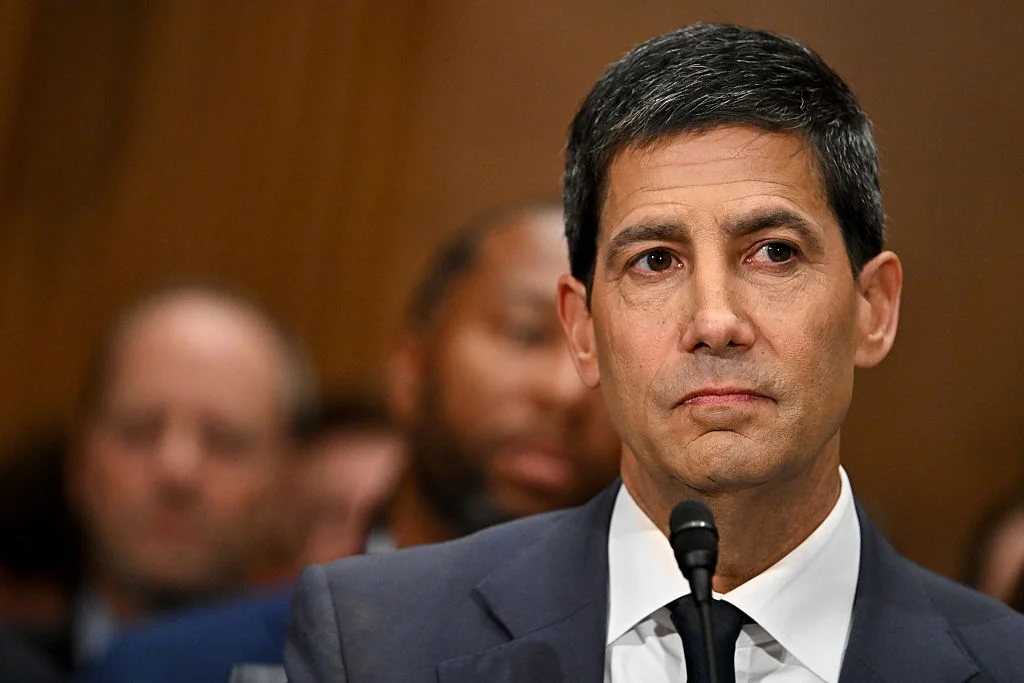
The Beginning of the Warsh Fed Era

To understand where the Warsh Fed is headed, one must first examine his deep-seated critique of the Fed’s recent past.
A fundamental shift is underway at the Federal Reserve, as Kevin Warsh takes the helm and is sworn in Friday in the White House Rose Garden. The transition marks the end of a long period of monetary accommodation and institutional drift and the beginning of a potentially leaner, more disciplined approach to central banking.
To understand where the Warsh Fed is headed, one must first examine his deep-seated critique of the Fed’s recent past. For years, the central bank suffered from an acute intellectual conformity, a form of groupthink. Warsh has long warned that a permanently bloated balance sheet is far from benign. By suppressing long-term interest rates and flooding the system with ample reserves, the Fed distorted asset prices, weakened market discipline, and left the financial system heavily dependent on central-bank liquidity.
Part of this institutional drift has been an eagerness to wade into fashionable cultural and political debates outside the Fed’s statutory remit. Under the guise of banking supervision and financial stability, the central bank embarked on a series of adventures into green monetary policy and climate risk regulation, including joining international climate groups and introducing exploratory climate scenario analyses for major banks. Warsh has been a vocal critic of this regulatory mission creep, viewing it as a distraction from the Fed’s core responsibilities. Under his leadership, the Fed is highly likely to roll back these ideological expansions and refocus on hard economic fundamentals.
Yet, those expecting Warsh to immediately and aggressively slash the Fed’s $7 trillion balance sheet may be misreading his strategy. He is an institutionalist who values market stability. Moving abruptly on the balance sheet risks triggering unnecessary liquidity shocks. Instead, Warsh is more likely to pause further expansion, allow existing assets to run off predictably, and focus his immediate energy on reforming the framework of monetary policy itself.
Central to this reform is a return to foundational economic principles. Warsh, in part, represents a modern return to monetarism, the school of thought championed by his former mentor, Milton Friedman, which posits that inflation is ultimately a monetary phenomenon. The Powell Fed (and those before it, going back to Greenspan) largely dismissed the money supply, preferring to manage inflation expectations through forward guidance and relying on broken theoretical frameworks like the Phillips Curve. Warsh rejects this. He recognizes that you cannot ignore the sheer volume of money sloshing through the economy if you want to maintain long-term price stability (M2 spiked at the same time as inflation in the early 2020s, arguably a result of fiscal transfers into deposit accounts).
However, Warsh is not a rigid dogmatist and comes across as a moderate pragmatist who can work with the Fed staff. Crucially, he views the rise of artificial intelligence as a powerful, structural disinflationary force. While traditional central bank models often treat technology as a secondary factor, Warsh sees AI as a profound productivity booster that can lower production costs, optimize supply chains, and increase output across the economy. By allowing productivity gains to naturally pull down prices, the Fed can avoid the temptation to over-tighten interest rates. In the Warsh era, monetary discipline will coexist with an embrace of technological abundance.
Perhaps the most radical departure of the Warsh Fed will be its relationship with fiscal policy and government debt. Over the last fifteen years, the Fed’s aggressive bond-buying programs have increasingly blurred the lines of macroeconomic governance. While the Fed did not monetize federal deficits, its quantitative easing programs effectively functioned as a massive debt management operation from a consolidated government balance sheet perspective, swapping long-term Treasury debt for short-term central bank liabilities. This intervention deeply entangled the central bank in the mechanics of fiscal financing. There is good evidence, particularly from Treasury Quarterly Refunding announcements, that the relative supply of Treasury maturities affects Treasury bond yields.
To rectify this, Warsh may advocate for a modern equivalent of the historic 1951 Fed-Treasury Accord. The original accord ended a wartime arrangement in which the Fed was forced to peg interest rates to keep government borrowing costs low, therefore returning independent debt management to the Treasury and allowing the Fed to focus exclusively on price stability. A new accord today would establish a clean separation of powers. The Fed would step back from executing what amounts to fiscal debt-duration shifts, leaving the Treasury to fund Washington’s massive deficits through the open market without relying on a central bank crutch.
The Warsh Fed likely will not resemble the activist Bernanke-Yellen-Powell central bank of the recent past. It could very well be an era defined by intellectual humility, structural independence, a return to its decentralized structure, and a renewed focus on the core mandate of stable prices. By challenging institutional conformity, respecting the link between money and inflation, and allowing technology to drive productivity, Warsh can restore the credibility that the Federal Reserve so urgently needs.
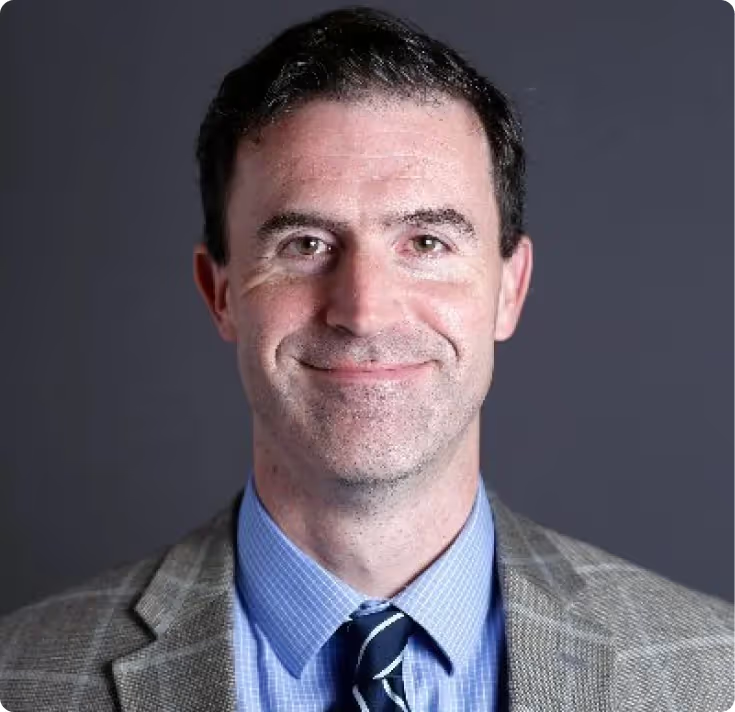
Jon Hartley is research fellow at the Civitas Institute, a Policy Fellow at the Hoover Institution, and senior fellow at the Foundation for Research on Equal Opportunity.

ISS and Glass Lewis Can’t Stop Texas
Texas’ policy is clear: the state wants businesses to thrive as businesses.

The Forgotten Greenspan Great Moderation Legacy
Alan Greenspan deserves to be remembered as one of the most consequential and successful central bankers in American history.

Can Socialist Fantasies Overtake the World?
Yes, if the unworldly philosophers at the Global Justice Project are allowed to have their way.



.jpg)
Get the Civitas Outlook daily digest, plus new research and events.
Get the Civitas Outlook daily digest, plus new research and events.