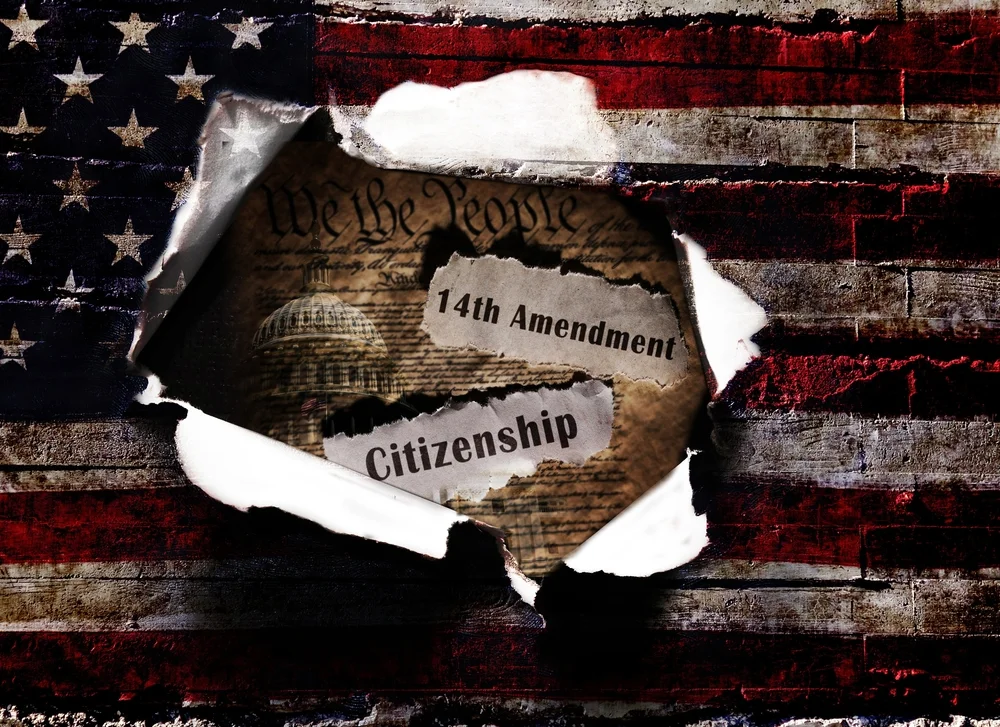
The Many Myths of Birthright Citizenship
.png)
No one in the debate wanted to confront either the doctrinal difficulties with birthright citizenship or the racist sentiments that frame the historical debate.
On April 1, 2026, the Supreme Court took its best shot at resolving the thorny issues surrounding birthright citizenship. That issue divides itself into two parts. The first addresses the status of children born in the United States to parents who were aliens, either legal or illegal, with no intention of returning home. The second class covers pregnant women who have entered and will enter the United States on temporary visas, often from China, with the sole purpose of securing United States citizenship for their children before returning home to raise their children with dual citizenship. The moral hazard is evident, for this group of potential citizens has swelled in number as hundreds of specialized firms have organized to handle all aspects of the trip. The Supreme Court was far more troubled with the second class of persons, which now poses a far greater social challenge. Effective border control can deal, and has dealt, with the influx of illegal aliens, but it is far harder, at least to control persons who come in on standard visas, to root out foreigners, some of whom could then come back to spy on the United States.
The immediate tactical question for Solicitor General John Sauer was how to make good on Trump’s effort by Executive Order to stop both forms of entry. In shaping his approach, Sauer made the bold move to rely on the 1898 case of United States v. Wong Kim Ark, which answered in the affirmative this question, in ways that have been a tonic for the advocates of birthright citizenship.
whether a child born in the United States, of parents of Chinese descent, who, at the time of his birth, are subjects of the Emperor of China, but have a permanent domicil and residence in the United States, and are there carrying on business, and are not employed in any diplomatic or official capacity under the Emperor of China, becomes at the time of his birth a citizen of the United States, by virtue of the first clause of the Fourteenth Amendment of the Constitution,
The gist of Sauer’s argument was that their “permanent domicil” meant that the case did not help the temporary sojourner, nor did it confer any benefit for the children of illegal aliens, who were likewise excluded. He took the risk that some very broad language in the opinion of Justice Horace Gray ignored both of these limitations and thus allowed Cecillia Wang, of the ACLU, to claim throughout that all persons born within the United States were citizens of the United States, even if their parents could be instantly deported. Her argument clearly had gained some traction because each of the four courts of appeal that had considered the matter held that the narrow limitations did not bind—citing this passage from WKA:
therefore every child born in England of alien parents was a natural-born subject, unless the child of an ambassador or other diplomatic agent of a foreign State, or of an alien enemy in hostile occupation of the place where the child was born.
In oral argument, Justice Elena Kagan insisted that this “common law” tradition “carried over to the United States” and was incorporated into the Fourteenth amendment, an argument that later was repeated by much of the press.
Their joint skepticism was matched by Justice Ketanji Brown Jackson’s observation that the child, not the parent, was the focus of attention under the Fourteenth Amendment. Off the bench, Emily Bazelon wrote in the New York Times that “Birthright Citizenship, by contrast, recognizes the universality of the American ideal. There is no ethnic or familial or historic barrier to becoming a citizen.” And on this website, Professor Jonathan Adler repeats the convention wisdom, citing multiple legal authorities, including Keith Whittington of Yale Law School jointly with James Heilbern of Georgetown Law School, Professor Michael Ramsey of the University of San Diego Law School and Judge James Ho to support that position
All these elaborate arguments are flatly wrong historically because they, either ignorantly or consciously, none of them either cite or explain the history of the Naturalization Acts of 1790, 1795, and 1870, which led all the lawyers and justices who participated in Barbara to misstate the relevant legal and institutional history, and thus led to extensive diversions from the relevant legal materials, leading to the wrong conclusion. Here is how the case should have run.
An orderly discussion thus should begin with the Naturalization Clause in Article I, Section 8, cl. 4, which gives Congress “the power … to establish a uniform power of naturalization”, that functions as the sole path to convert noncitizens into citizens. Note that naturalization does not include any power over immigration, which at the time was left exclusively to the states. Because naturalization law had to be uniform, only decisions by Congress, as interpreted by the federal courts, controlled. State law decisions on similar texts had no authoritative role in interpreting, as Alexander Hamilton argued in Federalist 32. Yet, by the same token, nothing in the federal laws on naturalization prevented states from adopting different rules for state citizenship, dealing with such matters as the right to vote in state elections or to receive property, even when, as was often the case, state law precluded aliens from suing to recover real or personal property located within the state. These cases were often decided in the federal courts under their diversity jurisdiction (i.e., over cases between citizens of different states).
Next, it is important to set out the major statutory provisions, which were in effect until after 1868, as well as the key provision in the Naturalization Act of 1870 dealing with applications of the naturalization laws to persons of African descent. None of these texts were mentioned even once in oral argument even though Benjamin Flowers, former Solicitor General of Ohio, and I had examined these acts in detail in our brief, not a word of which made its way into the oral argument or the parallel commentary. I also have a book now in preparation at Encounter Books, The Myth of Birthright Citizenship, due for publication in early May, 2026 that develops the alternative approach in far greater detail.
Here then is the array of relevant statutes and constitutional provisions.
The Naturalization Act of 1790 (excerpt):
That any alien being a free white person, who shall have resided within the limits and under the jurisdiction of the United States for the term of two years, may be admitted to become a citizen thereof on application to any common law Court of record in any one of the States wherein he shall have resided for the term of one year at least, and making proof to the satisfaction of such Court that he is a person of good character, and ... shall be considered as a Citizen of the United States. And the children of such person so naturalized, dwelling within the United States, being under the age of twenty one years at the time of such naturalization, shall also be considered as citizens of the United States.
Naturalization Act of 1795 (excerpt):
Secondly. He shall, at the time of his application to be admitted, declare on oath or affirmation ... that he does absolutely and entirely renounce and abjure all allegiance and fidelity to any foreign prince, potentate, state, or sovereignty whatever, and particularly by name, the prince, potentate, state, or sovereignty, whereof he was before a citizen or subject; which proceedings shall be recorded by the clerk of the court.
Naturalization Act of 1870:
[The first six sections tightening the requirements for applying for citizenship.]
SEC. 7. And be it further enacted, That the naturalization laws are hereby extended to aliens of African nativity and to persons of African descent.
Section 1 of the Civil Rights Act of 1866:
That all persons born in the United States and not subject to any foreign power, excluding Indians not taxed, are hereby declared to be citizens of the United States; and such citizens, of every race and color, without regard to any previous condition of slavery or involuntary servitude, except as a punishment for crime whereof the party shall have been duly convicted, shall have the same right, in every State and Territory in the United States, to make and enforce contracts, to sue, be parties, and give evidence, to inherit, purchase, lease, sell, hold, and convey real and personal property, and to full and equal benefit of all laws and proceedings for the security of person and property, as is enjoyed by white citizens, and shall be subject to like punishment, pains, and penalties, and to none other, any law, statute, ordinance, regulation, or custom, to the contrary notwithstanding
Section I of the Fourteenth Amendment:
Section 1: All persons born or naturalized in the United States, and subject to the jurisdiction thereof, are citizens of the United States and of the State wherein they reside. No State shall make or enforce any law which shall abridge the privileges or immunities of citizens of the United States; nor shall any State deprive any person of life, liberty, or property, without due process of law; nor deny to any person within its jurisdiction the equal protection of the laws.
It is now critical to put together the pieces of an alternative narrative that exposes the common mistakes in the oral argument.
First, from its opening words, the Naturalization Act was explicitly and openly racist by limiting citizenship applications only to free white persons. The provision had impeccable historical credentials, as it had been first drafted by Thomas Jefferson in 1779 for inclusion in the Virginia statute. That provision remained in full effect when the Civil Rights Act of 1866 was passed and when the Fourteenth Amendment was debated, also in 1866, shortly after the Civil Rights Act of that year was passed. It shows that the sole purpose of the Clause was domestic: to confer citizenship on former slaves. That act, by design, had no bearing on foreign relations, a point on which there was no congressional sense of dissatisfaction. Moreover, it was also true that the Clause had nothing whatsoever to do with diplomatic immunity, which the State Department manual treats as “a principle of international law” dating back to ancient Greek and Roman times. It was therefore wholly implausible to say that the 1866 Act had anything to do with naturalization as such. Those naturalization laws were incorporated into the Citizenship Clause as a fixed point for explaining its scope.
At this point, it becomes clear that the words “subject to the jurisdiction” did not change anything about foreign relations. The plaintiffs insist that these words were the linguistic equivalent with the distinct phrase “within the jurisdiction” found in the Equal Protection Clause, but which does not appear in either the Citizenship Clause, the Due Process Clause, or in the Thirteenth Amendment which states “[n]either slavery nor involuntary servitude, except as a punishment for crime whereof the party shall have been duly convicted, shall exist within the United States, or any place subject to their jurisdiction.” Those words were carefully chosen because it could not have been the intention of the Thirteenth Amendment to abolish slavery for slaves of citizens of other nations who were present in the United States. In fact, the key distinction between “subject to the jurisdiction” and “within the jurisdiction” was drawn clearly in Chapter 10 of Volume 1 of Blackstone’s Commentaries, where he wrote:
THE first and most obvious division of the people is into aliens and natural-born subjects. Natural-born subjects are such as are born within the dominions of the crown of England, that is, within the ligeance, or as it is generally called, the allegiance of the king; and aliens, such as are born out of it. Allegiance is the tie, or ligamen, which binds the subject to the king, in return for that protection which the king affords the subject.
ALLEGIANCE, both express and implied, is however distinguished by the law into sorts or species, the one natural, the other local; the former being also perpetual, the latter temporary.
Hence, temporary (or local) jurisdiction ends when a party leaves. In the interim, that party is subject to all the local rules on such matters as crime and traffic, like locals, but citizenship is never in the cards, a rule taken up in Schooner Exchange v. McFadden (1812), so the Wong Kim Ark decision does not upset this part of the game. It is also critical to note that the rules on local allegiance for aliens are uniform worldwide to encourage commerce and trade. The basic norm reduces transaction costs for millions of people; yet does not impose any onerous burdens on either insiders or outsiders. But the situation is quite different for natural allegiance, which concerns only the relationship any subject has to his or her own sovereign. Here the rules in question can be quite different and often are. Justice Kagan misses this point entirely when she observes of Wong Kim Ark:
the rationale of the case is really quite clear. It says there was this common law tradition. It came from England. We know what it was. Everybody got citizenship by birth except for a few discrete categories, which were the ones that the Chief Justice mentioned at the beginning. And that tradition carried over to the United States. And then what the Fourteenth Amendment did was accept that tradition and not attempt to place any limitations on it. And so that was the clear rationale, a clear rationale that is diametrically different from your rationale. And everybody took Wong Kim Ark to say that and to say that, as a result of that, of course, birthright citizenship was the rule.
She is not alone in making that elementary blunder. John Yoo muddles this distinction between the two types of allegiance when he writes on The Dispatch:
If an illegal immigrant were not subject (sic) to American jurisdiction, he could break American laws and claim the government had no authority to arrest, try, or punish him. That conclusion is untenable. Foreign nationals on American soil, lawful or not, are bound by American law.’
That statement is right because of local allegiance, but it is flatly wrong as a matter of natural jurisdiction, which is needed as the foundation for citizenship rights. The artful use of the phrase “subject to” is a variance with the well acceped usage of the time of full allegiance to the United States, as Randy Barnett demonstrates in his recent Wall Street Journal op-ed. By eliding the relevant distinction, their explication of English, American, and international law is 100-percent incorrect. The first point to note, as Blackstone stated, is that the rules of naturalization are in all countries statutory and not a matter of common law. The many English statutes did indeed adopt a rule of birthright citizenship. But that rule was emphatically rejected by all the federal naturalization statutes in effect in the United States before 1870, none of which even hinted at birthright citizenship. Thus, the English common law tradition never did carry over to the United States. There is an extensive history that I detail both in the brief, and in chapter four of my book on birthright citizenship that dates the explicit break from the English rules even at the state level in consequence of the Revolutionary War and the Treaty of Paris of 1783, which meant that Blackstone’s rule that citizenship followed birth within the jurisdiction was explicitly rejected by the U.S. statute, which is, as noted before, the sole source of federal authority. There are a slew of state cases, including Gardner v. Ward (1806), that were used to see whether persons were able to vote in state elections or inherit under state law, if there was a period of time during the Revolutionary War when they were out of the state, which had nothing to do with the status of children. But none of these were of the slightest relevance to the federal inquiry. The basic, common-sense throughline is that local allegiance is a question that requires a uniform answer to allow for ease of travel, whereas natural allegiance cuts to the very core of a nation’s identity: who is and is not a citizen.
All these naturalization statutes, moreover, explicitly reject the view that the interpretive issue is child-centered, as suggested by Justice Jackson, and defended by Evan Bernick, Paul Gowder & Anthony Michal Kreis, in their attack on my views in the Cornell On Line Journal who chastise me, because in my work “no attention whatsoever is paid to the fact that the illegal behavior (such as it is) is the parent’s, and the legal claim he would rule out is of the child.” The reason for this is found in the explicit terms of the naturalization acts, all of which state the status of the minor child, without distinction to where it is born follows from that of the parent, both by statute and as a matter of natural law, as noted by Vattel in his treatise, The Laws of Nations or Principles of Natural Law, to stress the close connection between these two sources of law. That view was taken to make it easy to ascertain the status of the children without inquiring into their mental state or the circumstances surrounding their birth.
The effort to circumvent the naturalization statutes on all these points rendered all its substantive restrictions relating to time of residence and the like irrelevant, so that the offspring of illegal aliens were far better off than naturalized children who followed the rules. Akhil Amar has made the bizarre claim that since he was born in the United States while his parents were legally present, he too enjoys the benefit of the birthright rule and thus did not really have to go through the naturalization process, as he was a natural-born citizen and thus eligible for the presidency. Apparently, millions of people did not know they could circumvent all the current naturalization rules just by waking up in the morning.
Matters even get more bizarre. The 1870 Act did two things. First, it tightened the proof needed to establish a claim, given the obvious fear of fraudulent applications. Chief Justice Roberts uttered a famous quip at oral arguments, “It’s a new world. It’s the same Constitution.” Factually, he was right on the second point and wrong on the first. The same fear of massive immigration from China was a defining characteristic of the period. Doctrinally, the new law allowed persons of African descent to apply for citizenship, but it did not exempt them from the other requirements regarding residence, character, and renunciation of past loyalties. The statute, moreover, did not mention that dreaded word “domicil,” which is utterly irrelevant to the statutory process, for all that was required was that the applicant only “shall have resided within the limits and under the jurisdiction of the United States.” That residency does not require that the applicant have any permanent domicil once in this country, so Wong Kim Ark adds an extraneous element in the effort to salvage his application, which then becomes an irrelevant fixation, when it was clear that his application did not meet the statutory requirements. The first sentence in the statement of facts in Wong Kim Ark establishes that he was ineligible for citizenship here because he was a citizen of China who traveled under a Chinese passport and thus had not renounced his former loyalties. But the errors do not stop there.
The proponents of birthright citizenship ignore the fundamental distinction between natural and local allegiance, embodied in the statutory and international law, elide the key distinction between “within the jurisdiction” and “subject to the jurisdiction,” treat the Naturalization Acts as a side show, ignore the basic fact that the status of the child depends on that of the parent, and think that the deep racial sentiments disappeared in a set of debates and compromises that at no point tried to satisfied the high-minded ideals of the modern defenders of birthright citizenship. These are topics that I cannot address here, but are covered in detail in my book exposing the myth of birthright citizenship. Suffice it to say that history is far more convoluted than the standard accounts provide.
Richard Epstein is a senior research fellow at the Civitas Institute at the University of Texas at Austin.

.jpg)
The Declaration Symposium
Civitas Symposium featuring Gregory Collins, Aaron Nielson, Joseph Postell, and John Yoo
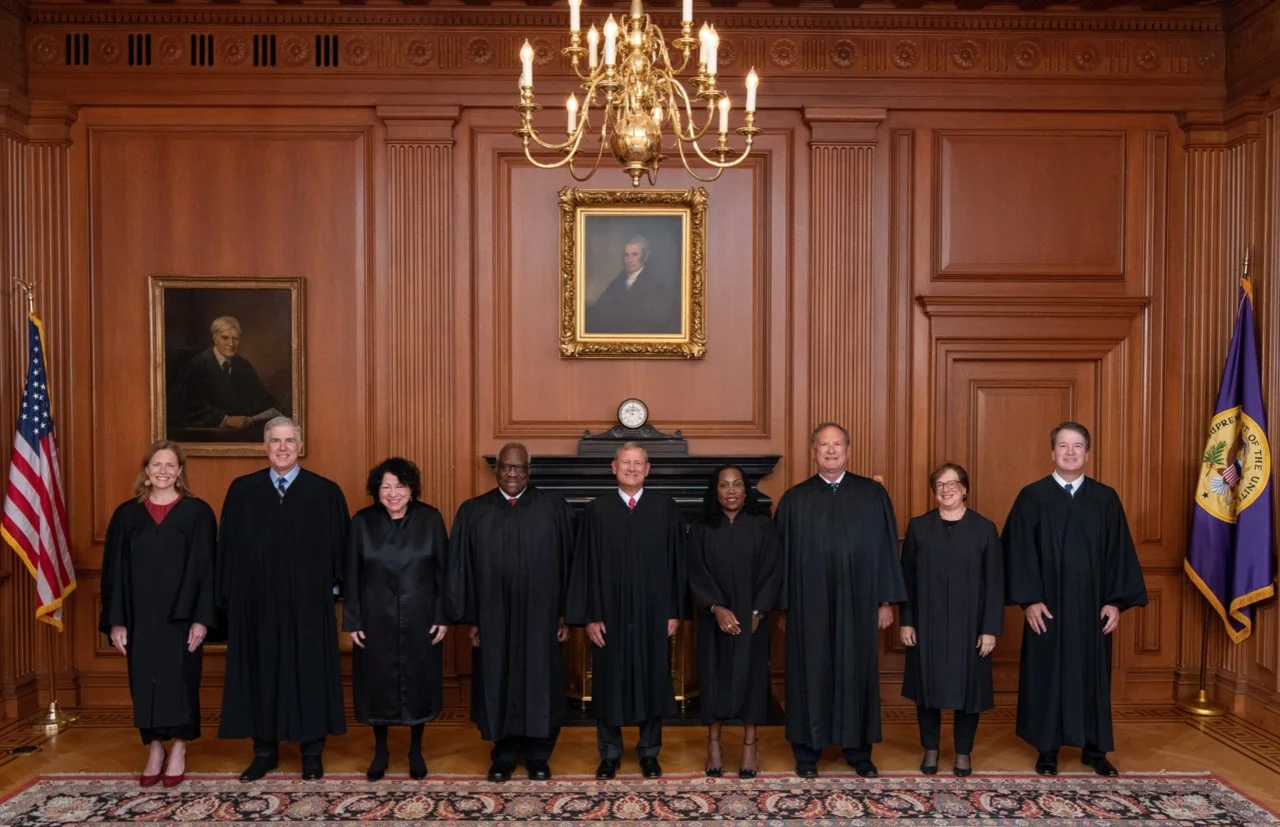
The Birthright Citizenship Decision Will Not End the Birthright Citizenship Debate
It is unlikely that Trump v. Barbara ended the debate over birthright citizenship. It may have truly started it.
The Declaration and Tradition
As we approach America’s 250th anniversary, we should reflect upon and appreciate the Declaration’s opening paragraphs—but we should not forget to remember the rest of the document or the context in which it was created.

.JPG)
.avif)



Get the Civitas Outlook daily digest, plus new research and events.
Get the Civitas Outlook daily digest, plus new research and events.